
RV-specific sites have never been plentiful inside Sequoia & Kings Canyon National Parks. The 33 RV sites at Dorst Creek Campground, once the largest such group in the parks, will not accept reservations throughout 2026 because damage from last winter’s storms has not yet been repaired. Travelers hoping to spend a night beneath the giant sequoias now need to reconsider their plans. Sequoia & Kings Canyon is known for having some of the world’s largest trees, but the roads running among them remain narrow and winding. The larger the vehicle, the more advance planning is needed for a smooth trip.
Why Dorst Creek Is Closed
Dorst Creek Campground sits beneath an evergreen forest at 6,800 feet, 10 miles from Giant Forest. Its 33 RV-only sites, out of 222 total sites, made it one of the park’s larger RV campground options. It also had four group sites, making it suitable for group trips with several vehicles. The issue is the damage that last winter’s storms left at the campground and along its access road. The park said it would not accept reservations for the campground during the 2026 season. Individual sites had normally been reservable one month in advance and group sites four months in advance, but that option is unavailable this year. Dorst Creek is not the only closure. The 27 sites at Buckeye Flat Campground, in the lower elevations near Potwisha, are also not accepting reservations for the same reason. With both campgrounds out of service, competition for peak-season sites has grown even tighter.
The 22-Foot Line
The Lodgepole and Giant Forest areas sit at 6,700 feet near the center of the park. They are about an hour from the Highway 198 entrance and 45 minutes from the Highway 180 entrance. Park guidance is clear: vehicles longer than 22 feet should enter from the Highway 180 side. The winding 45-minute road leading to Giant Forest is itself not recommended for vehicles longer than 22 feet. The Foothills area, where Potwisha is located, requires similar care. This lower-elevation area, between 2,500 and 3,000 feet, is hot and dry in summer, but its oak woodlands, river canyons, and spring wildflowers make route selection especially important for travelers in larger RVs.
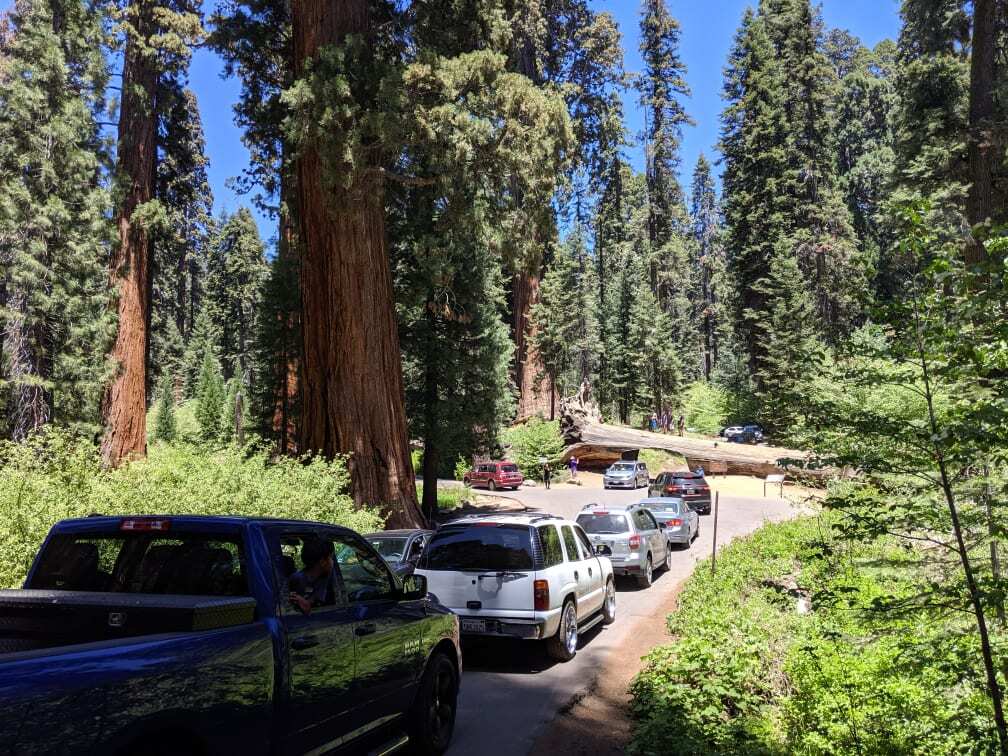
One of the area’s best-known sights is Tunnel Log, a fallen sequoia whose base was cut through to create a passage for vehicles. In summer, vehicles line up to pass through the narrow opening, causing congestion. That is one reason drivers of larger RVs should be cautious about including it in their route. Much of the Giant Forest loop road, including the Tunnel Log section, is narrow and winding, so travelers with large trailers may be more comfortable bypassing it and using the shuttle instead.
Where Larger Rigs Can Go
With Dorst Creek unavailable, three practical alternatives remain. Potwisha Campground is a 42-site campground at 2,100 feet beneath open stand oaks along the Middle Fork Kaweah River. Its dump station operates year-round, the campground is open in all seasons, and reservations are available four months ahead. Travelers should keep in mind that fire restrictions are common in summer because of heat and dry weather. It generally receives little snow in winter, making it a reasonable off-season option.
Lodgepole Campground, with 214 sites, is among the park’s largest. At 6,700 feet and within walking distance of Lodgepole Village, it operates from May through November and has a seasonally operated dump station. The nearby village has a market, showers, and laundry facilities, making longer stays manageable. In summer, the free Sequoia Shuttle makes it convenient to park the vehicle and explore nearby trails.
Azalea Campground is a 110-site campground in the Grant Grove area at 6,500 feet. It operates by reservation from May through October; from November through April, only 20 sites in one loop are available on a first-come, first-served basis. Cell service is available year-round, and a market and ice are nearby, making it the most accessible of the three. Winter first-come, first-served sites can be paid for only through the Recreation.gov mobile app, so it is prudent to download the app before arrival in an area where service may be weak.
Preparing for a Night Without Hookups
All three campgrounds have one thing in common: none has electric hookups. The same is true of all 14 campgrounds in Sequoia & Kings Canyon National Parks. Dry camping supported by batteries, generators, and solar panels is the standard here. Because bears are active in the area, food, trash, and scented items must be stored in the provided lockers. At the time of publication, Stage 1 fire restrictions were in effect, prohibiting wood and charcoal fires at lower-elevation campgrounds and picnic areas. Propane stoves and gas burners may also face separate restrictions, so travelers should check the latest fire-restriction notice before arrival.
Mineral King Road Is an Exception
The Mineral King area, home to the park’s highest campgrounds, is a different situation entirely. At 7,500 feet and open only for the summer season, it is reached by a narrow, winding road with many unpaved stretches. The park does not recommend the road for RVs or trailers, and they are not permitted in the campgrounds. This road branches off Highway 198 in Three Rivers, and larger vehicles are best left out of the plan from the start. Cold Springs and Atwell Mill campgrounds in the area have 40 and 21 sites, respectively, and are essentially for tent camping.
When to Go
Lower-elevation campgrounds around 2,100 feet, such as Potwisha, receive little snow even in winter and can work well for off-season camping. By contrast, areas above 6,500 feet, such as Lodgepole and Azalea, may still have snow in spring and fall, so checking road conditions before an early-May or late-October trip is the safer approach. During the summer peak season, temperatures can differ sharply between the low and high elevations, so travelers moving between the two in a single day should pack layers.
Reservations and Fees
Standard sites cost $32 per night; sites accommodating livestock cost $40; medium group sites cost $50; and large group sites range from $60 to $80 depending on size. Most sites require reservations and fill quickly. Cell service is limited in many mountain areas, so downloading the Recreation.gov mobile app before arrival is a sensible precaution. Some sites offer half-price camping fees for holders of a Senior Pass or Access Pass, so bringing one can help.
Dorst Creek’s absence is significant, but an overnight stay beneath Sequoia’s giant trees remains possible by shifting plans to Potwisha, Lodgepole, or Azalea and remembering the 22-foot limit and the Highway 180 approach.
Photo: Traffic at Tunnel Log, Rebecca Paterson / National Park Service (nps.gov/media/photo/gallery-item.htm?id=C814DB9C-8C4E-4393-BF61-7457872A0F9F). Data Source: NPS API (developer.nps.gov) / Recreation.gov RIDB