
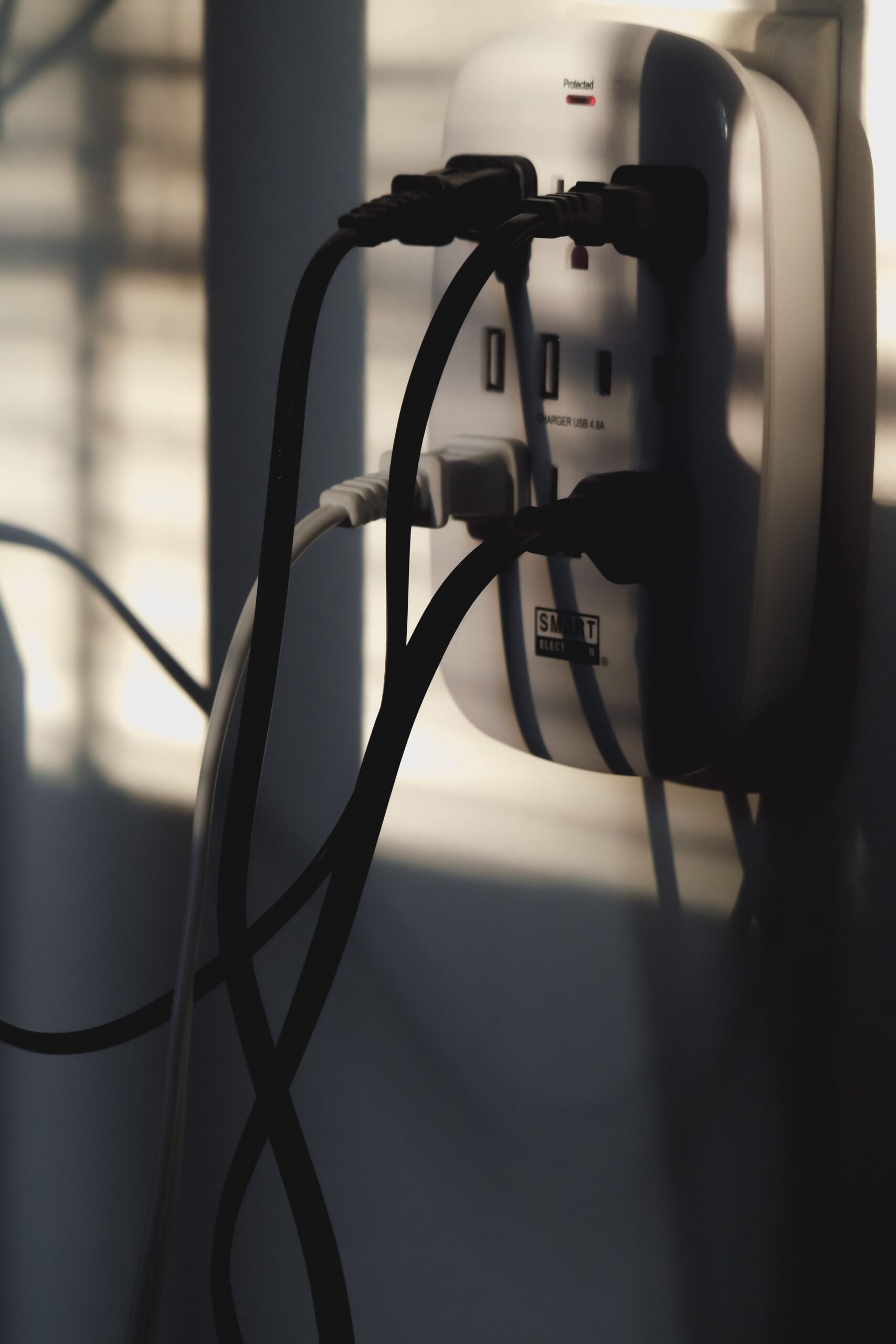
Campground electrical outlets may look alike, but wiring conditions and momentary voltage fluctuations can vary widely from site to site. An RV surge protector acts like a safety valve, remaining quiet under normal conditions and activating only when it detects abnormal voltage. It may seem like a minor accessory, but this one device can often protect the refrigerator, air conditioner, and electronic control boards.
30-Amp and 50-Amp Models Protect Different Numbers of Circuits
A 30-amp RV uses a TT-30 plug and operates on a single 120-volt circuit, so it needs a 30-amp surge protector. A 50-amp RV, by contrast, uses a 14-50 plug and operates on two 120/240-volt circuits, requiring a 50-amp-specific model that monitors each circuit independently. The price difference between the two ultimately comes down to whether the device must protect one circuit or two.
Surge Protectors and EMS Units Are Different
A basic surge protector focuses on absorbing momentary voltage spikes, with its absorption capacity measured in joules (J). An EMS (electrical management system), a step above that, does more than address momentary spikes: it continuously monitors for low voltage (about 104 volts or below), high voltage (132 volts or above), an open ground, an open neutral, reverse-polarity wiring, and frequency errors. When it detects a problem, it cuts power to the RV itself. The choice depends on whether you want to block surges alone or monitor overall power quality.
Check the Diagnostic LEDs Before Connecting
Most surge protectors include circuit-analysis functions and diagnostic LEDs, which indicate the wiring condition as soon as the unit is plugged into an outlet. These LEDs can immediately identify common wiring faults such as an open ground, reverse-polarity wiring, an open hot wire, or an open neutral. Connecting the surge protector first and checking the diagnostic results before plugging in the RV power cord is a safe habit.
Using the Same Connection Sequence Every Time Is Key
Once purchased, a surge protector is equipment you can use again at every campground. Plug the surge protector into the campground outlet first, check the wiring condition with its diagnostic LEDs, and connect the RV power cord only when no issue is indicated. This brief procedure is among the least expensive and most reliable forms of protection for the refrigerator, air conditioner, and various electronic control boards against unexpected voltage-related damage.
Photo: Steve A Johnson, Pexels — https://www.pexels.com/photo/plugs-plugged-into-wall-outlet-18358118/