
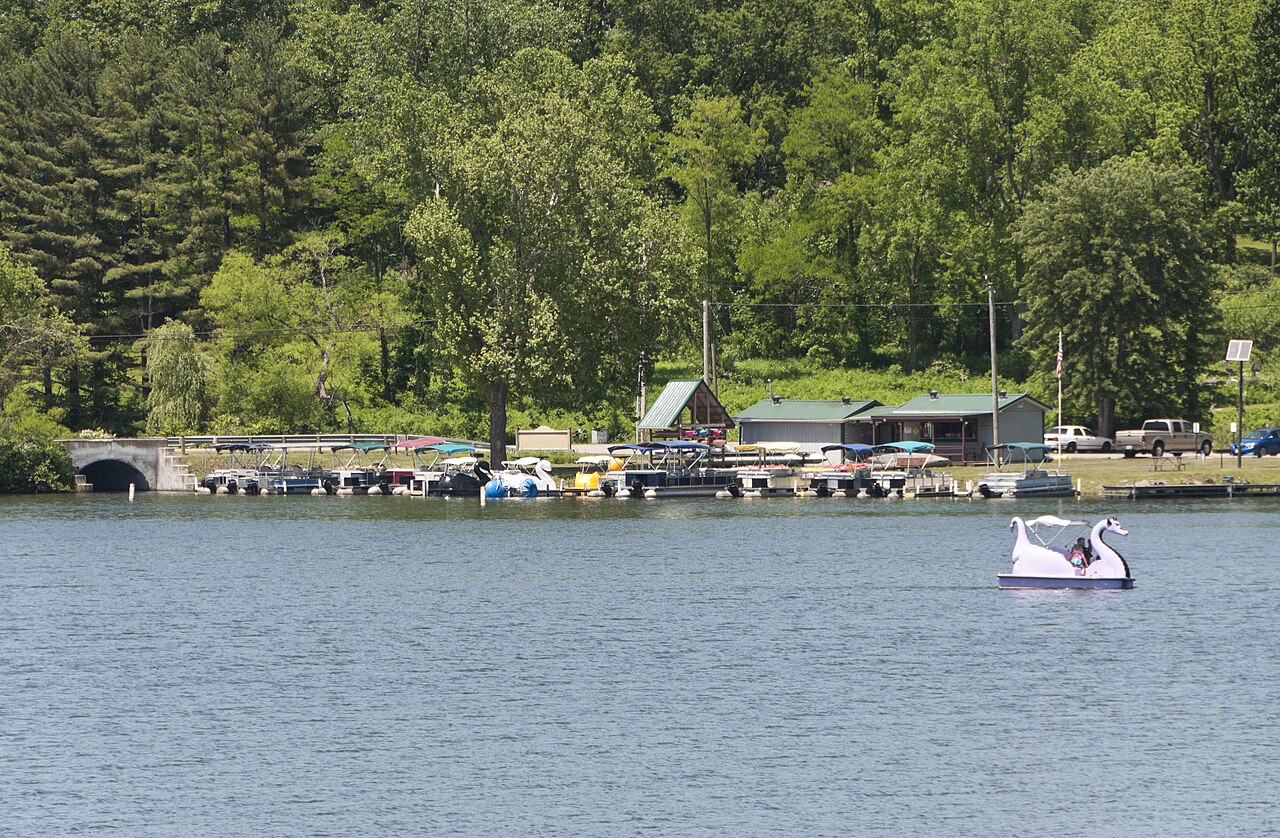
Weekend travel to Logan and Hocking County in southeastern Ohio should take already-saturated ground into account before focusing on rainfall totals. A Flood Watch updated by NWS Wilmington at 9:51 a.m. EDT on September 12 warned of possible localized flash flooding through that evening. Rain over the previous several days had saturated soils in many areas, and scattered thunderstorms could bring another round of heavy downpours.
That does not mean every location will receive the same amount of rain. NWS emphasized short-lived, localized downpours and rapid runoff. At campgrounds, access roads and low-lying parking areas should be checked separately, even if rain briefly eases. The watch should not be interpreted as confirmation of flooding already underway or closures at specific facilities.
Areas Affected
In Ohio, the affected areas include Hocking, Fairfield, Ross, Pike, and Scioto counties, along with Adams, Brown, Highland, Franklin, Licking, and Pickaway counties. Cities travelers may pass through include Logan, Lancaster, Chillicothe, and Portsmouth. The watch also cited possible flooding along rivers and streams, in low-lying areas, and in places with poor drainage.
Bracken, Lewis, Mason, and Robertson counties in Kentucky, across the Ohio River, were included in the same issuance. Crossing the state line therefore would not necessarily place travelers outside the area affected by this rainfall. Even when the destination is in another county, travelers should check forecasts and alerts separately for areas along that day’s route.
What RV Travelers Need to Know
Campers with a site reserved in a low-lying area should contact the operator before arrival to ask about access-road conditions and routes to higher ground. NWS flood-safety guidance advises campers in low areas to move to higher ground immediately if water begins rising and not to delay if evacuation instructions are issued. Moving people should take priority over packing up equipment.
Do not attempt to drive an RV through a water-covered road based on its size or ground clearance. Washed-out pavement and other hazards may be concealed beneath the water, and drivers should not go around barricades. NWS warns that even large vehicles can be swept away by moving water. If a detour is difficult, plans should shift toward waiting in a safe place and assessing conditions.
While the watch remains in effect, continue checking the latest forecast and watch for any upgrade to a Flash Flood Warning or local evacuation order. Travelers should be prepared to receive information through cellphone alerts, NOAA Weather Radio, and other channels. The key consideration for travel that day was not how conditions looked after the rain stopped, but whether the overnight site and its access roads were actually safe.
Source: NWS Wilmington Flood Watch / NWS Flood Safety During a Flood
Photo: Sixflashphoto / Original photo page (CC BY-SA 4.0)
