
A review of Yosemite National Park’s campground listings in official NPS data reveals one striking number: zero. Across every campground, the number of sites with electric hookups is zero. From Upper Pines on the Valley floor to Tuolumne Meadows at 8,600 feet, Yosemite has no sites with water, electric, or sewer connections. Instead, each campground has its own RV and trailer length limits, along with different reservation-release schedules. RV travelers planning a fall Yosemite trip need to account for those conditions first.
The Three Valley-Floor Campgrounds: Upper Pines, Lower Pines, and North Pines
The three Pines campgrounds are the only places to park an RV within Yosemite Valley. Upper Pines is the largest, with 236 sites, and is open year-round. It accommodates RVs up to 35 feet and trailers up to 24 feet, though not every site can handle those lengths, so travelers need to review the specifications for each site on the reservation page. The fee is $36 per night, and it has the Valley’s only dump station open year-round. In winter, only the first two loops are open.
Yosemite reservations are grouped by month and open at 7 a.m. Pacific Time on the 15th of each month, five months in advance. For October camping, the first inventory was released May 15, leaving only cancellations at this point. For a fall weekend site in the Valley, setting a cancellation alert and waiting is the practical approach. By the calendar, reservations for arrivals from October 15 through November 14 were released May 15, while arrivals from November 15 through December 14 opened June 15. For Yosemite next spring, reservations for arrivals from March 15 through April 14 open at 7 a.m. on October 15. Switching to a weekday arrival also noticeably reduces competition, a long-standing Yosemite reservation rule of thumb.
Alternatives Outside the Valley: Wawona, Hodgdon Meadow, and Crane Flat
Near the South Entrance, Wawona Campground has 95 sites and accommodates both RVs and trailers up to 35 feet. In 2026, Loops B and C operate by reservation through October 26, while Loop A remains reservable through November 29; after that, only Loop A remains first-come, first-served. The fee is $36, and its dump station operates seasonally. With reservable loops available well into fall, Wawona offers the broadest opening for RV travelers aiming for Yosemite in November.
Just inside the Big Oak Flat Entrance, Hodgdon Meadow has 100 sites for RVs up to 35 feet and trailers up to 30 feet. It is open year-round, with reservations required from April 15 through October 26 and first-come, first-served camping afterward. There is no dump station. Crane Flat has 148 sites, accommodates RVs and trailers up to 35 feet, and is open from June through mid-October.
Its reservation system is different: reservations are released two weeks in advance. For travelers who missed the competition five months out, Crane Flat’s two-week reservation window can be a back door into Yosemite in fall. It is accessed directly from Highway 120 rather than via Tioga Road, making it easier to reach with a larger RV.
High-Elevation Campgrounds End Their Season in September
Tuolumne Meadows, Yosemite’s largest campground with 289 sites, limits RVs to 35 feet and trailers to 24 feet, and its season runs from July through September. About half of its sites are available by advance reservation, with the rest released two weeks ahead. White Wolf has 68 sites and the strictest limits—RVs up to 27 feet and trailers up to 24 feet—and costs $28 per night. Both close before Tioga Road shuts down for snow, so they do not belong in plans for October or later. Even in September, overnight temperatures often drop into the 30s, making it important to check propane supplies and heating plans.
What the 35-Foot RV Limit Means
Most Yosemite campground RV length limits top out at 35 feet. Lower Pines and North Pines in the Valley are the only campgrounds that accommodate 40-foot RVs, and trailers are capped at 35 feet. That leaves many Class A motorhomes and long fifth wheels with just two choices from the outset. Valley sites also have tight spacing between trees, so travelers who check only the listed length—and not whether slide-outs are permitted—in the site details can face an unpleasant surprise on arrival.
The lack of hookups matters even more in fall. While daytime temperatures may reach the 70s, nights in the Valley can fall below 40°F, and running a propane furnace drains batteries overnight because of the fan. Generators are permitted at Yosemite campgrounds only from 7 to 9 a.m., noon to 2 p.m., and 5 to 7 p.m.; quiet hours run from 10 p.m. to 6 a.m. Even RVs with solar panels get limited late-day sun on the Valley floor because of cliff shadows. Travelers need either ample lithium battery capacity or a routine of refilling water and emptying tanks at the Upper Pines dump station every few days.
Camp 4 is Yosemite Valley’s only $10-per-night campground, but it is a walk-in tent campground that does not accept RVs or trailers at all. Reservations are also required there from April 15 through November 9, and each site may be shared by up to six people. For RV travelers unable to secure a Valley site, turning to Camp 4 is not an alternative. Outside the park, National Forest campgrounds along Highway 120 and private RV parks around El Portal and Mariposa offer hookups. Alternating two no-hookup nights in the Valley with one hookup night outside the park can ease concerns about batteries and holding tanks.
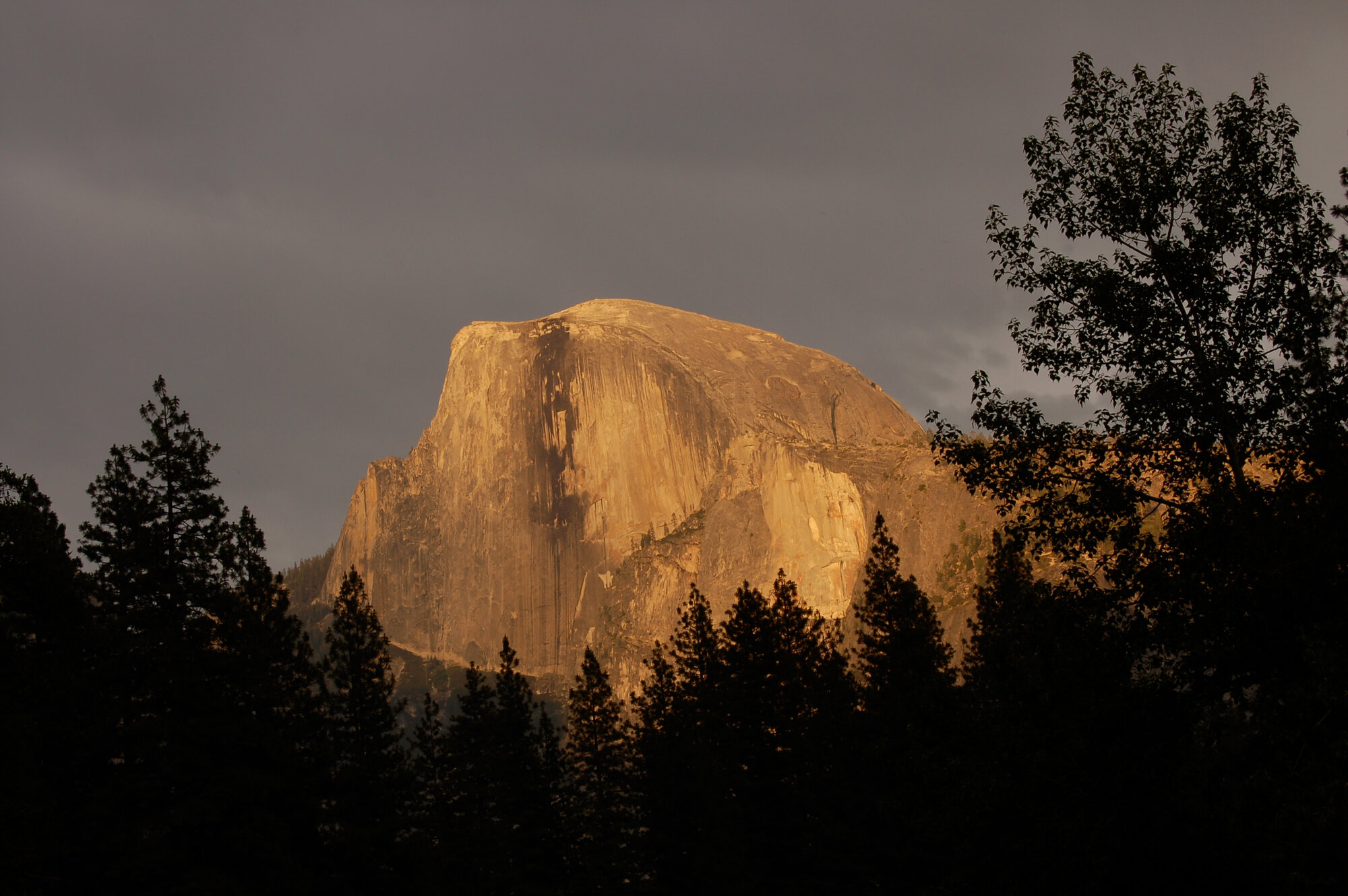
Fall in Yosemite offers clear rewards. The crowds tied to the summer entrance reservation system recede, and while waterfalls diminish, lower-angle sunlight lingers longer on Half Dome and El Capitan. But to park an RV in front of that scenery, travelers first have to clear three numbers: 35 feet, zero hookups, and reservations five months ahead.
Data Source: NPS API (developer.nps.gov) / Recreation.gov RIDB
Photo: NPS / Damon Joyce / Original photo. Public domain. Photo date: June 25, 2006.
