
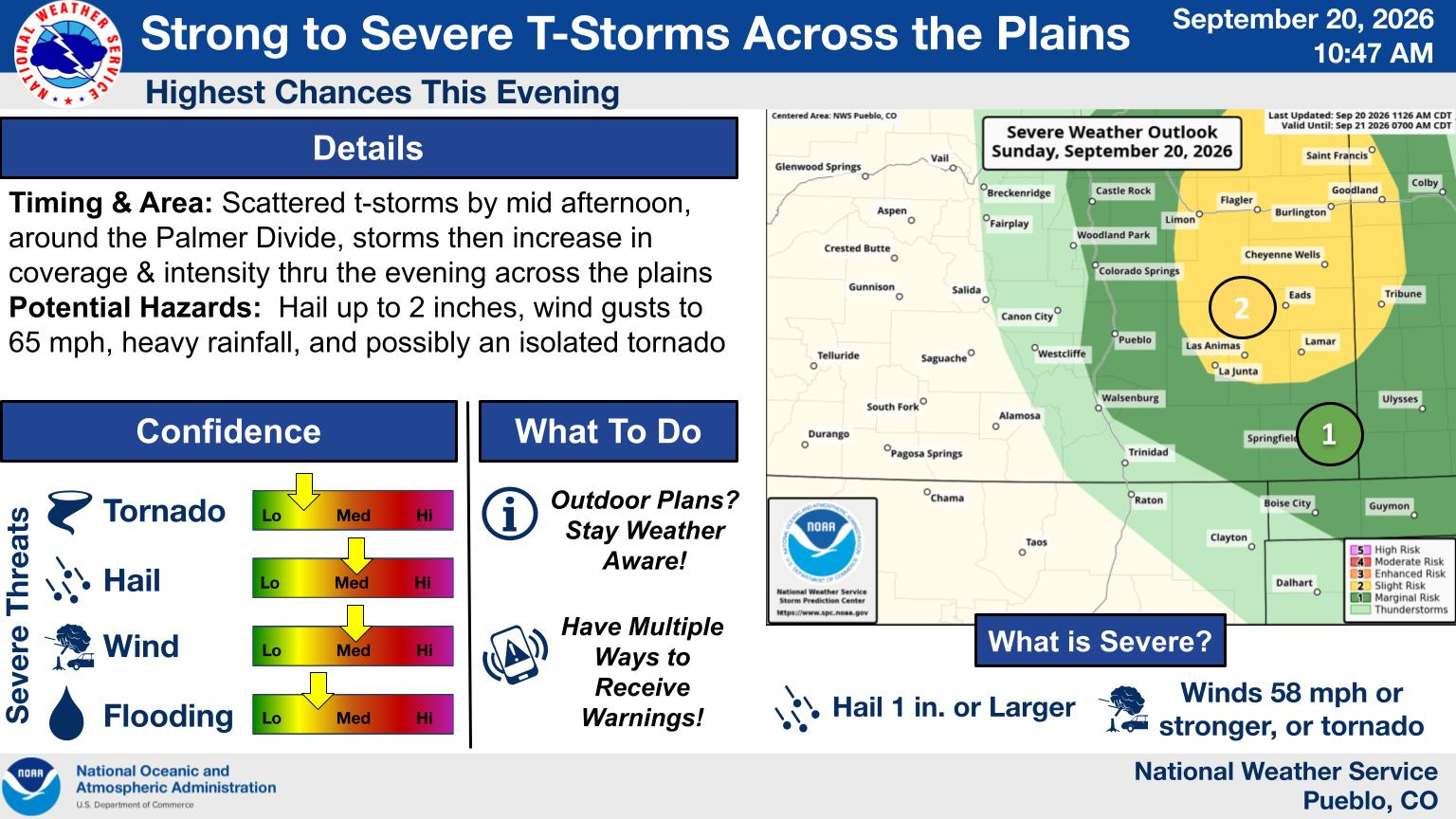
RV travelers wrapping up a weekend camping trip near Pueblo, Colorado, or staying through Sunday night needed to prepare for evening thunderstorms. A Hazardous Weather Outlook issued by the National Weather Service (NWS) Pueblo office at 11 a.m. MDT on September 20 said the threat would increase across the eastern plains and cities along I-25 from that evening into early September 21. Hail up to 2 inches in diameter and wind gusts up to 60 mph were possible; this was a forecast of potential hazards, not a report of observed damage.
Areas Affected
Thunderstorms could first intensify over northern El Paso County in the late afternoon. The outlook indicated that the threat area would expand as a strong front crossed the plains. Travel plans between Colorado Springs and Pueblo also needed to be checked against the forecast for the plains east of the mountains. Dry conditions in the afternoon were not a reliable indication that nighttime travel would face the same conditions.
A localized tornado threat was also identified from La Junta to the Kansas border. NWS added that flash-flood risk in the Aspen Acres burn scar was low but remained possible that evening. Hail and wind hazards may not occur in the same places as runoff hazards in the burn scar, so travelers needed to check new alerts for their campground address and actual travel route.
Lake Pueblo State Park offers RV camping, and reservations are required for overnight stays. A campground reservation, however, does not mean a safe building is available during severe weather. This outlook did not provide a basis to conclude that the entire park or I-25 was closed; before departure, travelers needed to check separate park operations notices and COtrip road information.
What RV Travelers Need to Know
Before arriving or packing up to leave, campers should ask the park office where weather shelter is located and whether it is accessible overnight. NWS explains that vehicles, including RVs, are not safe shelter in severe thunderstorms or tornadoes. Rather than remaining in a vehicle to protect camping equipment, the priority is to identify an accessible sturdy building before dangerous weather arrives.
If strong thunderstorms approach the travel route, consider delaying departure. In addition to phone alerts, have a way to receive information such as local weather radio, and compare the county named in an alert with your current location. Stopping beneath an overpass does not ensure safe shelter and can also obstruct other vehicles and emergency responders.
Finish lakeside activities and outdoor packing before thunderstorms arrive, and follow instructions from park staff. Activity was forecast to briefly decrease during the day on the 21st, but that could not be used to guarantee that a particular road was safe or that campgrounds would operate normally. Changes in the nighttime forecast and actual on-site controls were the factors that should determine when to head home.
Source: NWS Hazardous Weather Outlook for the 20th · Lake Pueblo camping information · NWS severe-weather guidance for vehicles and camping · COtrip road information
Photo: NOAA/NWS Pueblo / Original photo page (public domain; no copyright is claimed in original NWS materials · Terms of use)