
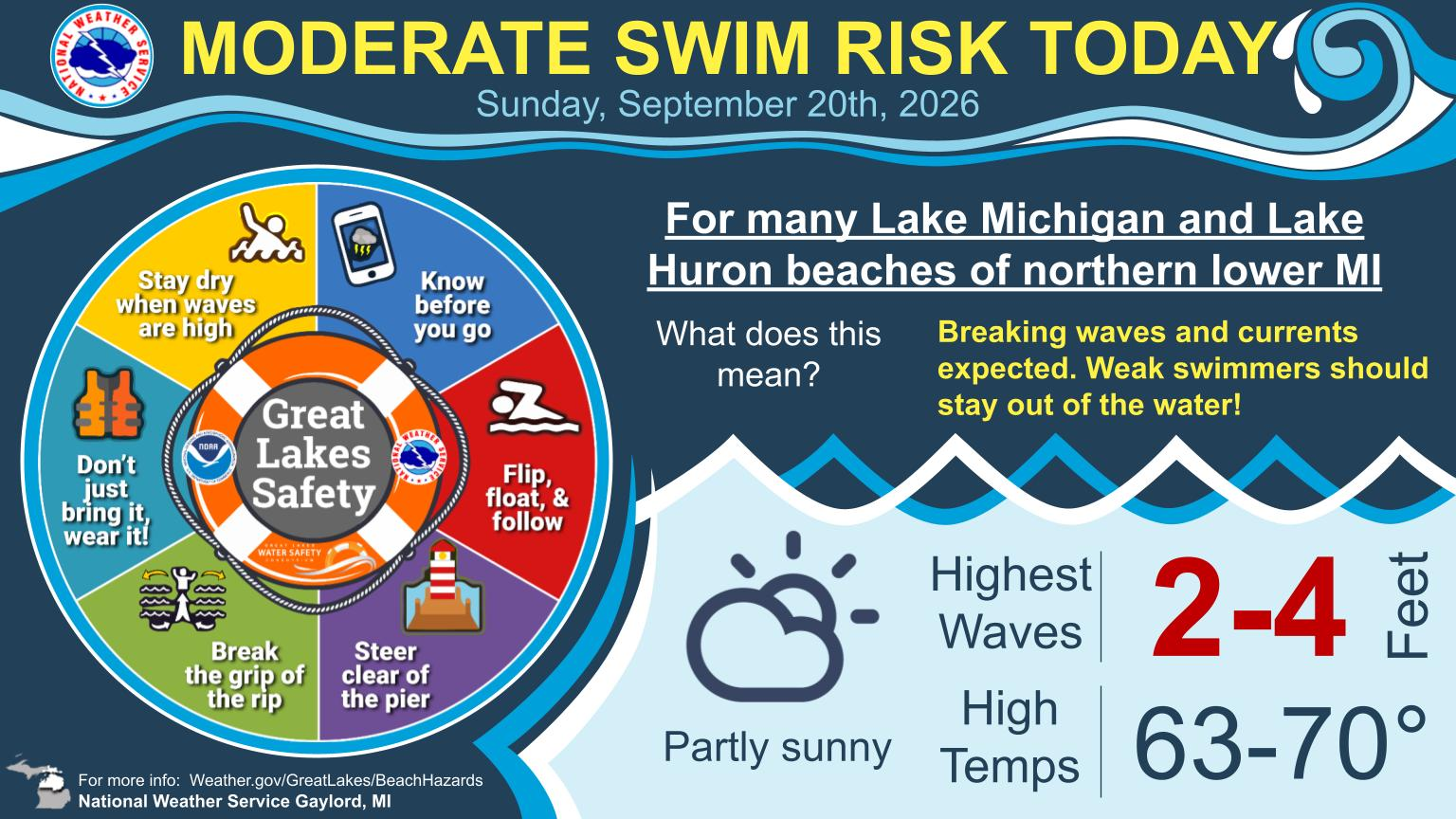
If you were camping at Sleeping Bear Dunes National Lakeshore and planning to enter Lake Michigan, clearing skies alone were not a reason to go in the water. The National Weather Service (NWS) Gaylord office’s beach forecast, issued at 9:56 a.m. EDT on September 20, rated the day’s swimming risk as moderate for Benzie and Leelanau counties. Breaking waves and hazardous currents were expected, and the day’s guidance also advised inexperienced swimmers to stay out of the water.
Areas Affected
Lake Michigan beaches in Benzie County were expected to see 2–3-foot waves on the 20th, while Leelanau was forecast for 2–4-foot waves. Northeast winds of 10–15 mph were expected in both areas. Nearby Manistee was forecast for 2–4-foot waves and northeast winds of 15–20 mph, underscoring that conditions should be checked separately for each stop along the lake.
The differences between areas were expected to become more pronounced on the 21st. Benzie and Manistee were forecast for waves of 2 feet or less and a low swimming risk, but Leelanau was expected to remain at a moderate risk with 2–3-foot waves. Staying an additional day did not mean conditions would become calm across the entire lakeshore at once. A low-risk rating also did not mean hazardous currents would be absent near breakwalls and river mouths.
Beach access points at Sleeping Bear Dunes identified by the NPS include Platte River Point, Esch Road, Glen Haven, and North Bar Lake. Plans should also account for the fact that lifeguards are not stationed at the beaches. This forecast provided swimming-risk information; it did not itself mean RV campground closures or beach-access restrictions.
What RV Travelers Need to Know
Before leaving the campground for the beach, check the latest forecast and posted conditions for that specific beach. Even under a moderate-risk rating, the NWS advises avoiding hazardous areas such as breakwalls, piers, and river mouths, and using a flotation device in the water. If waves are high or conditions are uncertain, it is better to enjoy the beach from away from the water rather than enter it.
If traveling with children, keep them within arm’s reach at the water’s edge, and make a separate assessment before using a kayak or paddleboard. The NPS recommends checking the weather and equipment before departure, wearing a life jacket, and not going out alone. A campground reservation or the impression of a calm inland lake does not determine safe conditions for going out on Lake Michigan.
If caught in a rip current, do not try to fight the flow head-on. The NPS advises moving sideways out of the current before returning to shore; if you cannot get out, float or tread water and call for help. To avoid needing that response, water activities during that day’s camping trip should be decided by wave conditions and the swimming-risk rating—not by sunshine.
Sources: NWS beach forecast · NWS daily hazard guidance · NPS beach access and lifeguard information · NPS water safety · NPS North Bar Beach information
Photo: NOAA/NWS Gaylord / Original photo page (public domain, no copyright claimed in original NWS material · Terms of use)