
RV travelers approaching Arches National Park on Friday, November 20, should plan around gusty conditions before a colder weekend. The National Weather Service’s 3:51 a.m. MST forecast for Arches/Grand Flat calls for southwest winds of 10–15 mph, gusts up to 35 mph and a 30 percent morning shower chance. Sunshine later in the day would not remove the need to consider wind on the drive.
Areas Affected
The forecast zone includes Moab, Arches National Park, Castle Valley and Thompson Springs. Friday highs span 45–55°F, followed by overnight lows of 25–35°F. These are regional ranges rather than a single temperature at every campsite or trailhead. Travelers heading to a higher or more exposed location should check the specific destination before relying on the Moab forecast.
Saturday is forecast to be sunny with highs in the 40s, and Saturday night drops into the 20s. Sunday is mostly sunny at 45–55°F. The immediate combination is a windy arrival followed by cold overnight conditions, not a forecast of heavy snowfall. An RV staying through the weekend needs a suitable cold-weather setup even if daytime sightseeing looks appealing.
What RV Travelers Need to Know
Devils Garden is the park’s only campground. Its November–February sites are first-come, first-served, unlike the March–October reservation season. NPS encourages winter visitors to download the Recreation.gov app before arrival and use Scan & Pay for their campsite. The seasonal arrangement is not a confirmation that a suitable space will be vacant when a particular RV arrives.
The same NPS guidance points travelers toward the Moab area when the campground is full and warns that first-come sites can fill early on busy periods and holiday weekends. With Thanksgiving approaching, identify a backup overnight option before entering the park. Confirm that an alternative accommodates the rig and provides the services needed for nights below freezing rather than assuming any open campground will do.
The park’s driving guidance describes winding roads, narrow lanes and soft shoulders. Use designated pullouts for photographs and stay on established roads. Its weather guidance also warns that wet or sandy sandstone can be slippery. A morning shower chance is therefore relevant to a walking stop as well as the approach, without establishing that any particular trail is currently wet.
Before departure, review park alerts and UDOT traffic information for current access. NPS notes that winter weather can affect roads and trails, but the forecast itself is not a closure notice. Download maps while service is available and keep the campsite decision separate from the sightseeing itinerary, especially if a delayed arrival would leave little daylight to find an alternative.
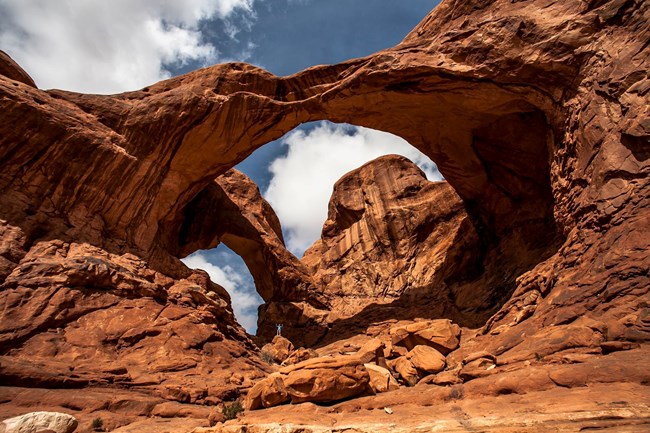
Photo: USGS, Double Arch, circa 2018. Public domain.