
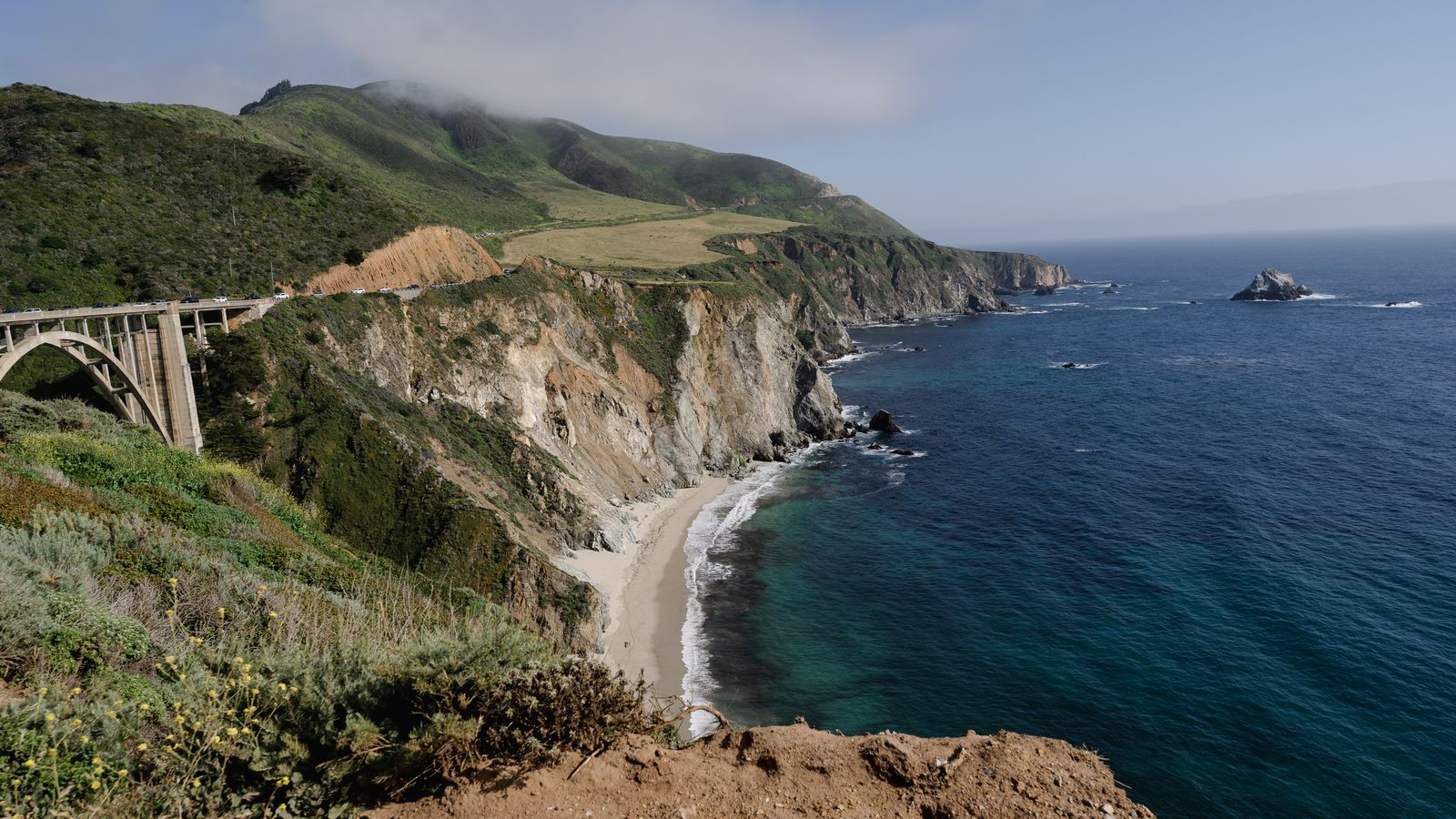
Along California’s Highway 1, the 90-mile stretch between San Simeon and Carmel known as Big Sur offers both dramatic scenery and demanding driving. Running 1,000 feet above the cliffs, this road has few traffic lights or towns, and cell service is unavailable across much of the route. Some campgrounds along the way do not accept vehicles longer than 24 feet.
30 Feet Is the Practical Upper Limit
There is no official maximum vehicle-length restriction for the Big Sur segment. But Caltrans guidance and the experience of RV travelers who have repeatedly driven the route point to the same conclusion: 30 feet is the practical length limit for comfortable travel, whether measuring a truck-and-trailer combination or the overall length of a motorhome. Up to 35 feet may be manageable for an experienced driver, but the risk rises beyond that.
Several curves between Big Creek and Lucia have such tight turning radii that large Class A motorhomes and fifth wheels may need to cross into the opposing lane to get through. In summer, of course, there is often oncoming traffic in that lane. Drivers of slow-moving vehicles are also required to pull over when five or more vehicles are behind them, so using the turnouts spaced about 1 mile apart can help reduce friction with following traffic.
Different Campground Length Barriers
Big Sur’s campgrounds do not all offer full-hookup sites with electricity, water, and sewer. Instead, their length limits vary widely.
Kirk Creek Campground, managed by Los Padres National Forest, accepts vehicles up to 30 feet at its 33 sites. Perched on a bluff overlooking the Pacific, sites 21 through 24 are especially striking near sunset. However, the entrance road is short and steep, with a sharp turn at the bottom, so it helps to be comfortable making tight turns in advance. The nightly fee is $35.
Plaskett Creek Campground, 1 mile south of Kirk Creek, is similar. Most of its 43 sites accommodate vehicles up to 30 feet, while only a few can barely handle 35 feet. The fee is also $35 per night.
Limekiln State Park is the most restrictive campground in this section. It operates 24 sites, but the maximum length is fixed at 24 feet because the campground entrance itself cannot accommodate anything longer. RVs over 24 feet should leave this campground off the list from the start.
Pfeiffer Big Sur State Park is the largest and most developed option. Most of its 189 sites accommodate vehicles up to 32 feet, and some accept up to 36 feet. It is also the only one with a dump station and hot showers, making it a useful stop to refill water and service tanks after several days at Kirk Creek or Plaskett Creek farther south.
Electric hookups are not entirely unavailable. Fernwood Resort, next to Pfeiffer Big Sur State Park, has electric hookups at some sites, a rarity in Big Sur. It accommodates RVs up to 34 feet, with peak-season rates of $75 to $110 per night. Sites with hookups are limited, so early reservations are necessary.
More Concerning Than the Turning Radius
Tight turns are not the road’s only hazard. Full closures caused by landslides and rockfalls repeatedly occur during the winter and spring rainy season, and some closures have lasted for months. Checking current road conditions through Caltrans QuickMap or by phone within 48 hours of departure is the safer approach.
The parking lot at Julia Pfeiffer Burns State Park has a 20-foot height limit, preventing some motorhomes from entering. Sycamore Canyon Road to Pfeiffer Beach is narrow and sharply winding, so RV access is not recommended; visitors should switch to a tow vehicle or smaller car.
There are only two gas stations within the corridor, and prices are $2 to $3 more per gallon than inland. Travelers entering from the south are better off filling up in Cambria or San Simeon, while those approaching from the north should fuel up in Carmel or Monterey. The same applies to groceries: bring supplies for the entire stay before entering the area.
For Larger Rigs, Make It a Day Trip Instead of Camping
For RVs longer than 35 feet, a more realistic option is to stay at a full-hookup RV park in Carmel or Monterey and visit Big Sur on day trips rather than overnighting there. Places such as Laguna Seca Recreation Area, with large pull-through sites and complete hookups, are about 30 minutes from the Big Sur approach. That arrangement preserves the scenery while reducing the burden of driving the narrowest sections every day.
30 feet, 24 feet, 20 feet. If even one of those numbers does not fit your RV, Big Sur is a route to pass through rather than a place to plan as a campground destination.
Photo: Wallace Henry, Pexels (https://www.pexels.com/photo/stunning-coastal-bridge-along-rugged-cliffside-28924195/)