
Even RV owners with years on the road tend to put off dealing with the black tank. It is understandable not to want to think about what is happening inside a tank you cannot see, but anyone who has dealt with the cost and time of clearing a clogged black tank may see it differently. A black tank can also cause trouble at the most inconvenient moment if it is not tended to regularly. Fortunately, black-tank care is not especially difficult when a few habits are followed. Setting a routine can make even an unpleasant task take less effort. No expensive new equipment is necessary; follow the sequence, and you can travel without worrying about the tank.
Dump It Between 75% and 100% Full
Neither dumping the tank too often nor leaving it too long is ideal. A cycle of one to two weeks is generally best, and dumping when the tank is between 75% and 100% full is most effective. Dumping frequently with too little water in the tank can leave solids stuck to the bottom, creating a blockage instead. A reasonable amount of water in the tank helps carry solids out when it is dumped. Once the routine is established, it tends to become second nature on later trips. It can be especially easy to forget this rule during a long stay at a full-hookup site, so keeping track of the date can help.
Water Is the Best Preventive Measure
Water use is one of the most overlooked parts of black-tank care. Using too little water makes solids and toilet paper more likely to clump and stick, while also worsening odors. Sending enough water through the system helps keep the tank contents liquid, reducing both clogs and odors. Adding extra water to raise the level before dumping is also a good way to reduce clogging. If your RV has a tank rinser or spray feature, running it while dumping can help wash the tank walls with the water flow. In a small trailer with limited fresh-water capacity, simply connecting to the campground water supply and flushing a little more generously than usual can make a meaningful difference.
Add Tank Treatment Every Time
Making a habit of adding treatment after every dump can also help. Enzyme-based treatments can break down solids and help prevent clogs. Check that the product is suitable for RV plumbing and follow the amount recommended by the brand. After doing it a few times, the process tends to become automatic. Treatments come in liquid, capsule, and powder forms, but whichever one you use, add it immediately after dumping so it can disperse evenly before the next use.
Choose Your Toilet Paper Carefully
Regular household toilet paper does not break down well in an RV black tank. It is safer to use RV-specific toilet paper designed to dissolve quickly in water. Wipes labeled “flushable” often do not break down properly and are a common source of clogs. Feminine hygiene products, paper towels, and leftover medication can also build up in the tank over time, so they are best kept out of the toilet. The longer a family travels together, the greater the chance that these items will end up in the system, making a separate trash can beside the toilet a simple but reliable preventive step.
Do Not Leave the Valve Open
Some RVers leave the black-tank valve open continuously at full-hookup sites, but that can make problems worse. Liquids drain out first, leaving solids behind on the bottom of the tank to harden. Keep the valve closed until the tank is 75% to 100% full, then open it completely only when it is time to dump. Dumping the gray tank last to rinse remaining waste from the hose also makes the next hookup cleaner.
Do Not Trust the Gauge Completely
Solids stuck to the tank walls can cause sensors to malfunction, commonly showing a full tank as half full or less. Checking the gauge at the same time each day can help you notice changes from the usual pattern much sooner. A gauge that behaves differently than normal or slower drainage can both signal buildup. Regular tank treatment and generous water use are the most fundamental ways to reduce these sensor problems.
Shorten the Cycle in Hot Weather
As temperatures rise, bacterial activity in the tank speeds up, and odors can develop much faster. If you are staying for several days in a desert or low-elevation area during midsummer, it is better to dump a day or two sooner than usual. If the tank will be exposed to direct sunlight for long periods, parking in shade when possible is a simple way to limit heat buildup. A clogged vent filter can allow odors to back up into the RV, so checking the vent is especially important during hot weather.
Plan More Carefully When Dry Camping
At national parks or mountain campgrounds without hookups, opportunities to dump the tank are limited. It is safer to leave with the tank as empty as possible and estimate water use in advance based on the length of stay and number of people. Fresh-water, gray-water, and black-tank capacities differ, so remember that whichever of the three fills first determines your actual length of stay. When several people are traveling together, it is more realistic to estimate daily toilet use based on tank capacity than to limit bathroom use to set times.
If It Is Already Clogged
A clog can still occur even with these habits in place. Slower-than-usual drainage or a tank gauge that does not reflect the actual level may be signs of a blockage. Rather than trying to force it loose, a commonly recommended approach is to fill the tank with water, add treatment, let it sit for about a day, and then try dumping again. If repeated attempts do not help, calling a professional cleaning service can avoid damage to the plumbing. Forcing tools through the plumbing is not recommended because it can crack the pipes.
Take Extra Care at National Park Dump Stations
Many mountain national park campgrounds operate dump stations but do not offer electric hookups. Multiple RVs may be waiting their turn within a short period, so maintaining the tank in advance helps make dumping faster. Bringing treatment and routinely using plenty of water are habits that ultimately show consideration for the next person in line as well.
A black tank is neither a flashy piece of equipment nor a noticeable upgrade, but following a few maintenance steps can help prevent some of the most inconvenient moments on a trip. It is enough to remember three things: use plenty of water, add treatment after every dump, and keep the valve closed until the tank reaches 75% full. These habits apply equally to a new RV and an older trailer. Maintenance habits have a far greater effect on tank life than equipment performance.
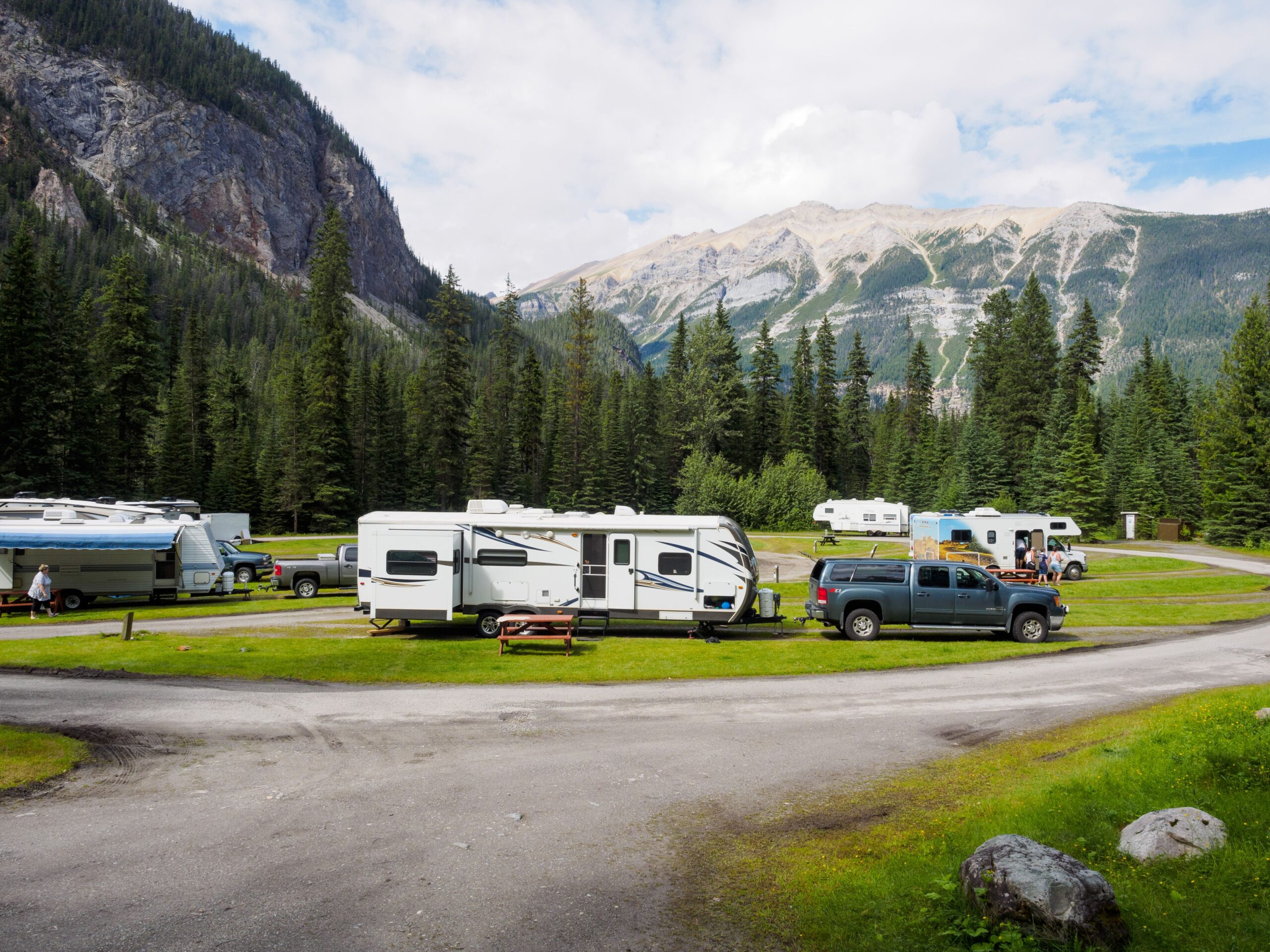
Photo: IslandHopper X / Pexels (pexels.com/photo/cars-with-trailers-at-a-campsite-in-mountains-17816414/)