
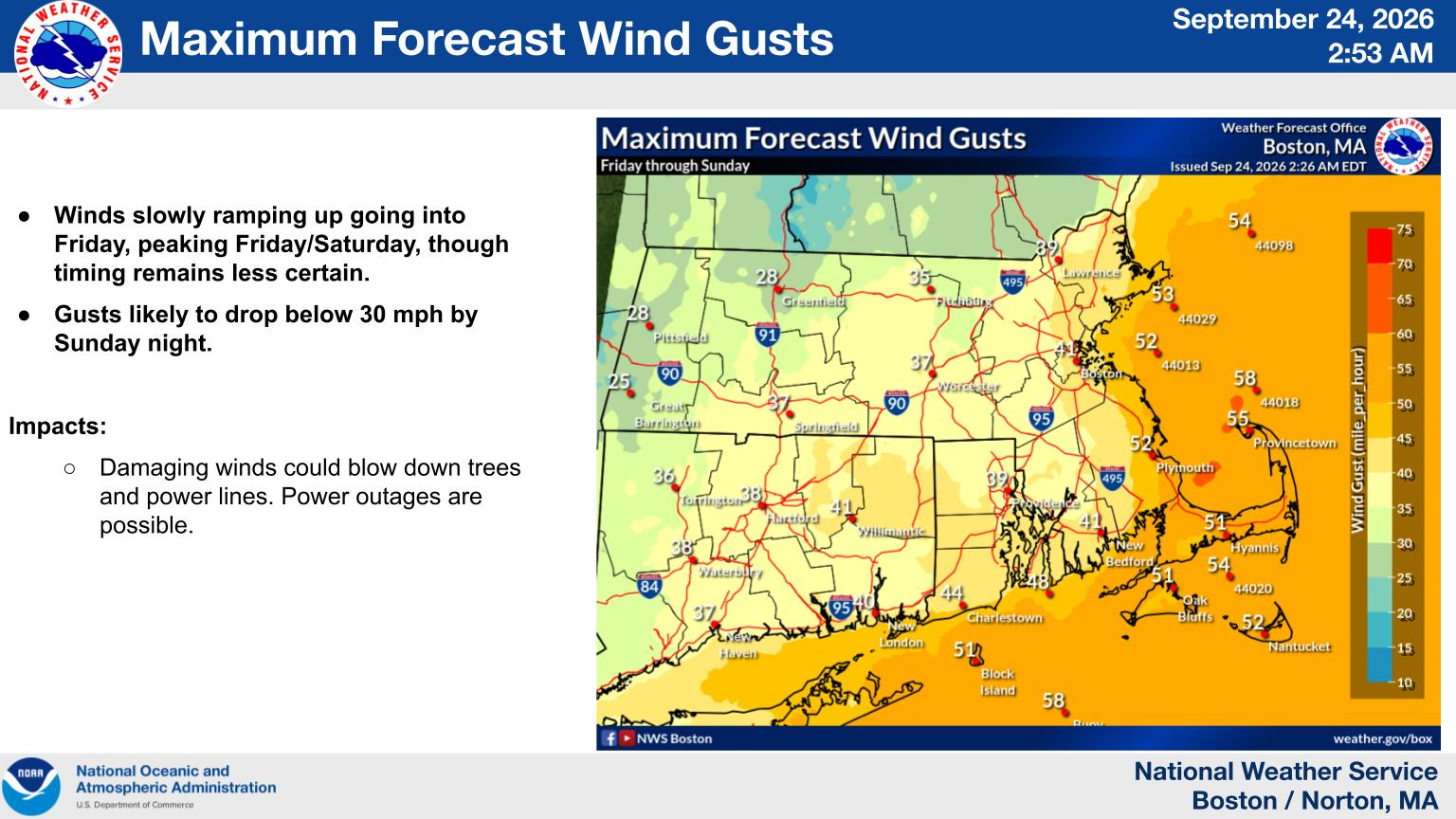
A High Wind Warning was added for weekend RV travel to Cape Cod. At 12:38 p.m. EDT on September 24, the NWS Boston/Norton office upgraded the coastal High Wind Watch to a High Wind Warning. The warning was in effect from 8 a.m. on the 25th through 2 a.m. on the 27th. Northeast winds of 25 to 35 mph, with gusts from 45 to 60 mph, were forecast, and the NWS said travel could be difficult for high-profile vehicles.
Areas Affected
The warning covered Barnstable County, home to Cape Cod; the eastern and southern Massachusetts coast, including Martha’s Vineyard and Nantucket; and the southern Rhode Island coast. Provincetown, Chatham, and Falmouth were named in the warning, along with Plymouth, New Bedford, Newport, and Narragansett. Simply relocating to a nearby shore to avoid wind at one beach was unlikely to take travelers outside the affected area.
The NWS maximum-gust map released early on the 24th showed winds from Friday through Sunday. It was a morning forecast, and the warning issued later provided a maximum gust of 60 mph and a more specific effective period. Point-by-point values on the map should not be treated as observed wind speeds, nor should the reference to Sunday be read to mean winds of the same strength would persist throughout that day.
This warning was not only about brief gusts. The NWS said prolonged winds, heavy rain, and trees still in leaf could raise the risk of damage to trees and power lines and lead to power outages. Campers in wooded campgrounds needed to consider both falling debris and electrical service. The issuance of a weather warning alone, however, did not mean that any particular campground or access road had closed.
What RV Travelers Need to Know
Campers booked to arrive on the 25th or travel on the 26th needed to check with operators before departure about whether check-in would be available and what storm-response guidance was in place. Having an electric hookup and having actual power during a storm are separate matters. Those changing travel times should check hourly wind forecasts along the full route from departure point to destination and avoid schedules that pushed driving up to the start of the warning.
The NWS advised people to move into a sturdy building while a High Wind Warning was in effect. Before winds strengthened, campers needed to identify available buildings and review the operator’s shelter instructions. Outdoor chairs and loose gear should be secured or stored beforehand, and travelers should avoid staying where branches or power lines could fall. Being inside an RV alone should not replace a separate shelter plan.
If gusts develop while driving, NWS guidance says to keep both hands on the steering wheel, reduce speed, and leave ample distance behind vehicles towing trailers. Do not approach downed power lines. That weekend, a safe arrival and stay took priority over a planned sightseeing itinerary, and travelers needed to check for warning updates and campground notices again on the day of departure.
Source: NWS High Wind Warning · NWS wind forecast map · NWS high-wind safety guidance
Photo: NOAA/NWS Boston/Norton / Original photo page (Public Domain, no copyright is claimed for the original government work · Terms of use)