
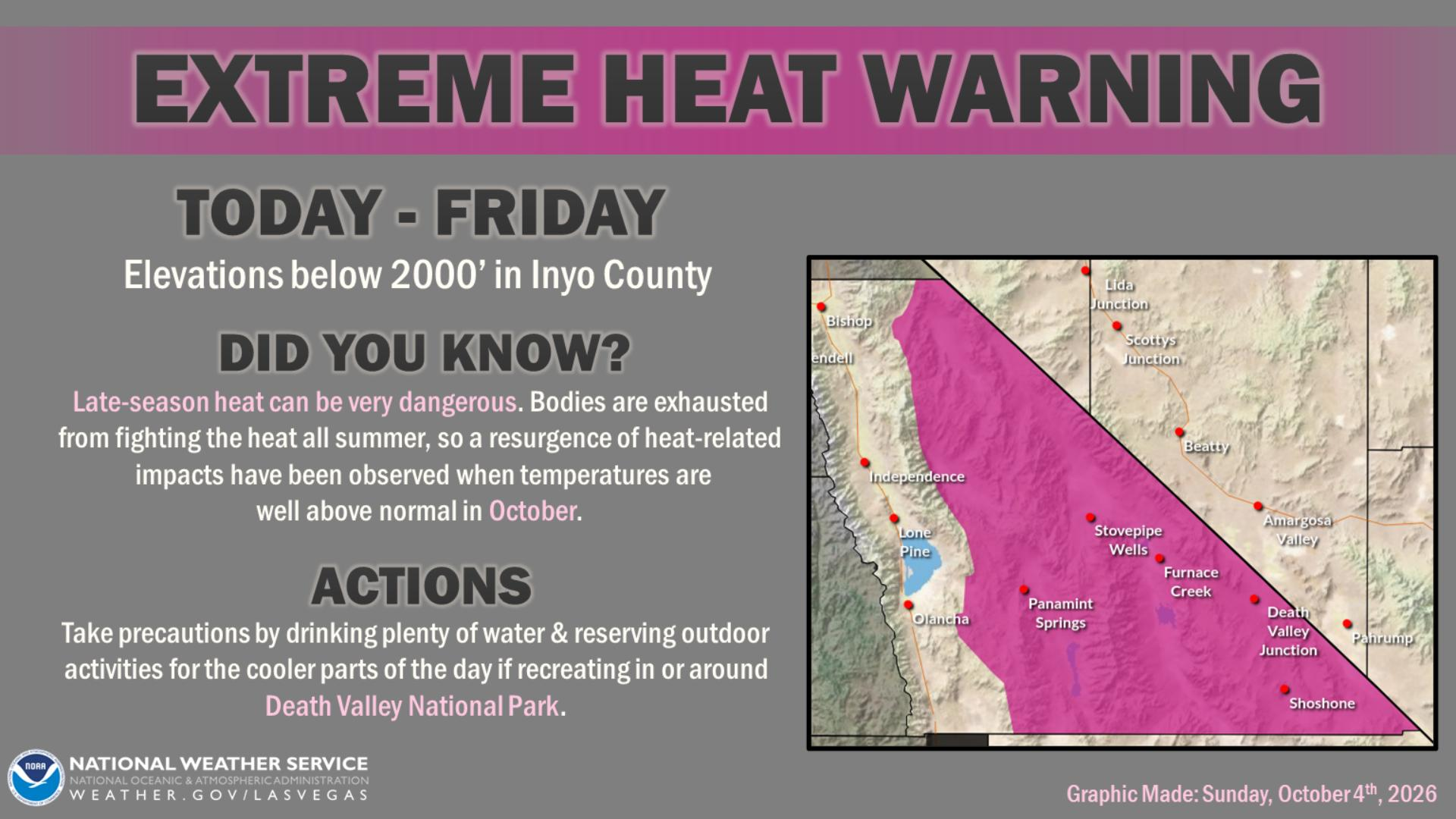
October camping in Death Valley calls for reconsidering any expectation that temperatures will cool sufficiently after dark. An alert issued by NWS Las Vegas at 3:39 PM PDT on October 8 forecast daytime highs near 110°F and overnight lows of 80–85°F. The Extreme Heat Warning for areas below 2,000 feet remained in effect through 8 PM PDT on October 9, with travelers lacking adequate cooling and hydration potentially facing serious impacts.
Areas Affected
The warning covered low elevations in Death Valley National Park, with Furnace Creek, Shoshone, and Stovepipe Wells included in the advisory. Not every part of the park has the same elevation or temperatures, but visitors should check the warning for major low-elevation lodging areas and sightseeing routes. Even travelers planning only a brief daytime visit should account for stops along the way and time spent outdoors.
Campground operating status should also be checked separately from the weather. An NPS operations page updated October 2 listed Furnace Creek and Mesquite Spring, among others, as open. Sunset, Texas Spring, and Stovepipe Wells campgrounds were seasonally closed, while Emigrant was listed as closed indefinitely because of a water-system problem. These closures should not be interpreted as new measures caused by this heat event.
Amenities can vary even among open campgrounds. NPS information indicated that Wildrose Campground had no water. Bonnie Claire Road and the access route to Scotty’s Castle remained under preexisting closures related to flood recovery. Finding an operating campground and confirming that the destination can actually be reached are separate steps.
What RV Travelers Need to Know
The most notable figure in this forecast is the overnight range of 80–85°F. Travelers who plan cooling use around the assumption of a substantial nighttime temperature drop may be underprepared. Confirm whether the RV site you reserved has electrical hookups and what amenities it actually provides; if continuous cooling is not possible, consider changing lodging. Do not confuse a campground’s general amenities with the power conditions at an individual site.
NWS advised staying in air-conditioned indoor spaces and limiting sun exposure and strenuous outdoor activity. NPS also recommends avoiding valley hikes during hot periods. Children and pets should never be left in vehicles. Even if sightseeing time is shortened, travelers should have adequate water and an air-conditioned place to rest; if anyone feels unwell on site, getting help should take priority over continuing the itinerary.
The end time of an Extreme Heat Warning does not mean every travel hazard has ended. Park safety guidance also calls for checking flash-flood risks in valleys and narrow canyons when rain is forecast. Cell service is limited in many parts of Death Valley, so it is advisable to save weather, road, and campground operating information before departure. Plans after October 9 should be reviewed against the latest forecast, and previously closed roads and campgrounds should not be assumed to reopen automatically.
Sources checked: NWS Extreme Heat Warning · Death Valley operations and road information · Death Valley safety information
Photo: NOAA / NWS Las Vegas / Original photo page (Public Domain)