
RV travelers approaching Joshua Tree on Thursday, November 19, face a wind advisory beginning at 10 a.m. PST and continuing until midnight. The National Weather Service advisory includes the Morongo Basin and forecasts southwest winds of 20–30 mph with gusts reaching 45 mph across its coverage area. That puts the drive into the park’s northern gateway communities within the period of concern.
The advisory specifically identifies difficult driving conditions for high-profile vehicles. It also warns that unsecured outdoor items may blow around and that isolated power outages are possible. These are forecast impacts, not confirmed reports of closures or damage. For travelers towing into camp, the warning is a reason to reassess the arrival time rather than relying on a relatively mild daytime temperature alone.
Areas Affected
The 2:07 a.m. PST Joshua Tree point forecast calls for scattered showers mainly after noon, a 50% precipitation chance and a high near 60°F. Its local gust forecast reaches 22 mph, below the regional advisory’s maximum. Those two products describe different geographic scales: the lower point forecast is not a guarantee that the entire approach through the Morongo Basin will stay below advisory-level gusts.
That forecast represents the community at about 2,700 feet, not every campsite inside Joshua Tree National Park. The park’s conditions guidance emphasizes the wide elevation range and location-dependent weather. Thursday night’s town forecast drops to about 42°F; Friday is expected to be sunny near 59°F, followed by a low near 39°F. Campers staying at higher elevations should check their actual location rather than use the gateway temperature as their overnight planning figure.
What RV Travelers Need to Know
The NPS campground page lists Jumbo Rocks at 4,400 feet with no water, while Black Rock is at 4,000 feet and Cottonwood at 3,000 feet, both with water and dump stations. Those differences matter for a wet, windy arrival: select a site that fits the RV and its supply needs before entering the park, rather than planning to move between campgrounds after dark.
Reservations are required at Black Rock, Cottonwood, Indian Cove, Jumbo Rocks and Ryan. NPS recommends booking before entering because cell reception is limited. Hidden Valley and White Tank are first-come, first-served but have a 25-foot combined vehicle-length limit, so they are not automatic backups for a longer motorhome or truck-and-trailer combination. Check the individual reserved site’s parking limits as well.
If weather changes the arrival plan, NPS asks campers arriving one or more nights late to leave a message at 760-367-3001 to help avoid cancellation. Overnight roadside parking inside the park is not an alternative campsite. Before departure, consult the park’s current-closures map and Caltrans QuickMap for the route; neither the forecast nor a campground listing confirms that every road will remain unaffected through Thursday night.
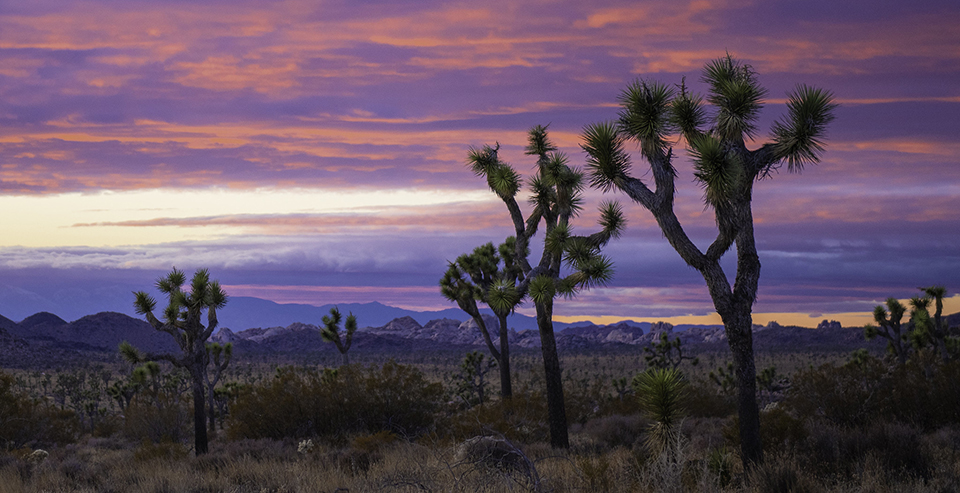
Photo: Emily Hassell/National Park Service, via USGS. Public domain.