
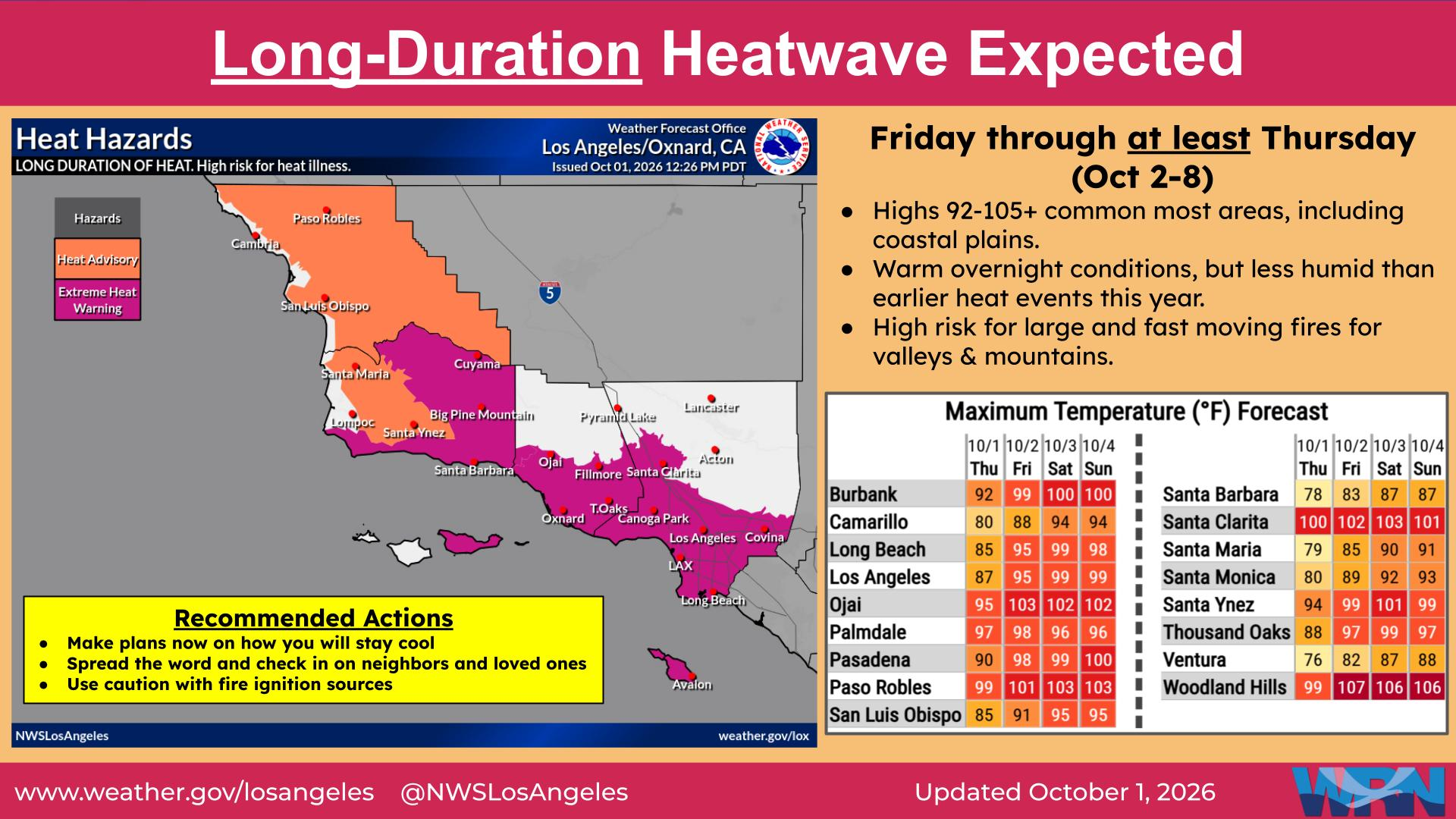
If you planned a beach camping trip at Point Mugu or Malibu, prepare separately for heat along the coast as well. The Extreme Heat Warning issued by NWS Los Angeles/Oxnard at 5:38 a.m. PDT on October 2 is in effect from 10 a.m. that day through 8 p.m. on October 8. Highs are forecast to reach 90°F along the coast and up to 105°F in inland valleys.
This warning does not describe heat that ends simply by avoiding the middle of one day. NWS also indicates that hot weather could continue into the second week of October, but that should not be read as an extension of the warning through that period. Make stay plans based on the currently confirmed validity period, and travelers staying several days should check updated forecasts.
Areas Affected
The coastal impact area includes the Malibu Coast, Ventura County beaches, and Oxnard, Port Hueneme, and Point Mugu. Ojai and the San Fernando and Santa Clarita valleys inland are also under the warning. If your trip takes you between the beach and inland areas, do not judge heat across the entire route by the temperature at just one lodging location.
Point Mugu State Park includes the Sycamore Canyon and Thornhill Broome campgrounds. The park is a coastal destination accessed along Highway 1 south of Oxnard. This weather warning is not a closure notice for these campgrounds; check park information separately for current operations and reservation status.
What RV Travelers Need to Know
NWS recommends drinking plenty of water, resting in air-conditioned places, and limiting sun exposure. When planning beach walks or outdoor meals, it is wise to reduce time spent outdoors for extended periods around midday. Identify an air-conditioned place to rest in advance, including the possibility that you may need to leave the park.
Plans to rest in an RV should be made only after confirming actual cooling conditions. Check the electrical availability at your reserved site and whether you can run the vehicle’s air conditioning, and prepare an alternative stay plan if cooling is unavailable. Do not assume that a vehicle or tent will stay adequately cool simply because it is near the coast.
Just before departure, check both the local NWS forecast and park notices. The accompanying map is an October 2–8 outlook updated October 1 and shows forecast temperatures ahead. Do not treat it as observed temperatures; adjust travel times using the latest forecast for your reservation dates and actual location of stay.
Photo: NOAA/NWS Los Angeles/Oxnard / Original photo page (Public Domain)