
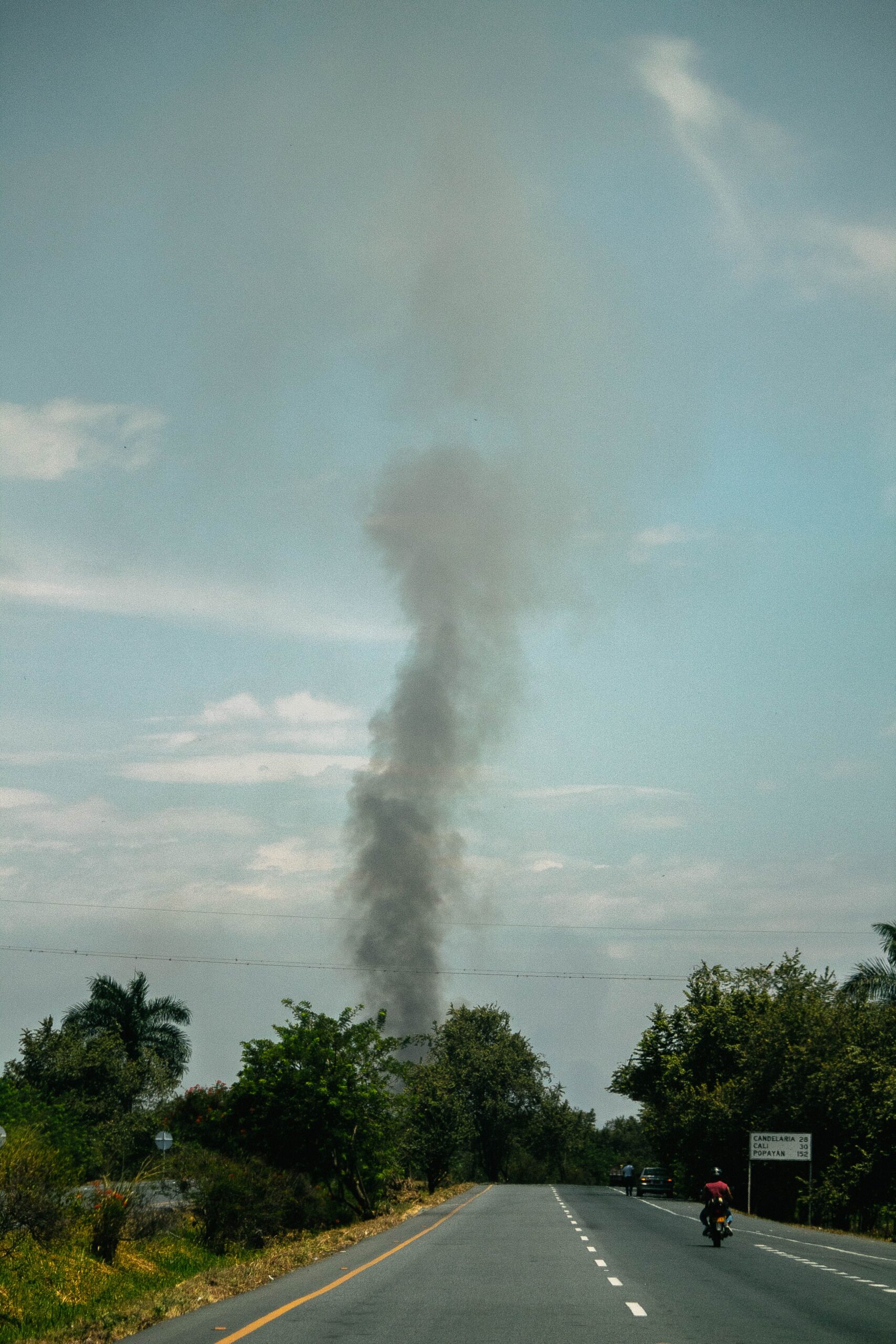
Even if no flames are visible around a campground, a wildfire-affected trip may already be underway. Smoke can travel hundreds of miles on the wind, leaving a reserved campground open while its air becomes hazardous. An RV has the advantage of mobility, but it is not as completely sealed as a house. When widespread smoke impacts persist, as they did in summer 2026, air quality, fire locations, road closures, and evacuation routes deserve the same attention as the weather forecast.
Smoke Travels Farther Than Fire Lines
In mid-July 2026, RVTravel reported air-quality alerts across multiple regions and cautioned travelers not to assume they were safe simply because no fire was nearby. That same week, RV.com recommended the AirNow Fire and Smoke Map as a pre-departure planning tool. Both outlets’ advice aligns with AirNow’s official guidance. The Fire and Smoke Map brings together current fine-particle air quality, smoke plumes, fire locations, and, where available, local smoke outlooks.
A smoke plume visible by satellite and air quality at ground level are not the same information. AirNow explains that satellite smoke layers may not be visible at night or beneath clouds, and smoke aloft can differ from ground-level readings. Do not make a decision based only on the gray bands on the map; also review AQI readings from nearby permanent and temporary monitors, as well as corrected sensors.
Turn AQI Numbers Into Camping Decisions
An AQI of 0–50 is Good; 51–100 is Moderate; 101–150 is Unhealthy for Sensitive Groups; 151–200 is Unhealthy; 201–300 is Very Unhealthy; and 301 or higher is Hazardous. These numbers do not tell you whether a destination is “open” or “closed.” Instead, they are health signals to help decide whether to reduce hiking intensity, stay indoors, or relocate.
Travelers with asthma, chronic lung disease, or heart disease, as well as older adults, children, and pregnant travelers, should take a more cautious approach. Even normally healthy adults should reduce exposure if they experience burning eyes, a sore throat, coughing, headache, shortness of breath, or unusual fatigue. If symptoms persist or worsen, medical advice takes priority over camping tips.
Hoping that it will clear up after just one day is not a plan. AQI can change within hours when the wind shifts. Check once before departure, once at a rest stop while traveling, and again after arriving at camp. Decide whether to hike the next day based on that morning’s current readings, not the prior night’s forecast.
Create a Clean-Air Zone Inside the RV
When smoke moves in, close windows, doors, and roof vents, and limit trips in and out. If the dashboard climate control or a separate ventilation system offers fresh-air and recirculation settings, use recirculation according to the owner’s manual. Do not assume every RV air-conditioning system is built alike. Check the equipment manual to determine whether a roof unit recirculates cabin air only or has a separate fresh-air intake.
Gaps in door and window weatherstripping, cable pass-throughs, and slide seals can all let smoke enter. Even when sealing gaps temporarily, never block emergency escape windows, propane-appliance exhaust vents, or the refrigerator’s exterior ventilation openings. Blocking safe exhaust from combustion appliances in an effort to keep out smoke creates other hazards.
Portable air cleaners can help reduce fine particles. EPA’s 2026 wildfire-smoke guidance identifies a clean-air delivery rate capable of filtering the room volume four to five times per hour as an ideal selection benchmark. Match the smoke-particle CADR listed on the product box to the RV’s interior size, and run the unit continuously with doors and windows closed. Do not choose solely because a product says “HEPA”; check its actual airflow, power use, and whether replacement filters will be available.
The thin, washable filter in an RV air conditioner is primarily intended to catch larger dust and protect the heat exchanger. It should not be treated as equivalent to a high-performance air-cleaner filter. Forcing in a denser filter that the manufacturer does not permit can reduce airflow and cause the unit to freeze up or overheat. A better approach is to use a separate portable air cleaner and clean or replace the existing filter as directed in the manual.
Do Not Create Indoor Pollution Yourself
On smoky days, avoid particle-producing activities indoors, including frying, high-heat cooking, candles, and smoking. AirNow also advises reducing use of gas-, propane-, and wood-burning appliances. Adding cooking smoke in a small RV that cannot be ventilated increases the burden on an air cleaner. Choose lower-particle options such as cold meals or electric cooking, and if cooking is necessary, follow local alerts and equipment safety guidance first.
After ash has accumulated, dry sweeping or aggressive vacuuming can send particles back into the air. Wipe hard surfaces and vent covers with a damp cloth, and wash bedding and clothing if they have absorbed the odor. After relocating, inspect the cabin filter in the motorhome or tow vehicle as well. Have a bag ready when removing the filter so accumulated dust does not fall into the interior.
An N95 Is a Backup Tool, Not an Escape Plan
AirNow explains that cloth masks do not protect against wildfire smoke. If you must go outside, a well-fitting N95 respirator can help reduce exposure. Facial hair, gaps, and loose straps reduce its effectiveness. Wearing an N95 does not make it safe to continue strenuous activities such as long hikes or biking.
A mask does not cool an RV interior, produce oxygen, or address gaseous hazards such as carbon monoxide. If a closed-up RV becomes too hot and there is no power or air conditioning, staying inside to avoid smoke can itself become dangerous. AirNow advises moving to a public shelter with cooling and filtration or to other lodging when indoor temperatures cannot be kept comfortable.
Prepare to Leave Before an Evacuation Order
Thickening smoke, falling ash, and increased fire-engine or aircraft activity can indicate worsening conditions. The absence of a mandatory evacuation order should not be translated as “no problem.” RVTravel recommends keeping awnings, rugs, chairs, bicycles, and grills to a minimum when fire danger is high. When you may need to leave within minutes, packing time becomes exposure time.
Position the tow vehicle for hookup as much as possible, and keep keys, wallet, medications, identification, pet leashes, chargers, and reservation information together. Do not rely on a single campground access road; identify exits in different directions on a map. Road closures can stop travel before the fire does. Monitor notices from local transportation agencies, forestry and fire agencies, and campground operators along with AirNow.
Also consider the possibility of lost cell service and power. Prepare paper maps or offline maps, a battery-powered radio, backup power, and emergency contacts. Let family or friends know your current campground and next destination so the search area is smaller if communication is lost.
Five Signs to Help Decide Whether to Stay or Leave
- AQI rises to the Unhealthy for Sensitive Groups or Unhealthy range, with no outlook for improvement.
- Smoke odor and irritation persist indoors even after doors and vents are closed and an air cleaner is running.
- Someone develops symptoms such as coughing, shortness of breath, chest discomfort, or a severe headache.
- Ash is falling, visibility is worsening, or road and campground conditions are changing quickly.
- There is not enough power or cooling capacity to keep the interior at a safe temperature.
If even one of these factors is serious, having time to relocate matters more than the cost of a reservation. It is especially safer to leave before nightfall, while visibility remains and before traffic builds. One of the greatest advantages of RV travel is the ability to change course. In the face of wildfire smoke, do not hesitate to use that flexibility.
Official Links to Save Today
- AirNow Fire and Smoke Map
- How to Use the AirNow Map During Wildfires
- Reduce Smoke Exposure With AirNow
- EPA Strategies to Reduce Indoor Smoke Exposure
- RVTravel’s 2026 Guide to Handling Wildfire Smoke in an RV
- RV.com’s 2026 Guide to Handling Wildfire Smoke in an RV
Photo: Nicolás Rueda / Pexels · Original photo page