
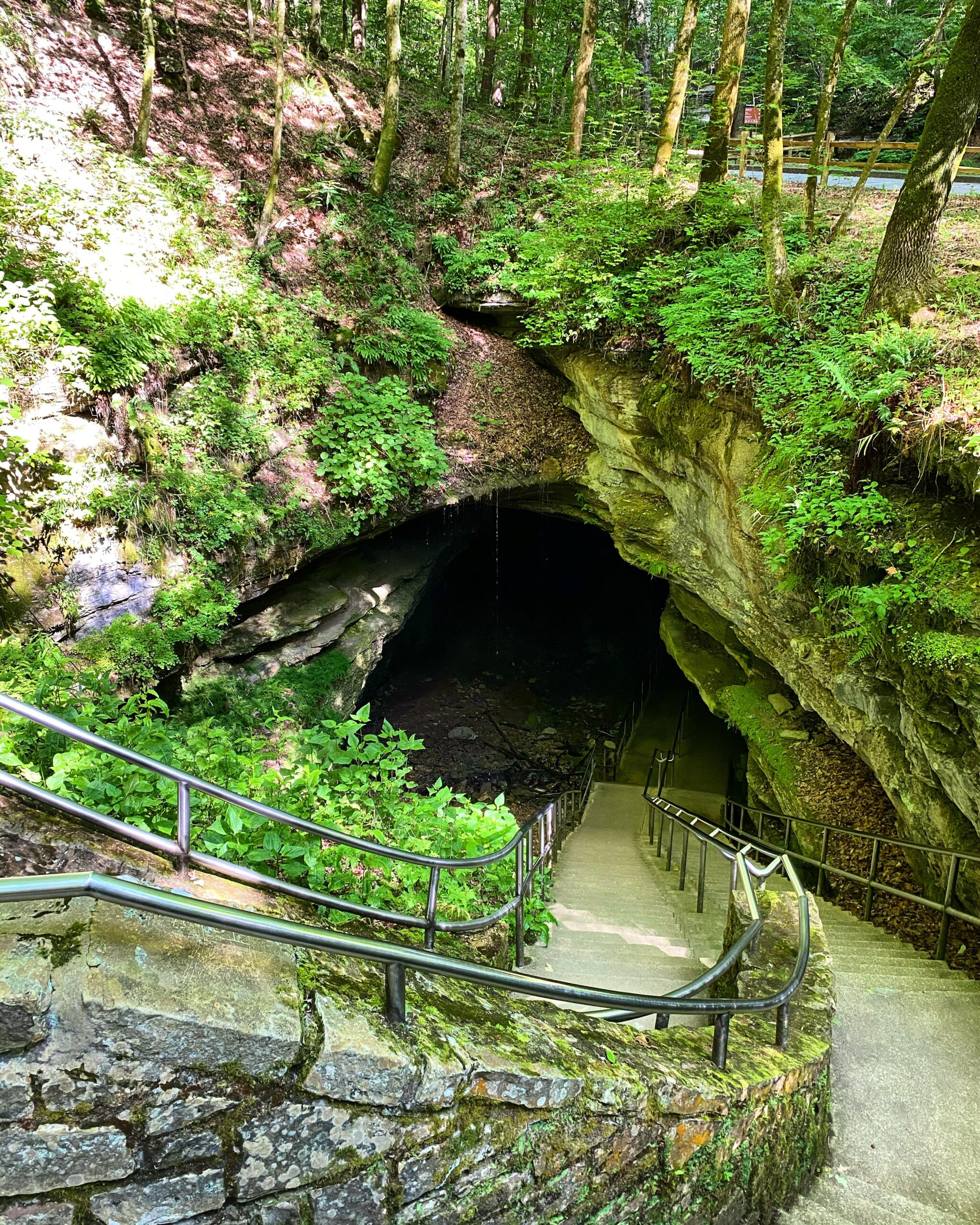
The forest is bright and humid at midday, while the world beneath the visitor center remains close to 54°F year-round. RV camping at Mammoth Cave is remembered less for dramatic overlooks than for the contrast in temperature and pace. In the morning, you can drink coffee in a forest crossed by wild turkeys; by afternoon, descend into underground passages; and by evening, return to the small glow of your RV. Choosing the right site here is about more than asking how close it is to the cave. Consider RV and trailer length, whether you need hookups, cave-tour reservations, and Green River Ferry operations. Campgrounds within the same park can be entirely different experiences.
400 Miles Underground, One Day Aboveground
Mammoth Cave is described as the world’s longest known cave system, with more than 400 miles of mapped passageways. For RV travelers, though, the route matters more than the number. Tickets are required to enter the cave, and the NPS strongly recommends booking ahead. Walk-up tickets may not remain available, so reserving a campground first and choosing a tour later can be risky during the busy summer season. The easier approach is to check tour times first, then plan campground reservations and travel days around them.
It is best not to schedule a cave tour for the day you arrive after a long drive. Checking in, leveling the RV, checking tank levels, and getting oriented for the next day can make an evening disappear quickly. Scheduling the first tour for the following morning or early afternoon leaves the RV trip feeling more relaxed. The cave stays around 54°F even in summer, so a light layer and slip-resistant shoes are useful. Aboveground, days commonly reach the upper 80s°F and humidity can be high. It can feel like experiencing two entirely different seasons in one place. Before leaving the RV, check the air conditioner and power supply; travelers with pets should also have a separate plan for an outage or tripped breaker.
The Closest Option: Mammoth Cave Campground
Mammoth Cave Campground is about a five-minute walk from the visitor center. It is the simplest choice for travelers building their day around cave tours and the visitor center. Many sites do not have hookups, making it best suited to travelers who can manage their own tanks and batteries. Longer RVs and groups that need electricity and water may be better served by Maple Springs Campground. For those seeking quiet in the woods, Maple Springs is the more secluded option.
If part of your route depends on the Green River Ferry, check its operating status in advance. Recreation.gov information notes that the detour may take about 45 minutes when the ferry is unavailable. Confirm ferry operations and trailer requirements with the park before departure. It is wise not to follow a navigation app’s shortest route into narrow roads with a long rig.
Houchin Ferry by the River Is Not an RV Campground
Houchin Ferry Campground catches the eye on reservation pages with its appealing 12 sites along the Green River. However, NPS information identifies it as tent-only, with no RVs or trailers permitted. It is easy to mistake vehicle access for RV suitability, but drive-up tent camping and RV accommodation are different things. The campground is 15 miles from the visitor center and has no cell service, showers, or dump station. It can work as a daytime destination for fishing or a riverside picnic, but it should not be used as an overnight base for an RV. This is why it is important to check the “RV allowed” field before reserving.
Three Things Easy to Miss When Booking for Summer
First, treat cave-tour and campground reservations as one plan. On days without cave tickets, you can enjoy surface trails and the riverbank, but that can be disappointing if the cave is the focus of your trip. It is better to choose the difficulty level and time of the tour you want first, then build your camping schedule around it.
Second, plan for power. Standard sites do not have electric hookups, so do not assume you can run air conditioning continuously during summer. Generator hours are 8 a.m. to 8 p.m., while quiet hours are 10 p.m. to 6 a.m. Rather than relying only on a generator, factor in shade, ventilation, battery capacity, and how you will operate the refrigerator.
Third, consider communications. Cell service is limited in the park, and campground internet is not available. Download reservation confirmations, cave tickets, and campground maps in advance. Setting a meeting time and place before family members split up may seem old-fashioned, but it is a practical precaution here.
How to Factor Current Alerts Into Your Itinerary
NPS alerts state that the elevator used for accessible tours is out of service because of a mechanical issue, suspending those tours. Portions of Old Guides Trail, Heritage Trail, Sunset Point Trail, and Sinkhole Trail are also closed for restoration work. Travelers with accessibility needs or plans for aboveground walks should check alerts again immediately before departure. When selecting another trail on the fly because a route is closed, consider slope and trail surface as well as distance. After a cave tour, you may already have climbed many stairs, so it is best not to pack the evening with another demanding walk. Mammoth Cave’s appeal lies not in seeing as much as possible, but in experiencing the different rhythms above and below ground.
Which RV Travelers Will Enjoy This Place
Mammoth Cave Campground is a good fit for travelers who value location over hookups and can operate independently on their tanks and batteries for a day or two. Maple Springs is better suited to groups or longer RVs that need electricity and water but still want the quiet of the forest. If full hookups are essential, comparing private RV parks outside the park will provide more options. An ideal three-night itinerary leaves the arrival day open, schedules a cave tour on the second day, and reserves the third for surface trails or the riverbank. This avoids stacking travel-day fatigue on top of cave stairs and leaves room to adjust for weather or tour changes. You cannot see all 400 miles underground, but every time you open the RV door, the vast hidden space beneath the forest comes to mind.
It is also worth keeping a pre-departure checklist: confirm cave-tour reservations, check Green River Ferry operations, verify generator hours, identify areas with cell service, and review the latest NPS alerts page. Each item may seem minor alone, but when several go wrong at once, an entire day’s plan can unravel.
Even within the same park, campground differences are not always clear from reservation-page photos. Before relying on reviews or maps, check official facility information for hookups and maximum vehicle length, then compare it with the cave-tour schedule. During peak season, popular sites can sell out weeks ahead, so it is worth opening the reservation page as soon as your dates are set.
Reference materials: NPS API (developer.nps.gov) park, alert, and campground information / Recreation.gov RIDB facility information
Photo: NPS Photo/Thomas DiGiovannangelo, official National Park Service image (https://www.nps.gov/common/uploads/structured_data/947D4300-ECE7-A506-8A6FF2BA4AECCFBB.jpg)