
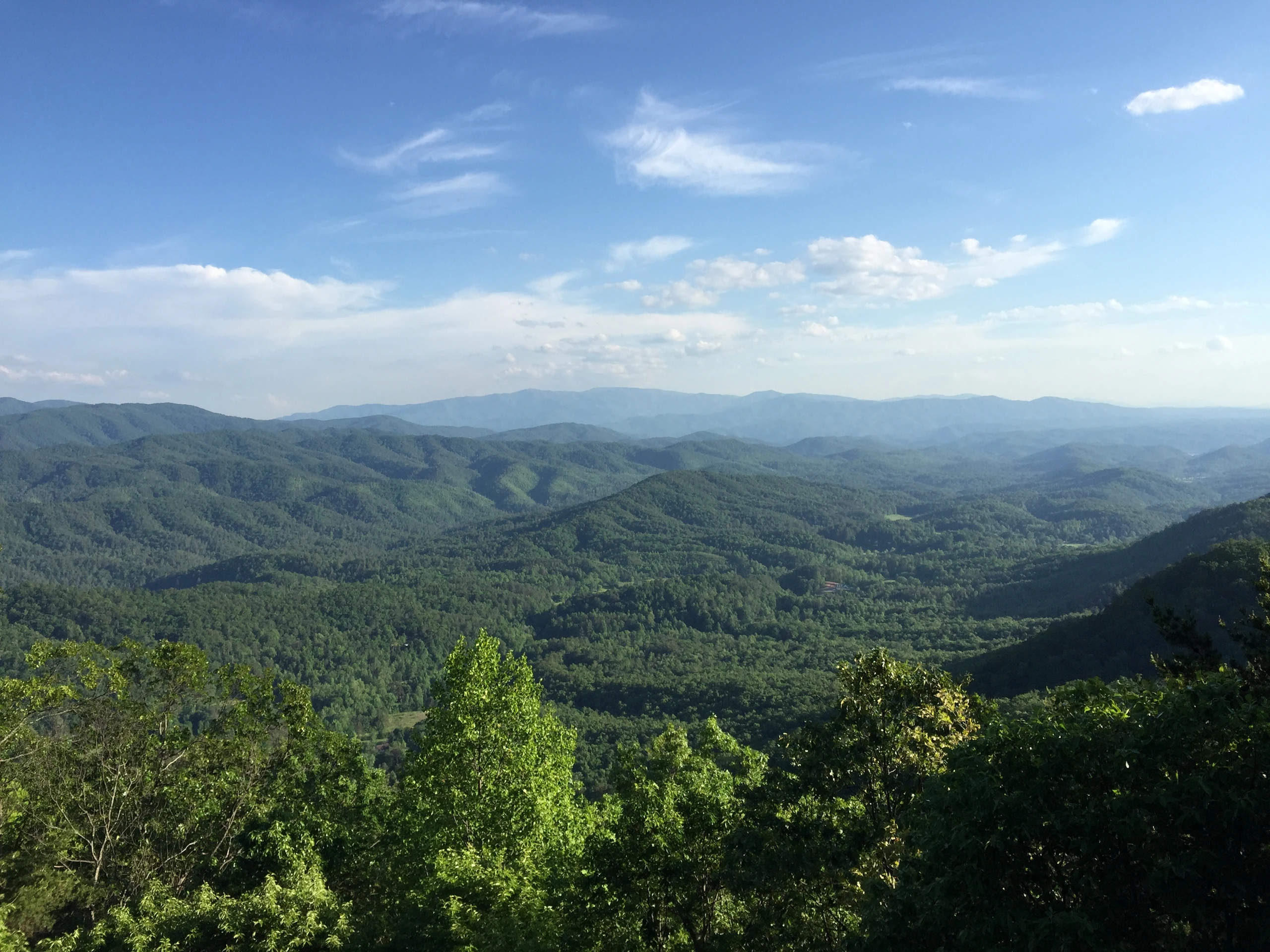
Great Smoky Mountains National Park is the busiest national park by visitation, but it can be unexpectedly challenging for RV travelers. Among the park’s nine frontcountry campgrounds, only 10 sites at Look Rock Campground have electric and water hookups; every other site is dry camping. None of the campgrounds has showers. Most sites cost a uniform $30 per night, however, and two campgrounds can accommodate RVs up to 40 feet. Ahead of October’s fall-color season, here is a campground-by-campground guide based on official NPS data.
Two year-round campgrounds: Smokemont and Cades Cove
Smokemont Campground is the closest campground to the Oconaluftee Visitor Center on the North Carolina side. At an elevation of 2,198 feet, it has 142 sites, including 44 designated for RVs. RVs may be up to 40 feet long, while trailers are limited to 35 feet. Interior campground roads and site access roads are paved, and the dump station and drinking water are available year-round. Loops A and B are open year-round; Loop C operates from March through late October; and Loops D and F operate from mid-May through late October. All loops are therefore open during the fall season.
On the Tennessee side, Cades Cove Campground sits at 1,807 feet and has 161 sites. It accommodates RVs up to 40 feet and trailers up to 35 feet. Its dump station and drinking water are also available year-round. Loop B and part of Loop C are open from mid-spring through November 30; in winter, only sites C1–12 and C26–61 are available by reservation. The camp store carries basic necessities and rents bicycles. One important consideration: through September 30, Cades Cove Loop Road is closed to motor vehicles every Wednesday and open only to pedestrians and bicycles. Travelers arriving on Wednesday who plan to drive the loop should shift their schedule by a day.
Elkmont has no dump station; Cosby has tight length limits
Elkmont Campground, the closest campground to Sugarlands Visitor Center, is the park’s largest with 211 sites. It can accommodate RVs up to 35 feet and trailers up to 32 feet, and its roads and site access lanes are paved. It has no dump station, however, so campers must travel 6 miles to Sugarlands Visitor Center. Drinking water is seasonal, and the campground itself closes seasonally.
Cosby Campground lies in a heavily shaded forest in the park’s northeast corner at 2,459 feet. Of its 157 sites, 134 are tent-only, and both RVs and trailers are limited to 25 feet. Unless travelers have a Class B or a small trailer, it is not a practical option. The dump station and drinking water operate seasonally.
Smaller outlying campgrounds: Cataloochee, Deep Creek, and Balsam Mountain
Cataloochee Campground is in Cataloochee Valley, known for elk viewing. Seven of its 27 sites are equestrian sites, and RVs and trailers are limited to 31 feet. Site access roads and pads are gravel, and the road into the valley is narrow and winding, making it a demanding approach for larger rigs. Deep Creek Campground, near Bryson City at 1,800 feet, has 92 sites and allows RVs and trailers up to 26 feet. With 60 tent-only sites and 42 walk-in sites, RV availability is limited. Its dump station operates seasonally.
Balsam Mountain Campground, at 5,310 feet, is the highest campground in the park. Summer daytime temperatures rarely exceed 70°F, and nighttime lows can reach 50°F. Its 43 sites accommodate RVs and trailers up to 24 feet. Travelers also need to account for the lack of a dump station and the absence of lighting in the restrooms. According to the current NPS alert, the one-way portion of Balsam Mountain Road (Heintooga Round Bottom Road) and Straight Fork are closed, so travelers should recheck access conditions before heading to this campground.
Abrams Creek Campground has only 16 sites, and the NPS specifically notes that its narrow, winding access road is not recommended for RVs and trailers. Trailers are also limited to 12 feet. All 12 sites at Big Creek Campground are tent-only, so RVs cannot camp there at all.
If you need electricity, Look Rock is the one option
Look Rock Campground is not in the main body of the park but along the western section of the Foothills Parkway between Walland and Chilhowee Lake. At 2,600 feet, it has 68 sites, 10 of which have electric and water hookups. Non-electric sites cost $30, while electric sites cost $36. Maximum RV length varies widely by site, from 13 to 48 feet, so campers should check the individual site specifications on recreation.gov before reserving. The dump station and drinking water are seasonal. As the only place in the park where campers can run air conditioning overnight, its fall-color weekends fill early.
Reservations, parking tags, and fall closures to check
Reservations are required at all frontcountry campgrounds and open six months ahead on recreation.gov. There are no first-come, first-served sites. Group campsites can be reserved 12 months in advance, and group sites at Elkmont, Cades Cove, and Smokemont operate through October 31.
There is no park entrance fee, but every vehicle parked for more than 15 minutes needs a parking tag. Tags cost $5 for a day, $15 for a week, or $40 annually, with the same price regardless of vehicle size or type. The NPS repeatedly notes in its campground descriptions that an America the Beautiful pass does not substitute for a parking tag when parking outside a campsite.
NPS alerts in effect at the time note that Park Headquarters Road is closed for Sugarlands water and wastewater construction; Abrams Falls Trail is closed Monday through Thursday through September 30; and the previously mentioned Wednesday vehicle restriction on Cades Cove Loop Road and closure of the one-way segment of Balsam Mountain Road remain in place. Traffic on Newfound Gap Road and Cades Cove Loop Road becomes heavy around peak fall color in mid-October, so RV travelers are better off moving early in the morning and remaining at the campground during the day.
How to choose by RV length and required facilities
When NPS data is arranged by length, the choices narrow quickly. Smokemont and Cades Cove are the only two options for 36- to 40-foot Class A motorhomes or large fifth wheels; trailers at both are capped at 35 feet. Elkmont joins the list for rigs measuring 32 to 35 feet, Cataloochee is available at 31 feet or less, Deep Creek at 26 feet or less, Cosby at 25 feet or less, and Balsam Mountain at 24 feet or less. Look Rock ranges from 13 to 48 feet depending on the site, so travelers should choose a site number before deciding based on length.
By amenities, the campgrounds fall into three groups. Dump stations are open year-round at Smokemont and Cades Cove; they are seasonal at Cosby, Deep Creek, and Look Rock; and they are unavailable at Elkmont, Cataloochee, Balsam Mountain, Abrams Creek, and Big Creek. Smokemont and Cades Cove are likewise the only two with year-round drinking water; at the others, water is seasonal. The NPS lists both cell service and internet as unavailable at all nine campgrounds, so reservation confirmations and maps should be downloaded before entering the park.
Elevation differences change clothing and heating plans. Cades Cove (1,807 feet) and Abrams Creek (1,125 feet) can still have warm October days, but Balsam Mountain (5,310 feet) can drop to 50°F at night even in summer, making it important to check LP supply for the heater before October nights. Because the park lacks electric hookups, electric heaters are not an option, and generator hours are governed by each campground’s posted quiet-hours guidance.
Data Source: NPS API (developer.nps.gov) / Recreation.gov RIDB
Photo: Famartin / Original photo. CC BY-SA 4.0. Photo date: 2017-05-17 18:54:14. Resized and compressed for display.
