
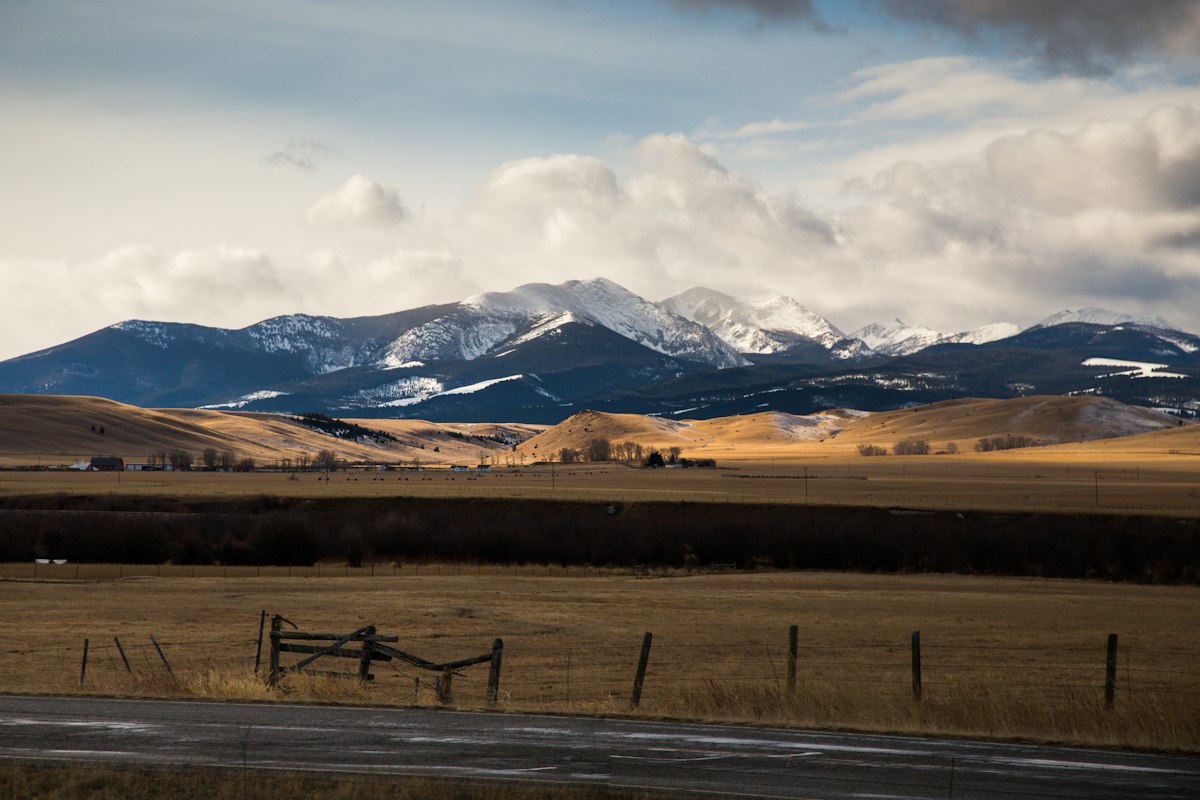
For RV travelers crossing the northern Rockies, the key weather factor on September 10 was dry wind rather than rain. A Red Flag Warning issued by the National Weather Service in Billings at 5:05 a.m. MDT that day was in effect from noon until 8 p.m. for Gallatin National Forest and parts of south-central Montana. Westerly winds were forecast at 15 to 25 mph, with gusts up to 40 mph, while relative humidity could fall as low as 10%. These conditions can allow any fire that starts to spread dangerously.
Areas Affected
The affected areas listed by the Billings weather office included the relevant forecast zones in Gallatin, Park, Sweet Grass, Wheatland, Golden Valley, and Musselshell counties. Conditions were expected to be especially poor at lower elevations that had received little rain during the previous week. Travelers heading east through the Bozeman area needed to check warning zones for both their destination and planned stops, rather than relying on a forecast for one city alone.
The Red Flag Warning for the Casper and Natrona County area of Wyoming remained in effect until 9 p.m. MDT that day. The Riverton weather office forecast gusts up to 30 mph and minimum relative humidity of 7%. Idaho’s Upper Snake River Valley was also under a warning from noon to 8 p.m., with gusts forecast as high as 35 mph. Warning expiration times varied when a route crossed state lines.
What RV Travelers Need to Know
A Red Flag Warning signals dangerous fire-weather conditions. Whether a particular campground allows campfires, charcoal grills, or propane equipment must be confirmed separately with the land-management agency and campground operator. A warning does not necessarily mean every campground is closed. For that day’s plans, the priority was to skip outdoor fires and check the operator’s latest guidance.
Motorhome and trailer travelers should not treat a high-wind forecast as an issue limited to the campground. Before departing, it was important to check wind forecasts separately for the destination and the travel route. If driving became unstable, it was better not to push to cover the planned distance. Road-specific restrictions and detours needed to be checked separately through real-time notices from each state’s transportation agency.
Those planning to arrive in the afternoon were advised to confirm their reservation and ask the operator about fire rules, how emergency notices would be delivered, and evacuation instructions. Separate fire restrictions did not automatically end when the warning expired. Before traveling the following day, travelers needed to check for new warnings rather than relying on the previous day’s information.
More information: NWS September 10 Red Flag Warnings · What NWS wildfire warnings mean
Photo: Matthew Lancaster / Original photo: Unsplash · Unsplash License