
Turning on a water heater with no water in it can damage the heating element in as little as 30 seconds. That is one reason RV water heaters can be more demanding to maintain than other appliances. Unlike a household water heater, an RV unit operates on gas, electricity, or sometimes both within a compact tank—and must also withstand road vibration. A few basic practices can add years to its service life.
Why You Should Never Turn It On With an Empty Tank
Most RV water heaters work by filling a small tank of about 6 gallons and heating the water inside. Trouble begins when power is supplied while that tank is empty. Without water to absorb and carry away heat, the heating element or burner can overheat almost immediately; in the worst case, the tank itself may be damaged. This is one of the most common mistakes when reopening an RV after winter storage or restarting it after maintenance. Before filling the tank, make sure the water heater is switched off. After filling it, confirm water is flowing from a faucet before turning the power back on.
Check the Anode Rod Every Quarter
Tank-style water heaters from brands such as Suburban contain a magnesium anode rod. This replaceable rod gradually dissolves as it absorbs corrosion that would otherwise affect the inside of the tank. Once the anode rod is fully depleted, the tank itself can begin to corrode. Full-timers who live in and use their RVs year-round should drain the tank and inspect the rod once per quarter. For occasional campers, checking it at least once every six months is the safer approach. If more than half the rod has worn away, it is time to replace it. On-demand water heaters from brands such as Girard and Truma do not use anode rods, but they require their own manufacturer-recommended descaling procedures.
Flush It Before Camping Season Ends
Mineral sediment gradually collects at the bottom of the tank. As that buildup thickens, it can reduce water-heater efficiency and make the unit noisier. Maintenance is straightforward: turn off the water heater, wait for the water to cool completely, then open the exterior drain plug and empty the tank. Use a flushing wand or a garden nozzle to spray the inside of the tank forcefully and rinse out the sediment. Opening the plug while hot water remains inside can cause burns, so wait until the water has cooled.
Can You Leave It Connected to 120-Volt Power?
For a combination water heater with an electric heating element, leaving it on while connected to campground power is generally not a major problem. If hot water will not be needed for an extended period, though, switching it off can reduce electric costs and unnecessary wear. Propane burners are a different matter. Because combustion may continue for long periods in an enclosed space, turning off the gas side of the water heater when leaving the RV is closer to a basic safety practice. If the RV has a propane alarm, verify that it is working properly before going to sleep with the water heater left on.
Drain It Before Winter Storage
If an RV will be stored through winter in an area where temperatures fall below 32°F, completely drain the water-heater tank and use the bypass valve so antifreeze circulates only through the plumbing, not through the tank. Water left in the tank can freeze and crack it, creating a far more costly repair than replacing an anode rod. When the season begins again in spring, return the bypass valve to its normal position and remember to fill the tank before following the power-up sequence described above.
The Difference Between Gas, Electric, and On-Demand Models
RV water heaters generally fall into three categories. Traditional tank models from brands such as Suburban and Atwood preheat and store about 6 gallons of water using propane, electricity, or both. They are easy to use, but once the tank runs out of hot water, users must wait for it to heat again. On-demand models from brands such as Girard and Truma heat water as it flows, without a tank, providing a continuous supply of hot water while weighing less. They cost more upfront, however, and may have limited temperature rise when incoming water is especially cold in winter. Checking the water-heater type before choosing a trailer can help RVers plan their campground shower routines.
How to Recognize Warning Signs
A rotten-egg smell from a water heater may indicate that sulfur bacteria inside the tank are reacting with the anode rod. Draining the tank, sanitizing it once with a diluted hydrogen peroxide solution, and refilling it will usually resolve the issue. Difficulty igniting the heater or hot water that cools quickly is often caused by soot around the burner or mineral scale. If a basic inspection does not resolve the problem, it is safer to use a certified RV service shop than to force a disassembly.
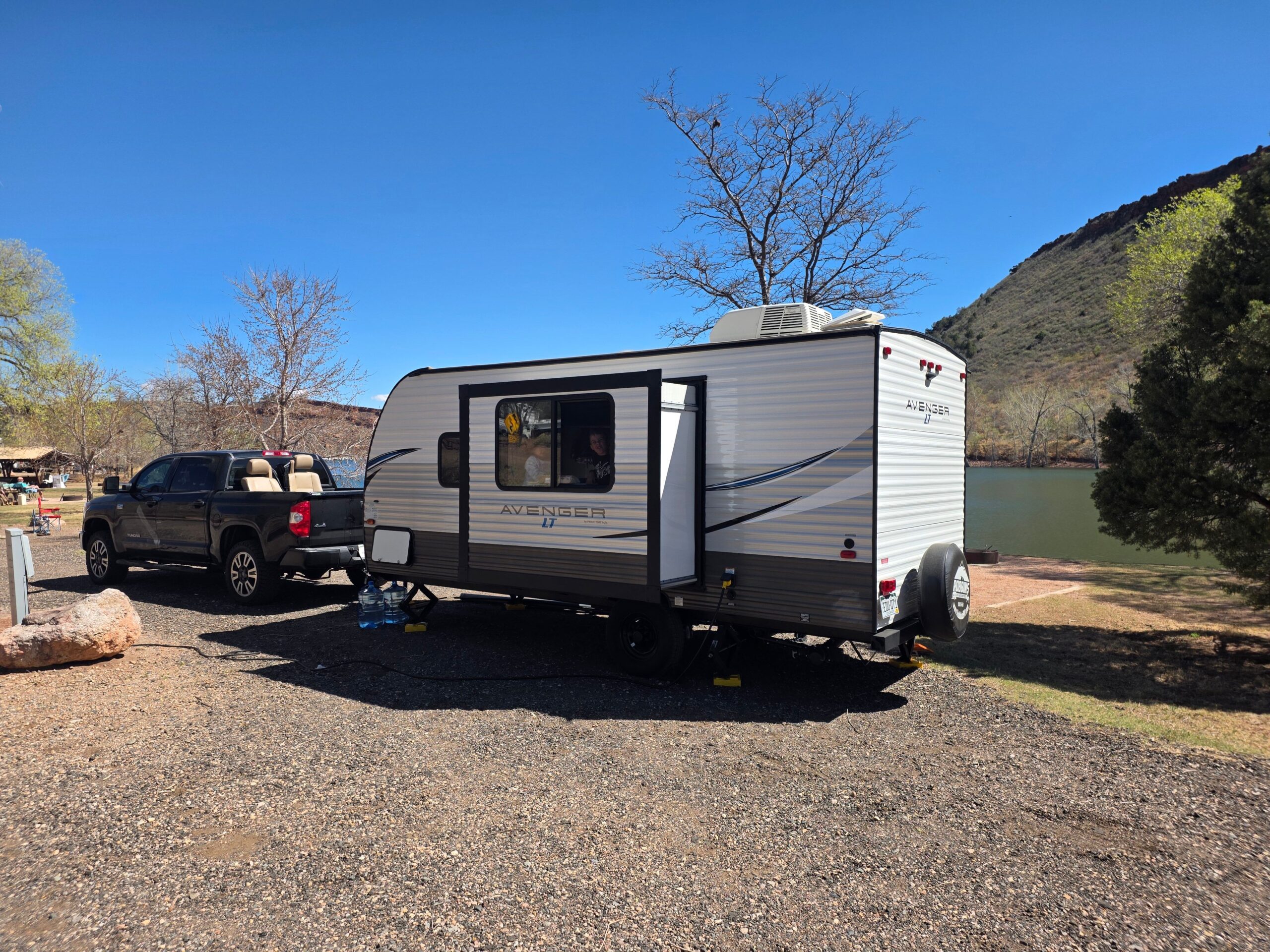
Photo: Vadim Bostanzhy, Pexels (Free to use) — https://www.pexels.com/photo/camping-by-the-lake-with-caravan-and-truck-37114015/