
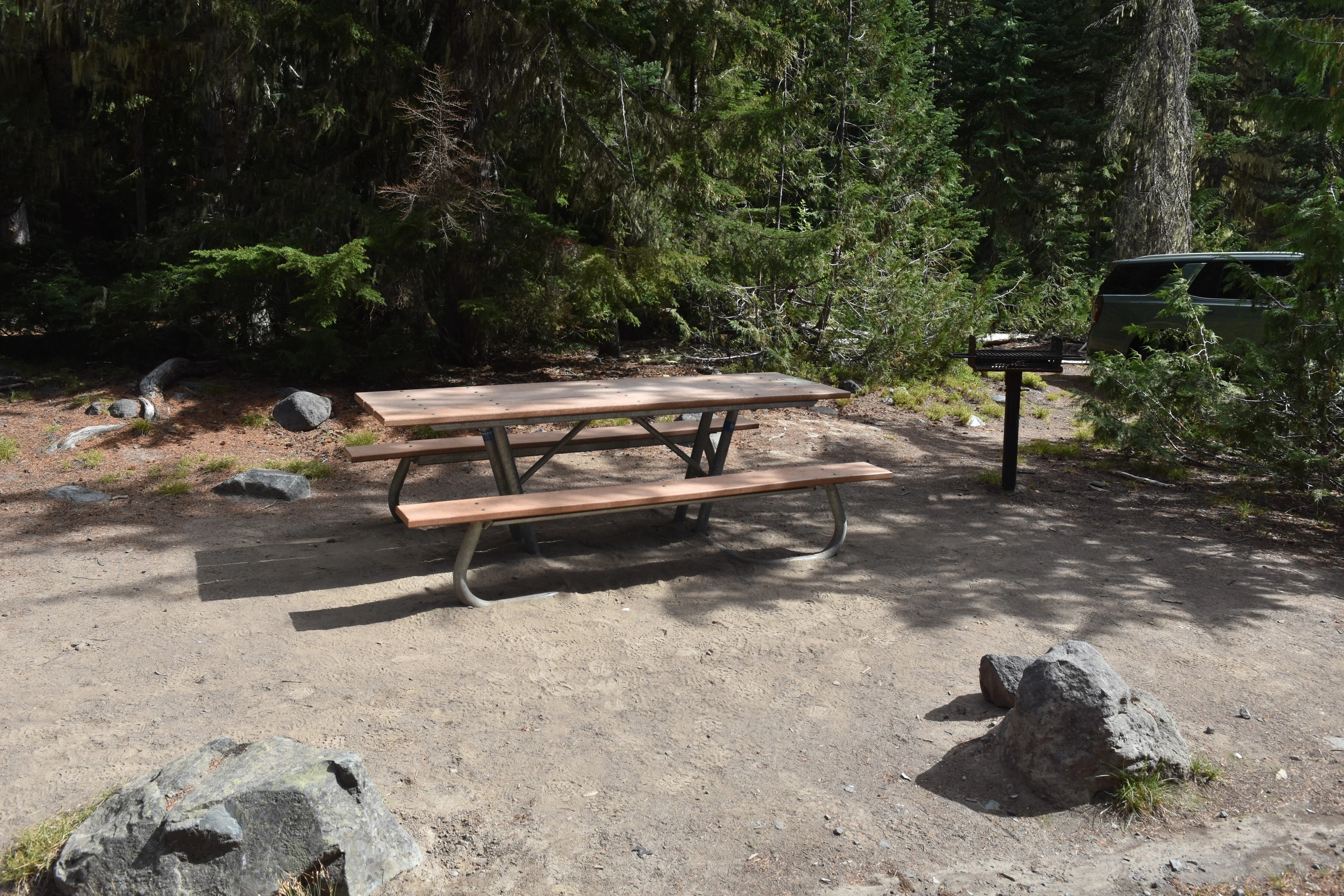
This summer, RV campers at Mount Rainier National Park had effectively been left with one campground option. None of the park’s three campgrounds offered hookups to begin with, and Ohanapecosh, one of the larger facilities, closed for the entire summer for rehabilitation work. The park’s notice was brief and unequivocal: “The entire Ohanapecosh Campground area is closed during construction, including campsites, the visitor center, restrooms, and access to the Ohanapecosh River.”
Ohanapecosh Closed in Its Entirety
Ohanapecosh, normally a major 179-site campground in the park’s southeast section, sat in the woods at 1,914 feet along the road south of Longmire, known for deep shade and the nearby sound of the river. But the 2026 rehabilitation project took the entire campground out of service for the season. No reopening date had been announced. Since the campground normally operated only from late May through early October, reopening could be at least another season away. The closure covered not only campsites but also the visitor center, restrooms, and riverside trail, making even a brief stop to use the restroom impossible.
Cougar Rock: Just 24 RV Sites Among 179
That left Cougar Rock Campground as the remaining option. Located midway along the road from Longmire to Paradise, in a steep valley beside the Nisqually River, it had 179 sites. Of those, 133 were reservable and 24 were designated for RVs. Site-specific rules listed on Recreation.gov showed that maximum vehicle lengths varied widely, from 20 to 35 feet. Many driveways had gravel surfaces and required backing in, so travelers with larger rigs would be wise to check the driveway length for each site number in advance.
There were no electric, water, or sewer hookups. Across all three campgrounds, the number of electric sites was zero. Visitors needed to plan for fully self-contained dry camping. Rates were $20 per night per site, $10 for the discounted rate, and $60 for group sites. The campground typically operated from late May through early October, with exact dates changing each year based on snow conditions. Checkout was at noon.
14 Miles From Ashford, 2 Miles From Longmire
Cougar Rock Campground did not have a formal street address. It was 14 miles east of Ashford, Washington, via State Route 706, and another 2 miles beyond Longmire. The Nisqually River ran across the road in the steep valley, while dense forest around the campground provided privacy between sites. The Wonderland Trail could be reached directly from across the road, and a short, gentle walk led to a waterfall. Longmire and Paradise were both less than a 15-minute drive away.
Elevation was about 3,180 feet. Summer afternoons were pleasant, but temperatures dropped quickly after sunset. Given the mountain climate, rain, thunderstorms, and even snow had been recorded in July and August. Official guidance also noted exposure to geologic hazards including flooding, landslides, and rockfall. Cell service was generally weak regardless of carrier. Public Wi-Fi was available at the Jackson Visitor Center in Paradise, though it could slow during peak periods.
Reservations generally opened six months ahead through Recreation.gov. With only 24 RV-designated sites, peak-season weekends often filled as soon as reservations became available. For canceled reservations, refreshing the site in the days before check-in was a more realistic strategy.
White River Does Not Take Reservations
White River Campground, on the park’s east side along the road to Sunrise, did not accept reservations at all. Its 88 sites were entirely first-come, first-served, and only one was designated for RVs. The canyon setting brought tight curves, and its late-June-to-early-September operating period was the shortest of the three campgrounds. There were no showers beyond the restrooms. It could be worth considering after failing to secure a Cougar Rock reservation, but it was not a realistic alternative for most RV travelers. The Sunrise area had no campground and was intended for day use, so travelers planning to spend a night in an RV were better off ruling it out from the start.
Five Things to Watch During Peak Season
As of August, the park’s alerts page listed six alerts. First, a park-wide fire ban had been in place since June 26. Campfires, firewood, briquettes, fire pits, and igniting grills were prohibited until the restriction was lifted. Second, smoke from nearby wildfires frequently degraded air quality. Third, river flows were high enough to warrant a separate warning against crossing rivers on foot. Fourth, the park had issued a separate warning after repeated cases of navigation systems directing visitors to the wrong entrance. Fifth, long lines commonly formed at the southwest SR 706 entrance on weekends. Visitors were also asked to check Google Maps traffic conditions in advance and not block private driveways beside the entrance road.
Access toward Carbon River and Mowich Lake was completely cut off. The Carbon River/Fairfax Bridge on SR 165 was closed to pedestrians, bicycles, and vehicles, with no detour available. The area did not have camping facilities to begin with, so the closure had limited effect on RV camping plans, but travelers relying only on a map could still run into trouble.
Dry Camping: What to Bring
The absence of electric, water, and sewer hookups at all three campgrounds changed the priority list for supplies. Leaving with a full freshwater tank was essential, and gray-water and black-water capacity should allow for at least three nights. Travelers planning to use a generator should also check their distance from neighboring sites, as noise carries especially far in the forested valley terrain. This was bear country, so food and cooking equipment had to be stored in bear-resistant lockers or inside the vehicle; leaving them outside could draw enforcement action from park staff.
The drive in was another variable. From the Seattle area, the standard route was south on Interstate 5 and then onto State Route 706. After Ashford, the road narrowed and curves became more frequent. Larger RVs needed to slow considerably on the uphill approach toward Paradise, and weekend backups often began at the southwest entrance in the morning, making an early start advantageous.
The Remaining Choice
In short, the only realistic place to park an RV at Rainier that summer was one of Cougar Rock’s 24 RV-designated sites. Reservations were available only through Recreation.gov beginning six months in advance, and travelers needed to prepare for dry camping without hookups. White River was closer to a first-come, first-served gamble, while Ohanapecosh needed to be removed from the season’s plans altogether. With the fire ban and smoke alerts overlapping, it was also safer to plan ahead for generator hours and ventilation. Given the narrowing mountain roads and shortened operating windows, a summer trip to Rainier was effectively open only to those who had marked the reservation release date on their calendars.
Data Source: NPS API (developer.nps.gov) / Recreation.gov RIDB
Photo: NPS / Original photo. Public domain. Photo date: August 10, 2023. Resized and compressed for display.