
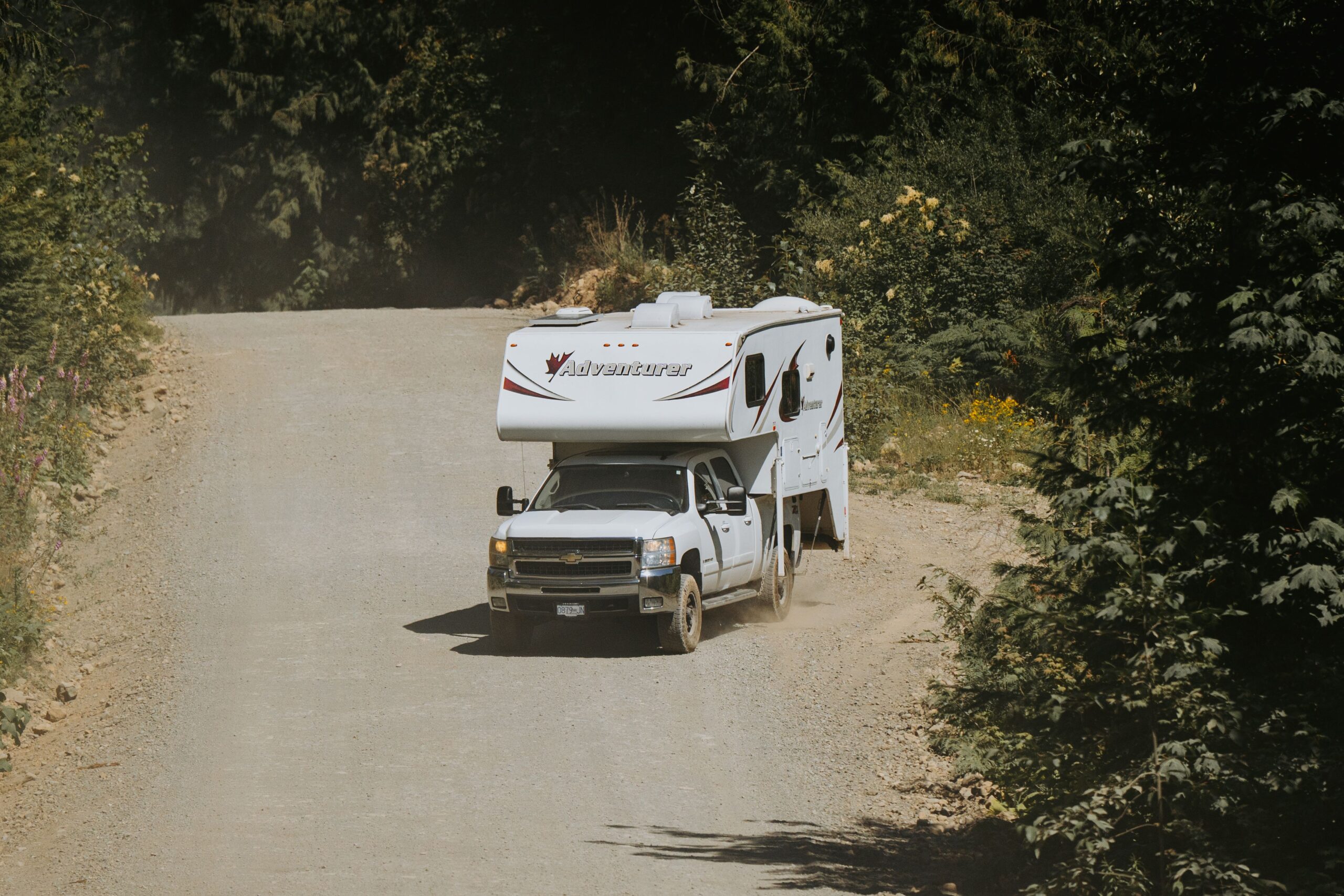
It is essentially a house loaded into a pickup bed. The 2026 Northwood Wolf Creek 850 is a truck camper with a fully loaded weight of 3,000 pounds. The issue is that this weight requires more than a half-ton truck can handle.
Dry Weight vs. Fully Loaded Weight: A 992-Pound Difference
The Wolf Creek 850 has a dry weight of 2,008 pounds. Fill its water tank and add propane, gear, and people, and its fully loaded weight rises to 3,000 pounds. That is a 992-pound increase from water, cargo, and options. For a camper that rides in a truck bed, that is no small figure—and it largely determines what kind of truck is needed.
Why a Half-Ton Will Not Work
There is effectively no half-ton pickup with enough payload capacity for a camper weighing 3,000 pounds when fully loaded. The Wolf Creek 850 was therefore designed from the outset with three-quarter-ton and one-ton trucks in mind. A three-quarter-ton truck can carry it, but only if it is a specially configured model with the highest possible payload rating. For the short-bed version, more people recommend a non-dually one-ton truck than a three-quarter-ton model. It offers a larger payload margin and firmer suspension, making a noticeable difference in ride quality and steering response once the camper is loaded. That is why the process should not be buying a truck first and choosing a camper afterward; the truck’s payload rating needs to be calculated backward from the camper’s fully loaded weight.
A $46,488 Price Tag
The 2026 Wolf Creek 850 carries an MSRP of $46,488. That is the price of the camper alone, without the truck. Add the cost of a one-ton pickup, and total spending can rise to a level not far below that of a small Class C motorhome. A truck camper, however, can be removed and stored when it is not needed, leaving the truck available for everyday use. A realistic budget requires looking beyond the camper’s price to the combined cost of both camper and truck.
An Interior Designed Without a Slide-Out
The Wolf Creek 850 is a hard-side camper with no slide-out. That means no expandable living space, but it also eliminates one moving component. It avoids concerns about worn slide seals or failed motors. Its fully welded aluminum frame, laminated fiberglass exterior walls, and high-density block-foam insulation bring its height to 8.8 feet when mounted on a truck. The layout sleeps up to four people and includes a wet bath, with the toilet and shower in the same space. Although the entire bathroom gets wet during a shower—a tradeoff some find inconvenient—the arrangement saves enough space to fit a complete bathroom into a compact camper.
Why Some Campers Choose a Truck Camper Instead of a Trailer
For the same budget, a travel trailer or fifth wheel offers more interior room. Yet many campers continue to choose truck campers for a simple reason: remove the camper from the bed, and the truck returns to everyday duty. Unlike a towable trailer, there is no need to find separate parking or practice backing up with a trailer attached. A truck camper can also negotiate forest roads and narrow mountain routes that may be difficult for a trailer. The tradeoff is a smaller interior, along with a higher center of gravity and greater suspension load on the truck.
Why It Uses Aluminum Instead of a Wood Frame
In the truck-camper industry, fully welded aluminum frames are commonly described as less vulnerable to moisture-related warping and deterioration than wood frames. Wood framing can gradually warp or rot after prolonged exposure to moisture, while a welded aluminum structure is comparatively resistant to those changes. The Wolf Creek 850’s use of this construction can be seen as an effort to better withstand vibration and moisture, given the frequent rough-road use of truck campers. Aluminum framing itself does not necessarily make the camper lighter, however, and the 3,000-pound fully loaded weight already accounts for the weight of this structure.
Why the Truck Must Be Measured First
The truck has its own critical number to verify. The certification label inside the driver’s door frame, often called the VIN sticker, lists the truck’s maximum payload, and that figure can vary substantially by trim and options even within the same model. Higher-end trims with more equipment often weigh more themselves, reducing available payload. That is why payload should be checked before convenience features when shopping for a truck. The combined weight of the camper’s 3,000-pound fully loaded weight, driver and passengers, extra fuel, and personal gear must remain below the truck’s payload rating to leave a safety margin.
The Number You Only Know After Visiting a Scale
The manufacturer’s stated fully loaded weight is based on standard equipment. Adding batteries, a generator, or extra storage can raise actual weight further. One recurring piece of advice in the truck-camper community is to load the camper onto the truck, fill it with water and gear, and visit a public scale to weigh the axles directly. The payload shown on paper and the real axle weights do not always match. The 3,000-pound figure is only a starting point; the final confirmation comes on a scale.
Photo: Luke Miller, Pexels (pexels.com/photo/a-truck-driving-down-a-dirt-road-with-an-rv-on-it-27489810/)