
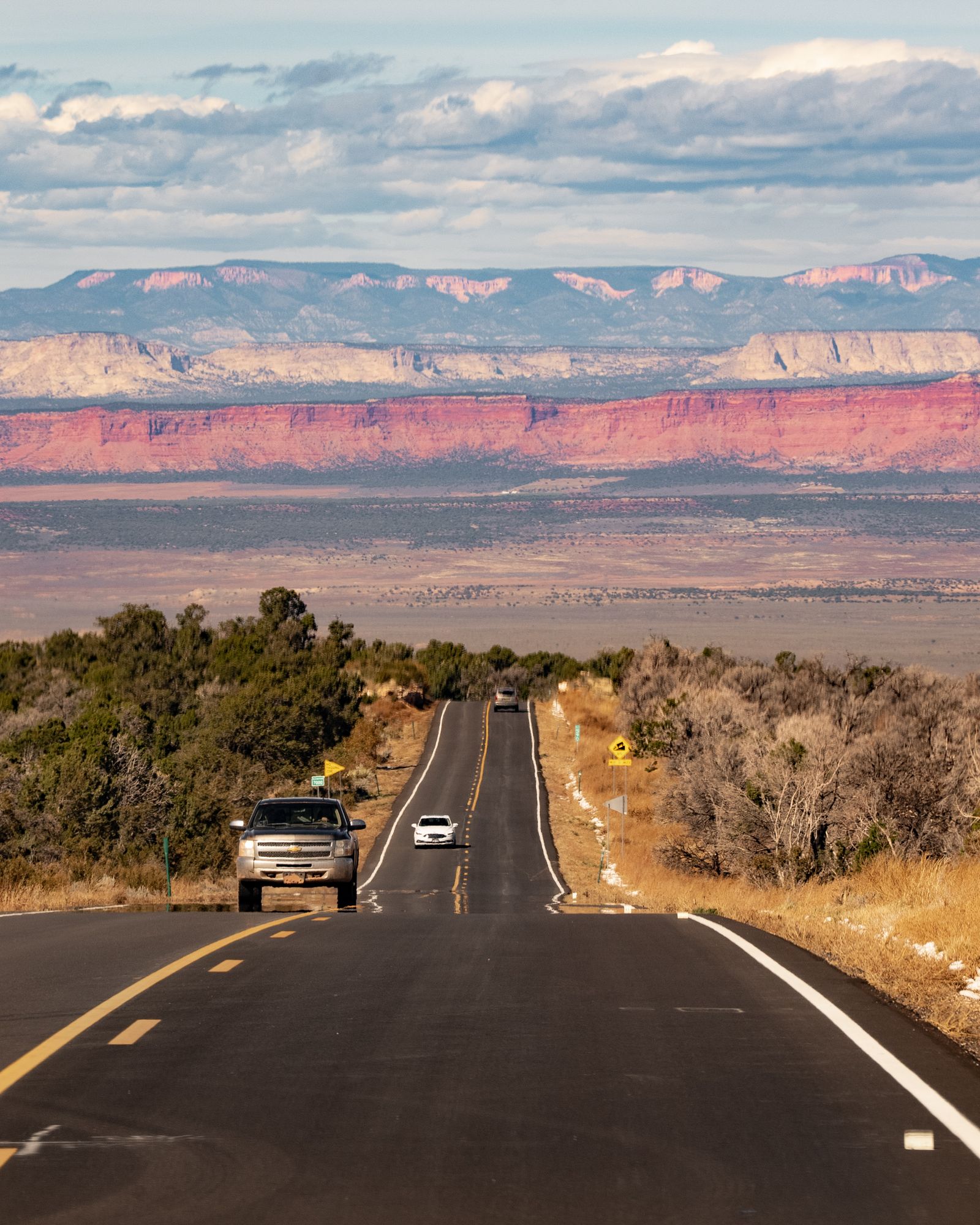
Utah Route 12, which connects Bryce Canyon and Capitol Reef, is designated an All-American Road for its exceptional scenery. But among RV drivers, it is often discussed for another reason: the Hogback section, which crosses a 6,700-foot ridge between Escalante and Boulder. With sheer drop-offs on both sides of a narrow ridge and no guardrails, this stretch may look like an ordinary two-lane road on a map, but it is an entirely different experience behind the wheel.
Why It’s Called the Hogback
Hogback is the nickname for a narrow ridge section between Calf Creek and Boulder Creek. The road itself is not dramatically narrower than other two-lane stretches, but the open views on both sides make it feel much tighter than it is, according to drivers who have traveled it. The curves are not especially sharp and generally sweep gently along, but there are stretches with no room beyond the roadway itself—and no guardrails at all. By contrast, the switchbacks between Escalante and Boulder are wider and have gentler turning angles, and many drivers do not consider them cause for concern over sharp curves. The greater challenge is the ridge road that appears, at first glance, to run straight ahead.
RVs Up to About 30 Feet Make the Drive
Based on accounts posted across RV communities and forums, the prevailing view is that RVs around 30 feet long can pass through this section without difficulty. But the same qualifications come up repeatedly: the driver should be comfortable with mountain roads, and the route is not recommended for beginners. That suggests the driver’s psychological comfort may be a bigger factor than the road’s physical width. Drivers of larger RVs should also keep in mind that many spots offer little room to pull over for a quick photo. Rather than stopping abruptly because of the scenery, it is safer to use only marked pullouts.
Windy Days Are a Different Story
The Hogback is exposed on all sides, leaving it fully open to the wind. Multiple firsthand accounts advise avoiding the section altogether when strong winds are forecast. That is especially true for boxy RVs and travel trailers that are vulnerable to crosswinds. A sudden gust pushing a vehicle across its lane on a road without guardrails is a sobering prospect. Check the wind forecast before departing, and if a high-wind advisory is in effect, it may be better to adjust the itinerary by a day or two.
It Becomes an Entirely Different Road in Winter
Utah Route 12 remains open year-round, but its perceived difficulty changes substantially by season. After heavy snowfall, some sections become impassable until plowing is complete, and the stretch across Boulder Mountain is particularly prone to winter ice. In summer, road-surface conditions are generally good, leaving wind and driver experience as the main variables. In any season, it is important to stop at a visitor center before departure to check current road conditions. On mountain roads, a single night of weather can completely change the situation.
Beyond Boulder Toward Torrey, It Reaches 9,600 Feet
After passing the Hogback and continuing from Boulder toward Torrey, travelers face a very different kind of challenge: the crossing of Boulder Mountain. This paved road, built in the 1920s, climbs to 9,600 feet at Boulder Mountain Pass, the highest point on all of Utah Route 12. The landscape shifts quickly from desert canyons to conifer and aspen forests, and temperatures drop noticeably compared with the canyon sections. Even in summer, travelers should expect cool conditions in the early morning or late evening, while snow begins to fall first in this area in late autumn. RVs equipped with an engine brake should use it on descents; in vehicles without one, selecting a lower gear and reducing speed in advance can help prevent brake overheating.
What to Prepare Before You Go
Hogback Ridge Overlook is one of the few places along this section where travelers can pull over briefly and take a break. Parking is limited, however, so drivers of large RVs may want to avoid busier times. Those departing from Escalante or Boulder should check the latest road information at a visitor center, fill up on fuel and drinking water, and then set out. The segment is not long and does not take a great deal of time to cross, but there are no convenient gas stations or services along the way. Travelers towing a trailer should also inspect the trailer brakes in advance.
Photo: Max Ravier, https://www.pexels.com/photo/road-on-priaire-in-usa-17363625/