
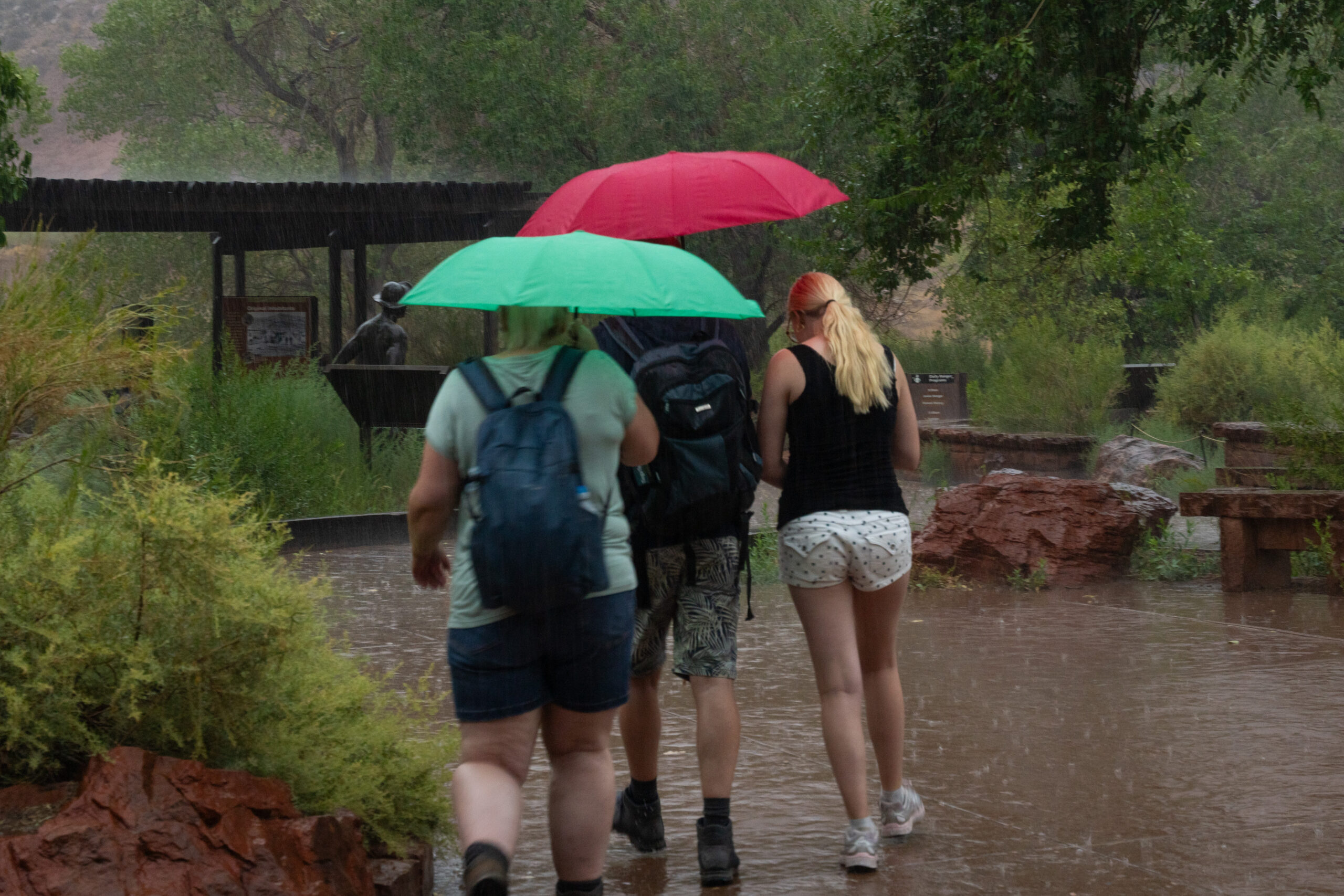
A clear sky can turn to dark storm clouds in an instant by afternoon. On July 29, Zion National Park announced the temporary closure of all slot canyons in the park, along with The Narrows. Not a single drop of rain may have fallen inside the canyon itself. The watershed that feeds The Narrows covers 288 square miles, and storms capable of producing heavy rain can form 15 to 20 miles upstream of the canyon. During monsoon season, Zion is not a place where visitors can rely only on the weather they can see.
Areas Affected
Each summer, the monsoon spreads across the Southwest. From July through September, moist air destabilizes the atmosphere and frequently brings sudden heavy rain. Flash floods in Zion Canyon can be powerful enough to reshape the landscape in moments. When heavy rain funnels into slot canyons and smooth rock drainage channels, conditions inside the canyon may already be dangerous even if the nearby sky looks clear. On July 29, the park also released a photo showing visitors with umbrellas running for shelter outside the Zion Canyon Visitor Center during a sudden thunderstorm.
Flash Floods Caused by Rainfall You Cannot See
The park emphasizes the danger of judging conditions by what is visible. Even if visitors are not standing in the rain, water from rainfall 15 to 20 miles upstream can rush through the canyon and reach them within minutes. That water can carry rocks, branches, and other debris. During rain, streams may pour down canyon walls like waterfalls. They are something to view from a safe distance, not to approach, because they can also discharge debris. If a flash flood occurs, the park advises visitors not to spend time gathering belongings or breaking down a tent; they should move immediately to higher ground.
Three Habits Recommended by the Park
Zion’s safety advice falls into three main categories. First, check information. Before entering the canyon, visitors are advised to review the National Weather Service daily forecast, the park’s current conditions page, and alerts for The Narrows, as well as real-time streamflow data from the U.S. Geological Survey (USGS). Second, remain alert. Weather far upstream can quickly affect a visitor’s location, and closure signs posted at places such as the Riverside Walk must be followed. No slot canyon wilderness permits are issued during closures. Third, have a backup plan. Checking ahead for weather-independent activities—such as ranger talks, Zion Lodge evening programs, and Junior Ranger programs—can keep an itinerary from falling apart. The park notes that these free programs can offer visitors a worthwhile experience regardless of the weather.
What RV Travelers Need to Know
Even RV travelers with no plans to hike the canyon should take precautions during monsoon season. Avoid setting up camp in dry streambeds, often called dry washes. If staying nearby is unavoidable, choose the highest ground possible and look for evidence of previous flooding, including water marks on rocks or debris left behind by floodwaters. The rule never to cross flowing water applies to vehicles as well as pedestrians. Low-lying access roads or unpaved sections that cross washes can become impassable within hours of heavy rain. The Skyline Shuttle serving Zion Canyon may also temporarily suspend service during heavy rain, so checking shuttle status is prudent during monsoon season.
A Trip Can Still Be Good When Plans Change
Flexibility was ultimately the point emphasized by Zion National Park Supervisor Jeff Bradybaugh. He said the park provides a range of online tools and visitor center materials to support visitor safety, along with free programs that can be enjoyed regardless of weather. Monsoon season can also show Zion at its most dramatic. Temporary waterfalls streaming down cliffs and deepened canyon colors create scenes not seen on clear days. But enjoying that landscape requires being willing to set aside a plan, a message the park continued to stress.
Data Source: NPS API (developer.nps.gov) / National Park Service News Release, July 29, 2026
Photo: NPS Photo / Wil Marischen (nps.gov/zion/learn/news/2026-07-29-monsoon-season.htm)