
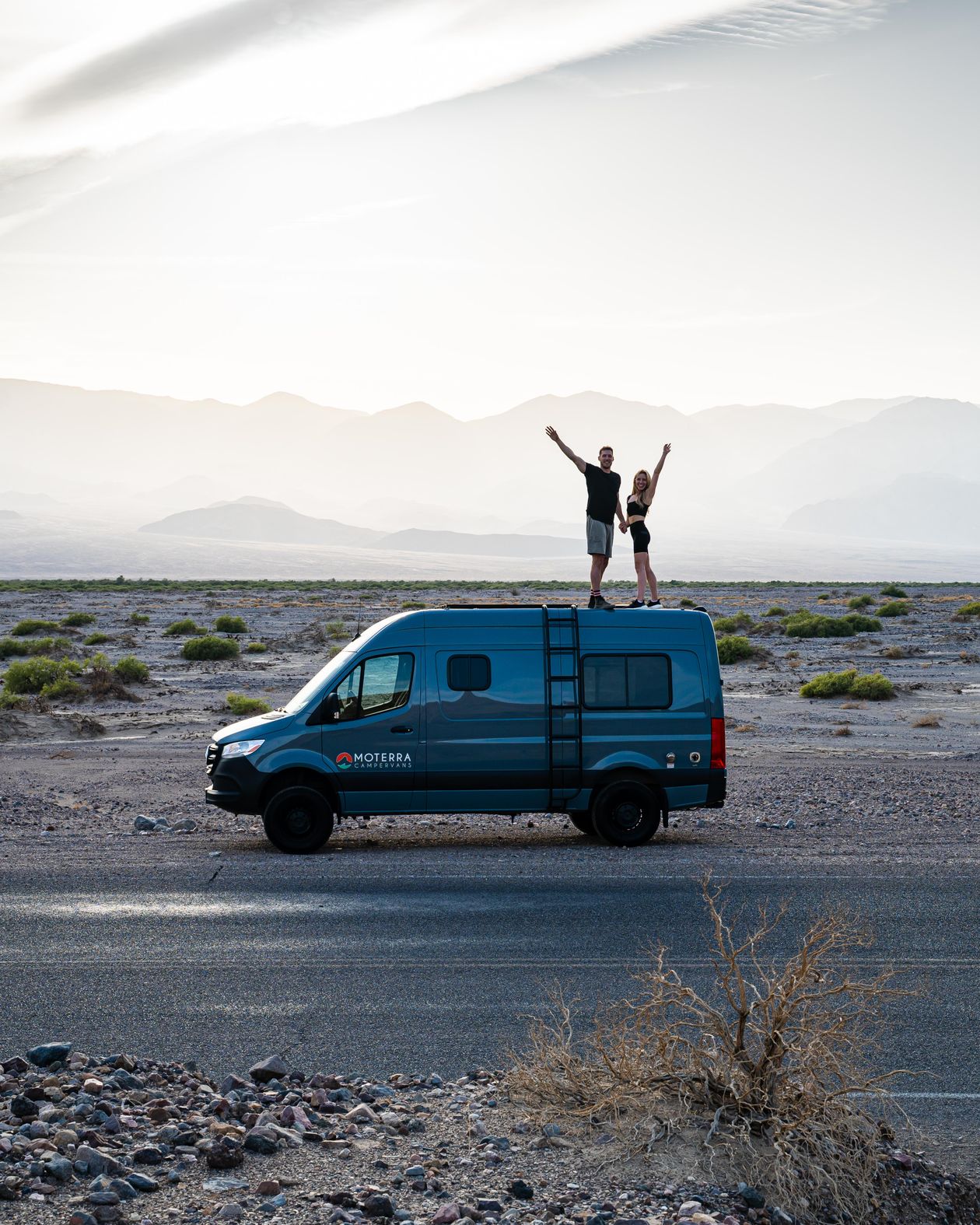
RV travelers planning to camp in Death Valley National Park need to choose their campground carefully. The park has more than nine campgrounds, but Furnace Creek Campground is the only one with full hookup sites offering electricity, water, and sewer service. Even there, only 18 of its 136 sites have hookups; the rest are dry-camping sites that require generators or battery power. Because the park sits in a basin 190 feet below sea level, campground choice can dramatically change power and water plans. Some campgrounds also close seasonally, making advance research essential.
Furnace Creek, the Only Campground With Hookups
Located near the visitor center, Furnace Creek Campground is the only NPS campground in the park that accepts reservations. Hookup sites include 30/50-amp electric service, water, and sewer and cost $44 per night ($30 base fee plus a $14 utility fee). Standard sites without hookups cost $30. Group sites for 9 to 15 people cost $40, while sites for 9 to 40 people cost $60. Each site accommodates up to eight people and either two vehicles or one RV, making it better suited to smaller parties than large families or groups.
Reservations are accepted only during the cooler season, from October 15 through April 15. They can be made up to six months ahead and no later than five days before arrival through recreation.gov or by phone at 877-444-6777. During this period, all 136 sites are available. From mid-April through mid-October, the campground is reduced to 41 sites and operates on a first-come, first-served basis, so summer visitors hoping to stay here are better off arriving early in the morning. The park notes that it may temporarily hold even reserved sites for management needs, so visitors should check posted notices again upon arrival. The 18 hookup sites are highly sought after and often book up as soon as reservations open, even in the cooler season, so marking the six-month reservation opening date on the calendar can pay off.
The Other Campgrounds Have No Hookups
Texas Springs Campground, above Furnace Creek, has 106 sites and is open only from late fall through mid-April. It has no hookups and costs $20, or $10 for holders of qualifying senior or access passes. Its views make it popular, but sites are first-come, first-served and cannot be secured in advance. Sunset Campground, the park’s largest, is a relatively uncrowded, flat campground with 230 sites; it also operates seasonally and costs $18. Stovepipe Wells Campground, at sea level, has 190 sites at $18 and is conveniently close to the village store.
Mesquite Spring Campground, open year-round, is 2 miles off Scotty’s Castle Road and has 40 sites at an elevation of 1,800 feet; the fee is $20. Its elevation generally brings slightly cooler nighttime temperatures than the low-elevation campgrounds. Wildrose Campground has 23 free sites but no drinking water, and the nearest water source is about 31 miles away in Stovepipe Wells. Thorndike and Mahogany Flat primitive campgrounds are on high-elevation mountain roads and are difficult to reach without four-wheel drive and all-terrain tires. Larger RVs should realistically leave these two out of their plans. Primitive campgrounds at places such as Eureka Dunes, Homestake, and Saline Valley are also extremely remote and require high-clearance vehicles, making them unsuitable for typical RV travel.
Emigrant Campground remains closed after late-August 2025 flooding severely damaged 5 miles of water line and water-system infrastructure. No completion date for repairs has been set. Travelers who had included this campground in their itinerary should check the park’s alerts page again before departure to see whether it has reopened.
Summer Camping Is Not Recommended
The park’s reservation system also warns that Death Valley is known for extreme summer heat and that summer camping is not recommended. According to the park, spring is the most popular time to visit, offering warm weather and wildflowers, while summer starts early and is already hot by May. Fall brings cool, clear weather beginning in late October, and winter typically has cool days, chilly nights, and occasional rain. This is also why even Furnace Creek, with hookups, limits its reservation season to the cooler months of October through April. Travelers who must visit in summer are safer skipping overnight camping, seeing only the main attractions on a short early-morning itinerary, and then moving on to a cooler area. Many visitors make quick stops at roadside destinations such as Badwater Basin and Artists Drive, then plan to rest inside their vehicle around midday.
What RV Travelers Need to Know
The park entrance fee is $30 per vehicle for seven days. Gas stations at Furnace Creek and Stovepipe Wells operate 24 hours a day, while the Panamint Springs Resort gas station is open only from 7 a.m. to 9:30 p.m. Because distances between fuel stops in the park are long, it is safest to refill at the next station once the fuel gauge drops below half a tank.
Anyone needing to run air conditioning overnight at a campground without hookups should bring ample generator fuel and battery capacity. Check tire pressure against recommended levels before departure, taking into account heat-related pressure increases. Inspecting coolant and brakes is also essential, since both the engine and air-conditioning system face greater strain in extreme heat. Carry more drinking water than usual as well, because water availability varies by campground and some have none at all. Above all, shifting a summer visit to the period from late fall through early spring provides more campground options and is far safer.
It can also help to leave room for flexibility when selecting a campground. Travelers who cannot reserve a Furnace Creek hookup site often keep first-come, first-served alternatives such as Texas Springs or Stovepipe Wells in mind, arriving early to secure a site before exploring the park. The temperature difference between low- and high-elevation campgrounds also matters. Visitors have consistently noted that choosing a somewhat higher campground, such as Mesquite Spring, can make the night considerably easier to tolerate even on the same day.
Photo: Kirk Thornton, https://www.pexels.com/photo/couple-standing-on-the-roof-of-a-camper-van-and-waving-14105745/