
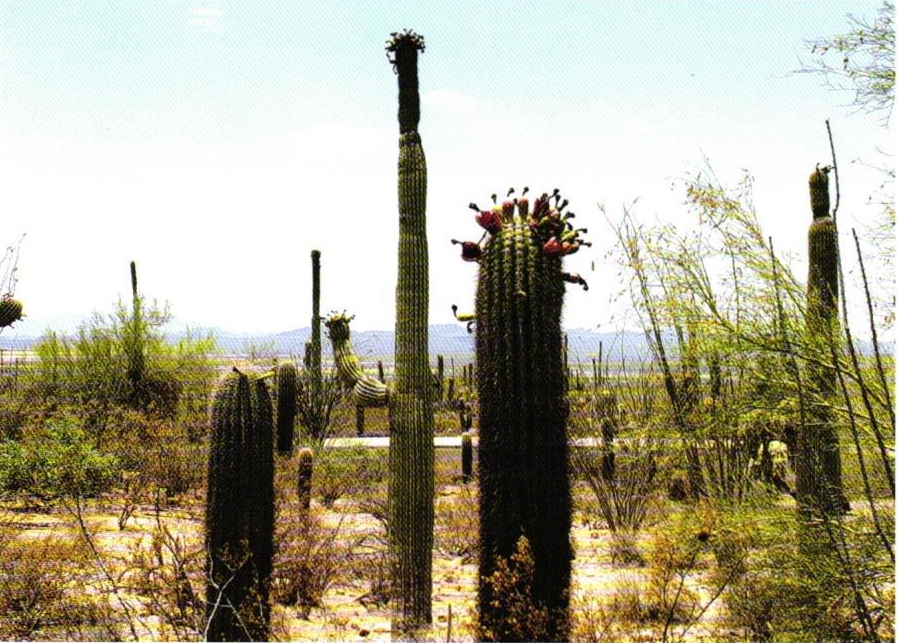
Day two: the journey begins in earnest. Today’s destination is Saguaro National Park. Centered on Tucson, Arizona’s second-largest city, and I-10 passing through it, the park is divided into east and west districts totaling roughly 90,000 acres.
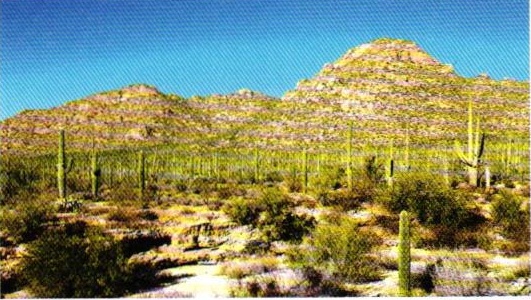
Leaving I-10 at Exit 246, we reach the western park gate. My first reaction is disappointment: “This cannot be it. Did we come all this way for this?” There is a well-built visitor center and a campground, but nowhere do I see the giant cacti several times taller than a person that I imagined. Only little ones about 3 feet tall dot the hills and fields.
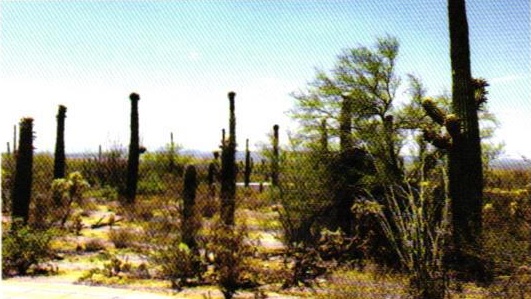
To see fully grown saguaros like those in photographs, we must cross Tucson to the east district. From Rincon Visitor Center, a road circles through the park’s interior. Here are the giant cacti of Westerns and photographs. Following the road, we enter a cactus forest. Up close, we see woodpecker holes in pillars four or five times human height. We do not venture deep among them, though: venomous rattlesnakes, including diamondbacks—the baseball team shares the name—and other dangerous creatures live here.
Saguaros are said to open fragrant white flowers at night from April through June. In June and July they bear juicy fruit resembling figs, which the Indigenous people of the area used to make fruit wine.
Even a quick look at the east and west districts takes the whole day. There are many hiking trails, and at sunset the cacti apparently stand with arms outspread against a red sky. Our schedule does not allow us to wait, so we head onward. If asked, I would say the west district could be skipped.
For our second night, exhausted early in the trip by the previous night’s heat, we take a motel beside I-10 just beyond Tucson. A proper shower and air-conditioning bring me back to life. Our rule of camping for three or four nights and then taking a hotel has collapsed almost immediately.
MEMO
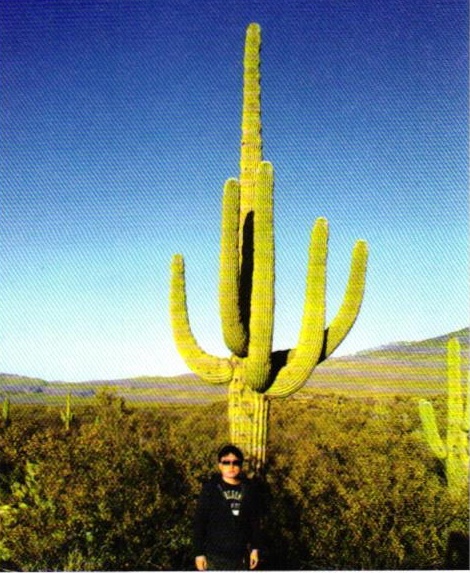
These cacti can reach about 80 feet, taking roughly 150 years to attain such size, I am told. It takes more than 50 years to reach 7 feet and begin spreading side branches. Without those branches, one can think of a cactus as not yet 70. After 100 years it may reach 25 feet, and after 150 years, 50 feet and as much as 8 tons. Its lifespan is about 150 to 200 years.