
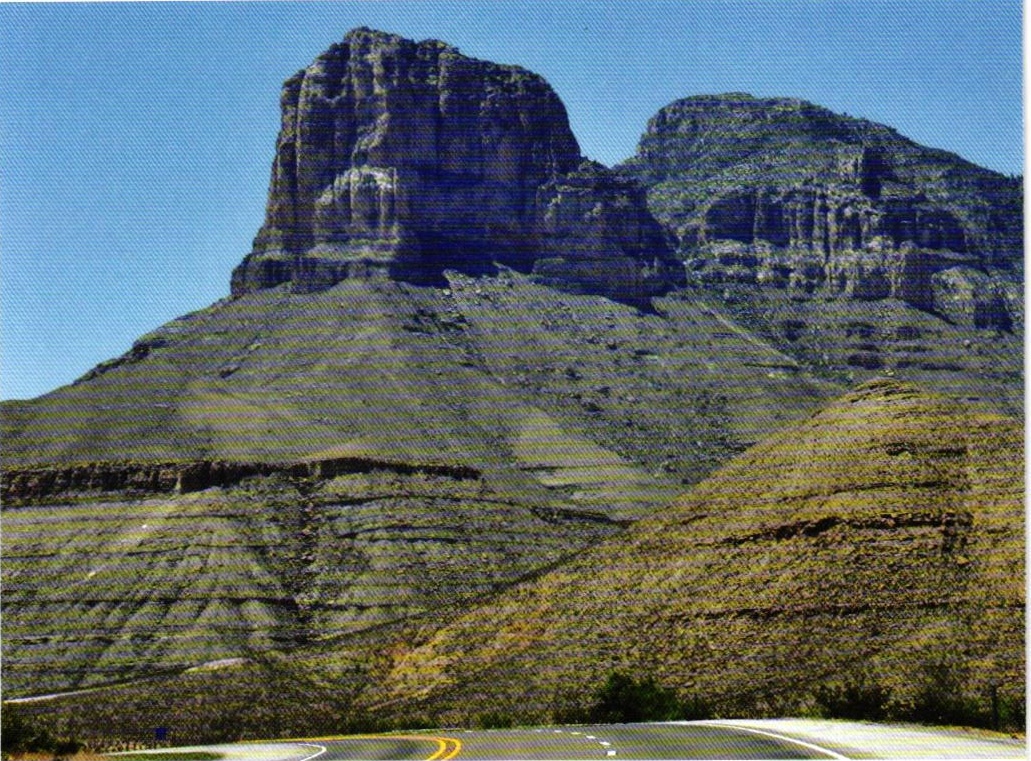
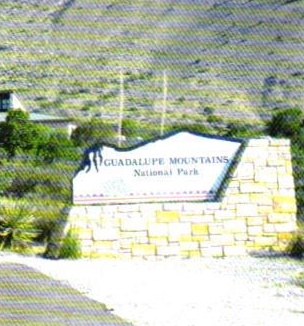
Guadalupe Mountains National Park lies at the northern edge of Texas, on the New Mexico border, only 32 miles south of Carlsbad Caverns National Park. Guadalupe Peak, Texas’s highest mountain at 8,717 feet, is said to have emerged from reefs once beneath the sea tens of thousands of years ago; those reefs became fossils, and dunes formed alongside them.
The approach is so quiet that cars pass only occasionally. Roadside wildflowers and cacti welcome the traveler. The nearer we get, the more sharply the towering Guadalupe Peak reveals its imposing outline.
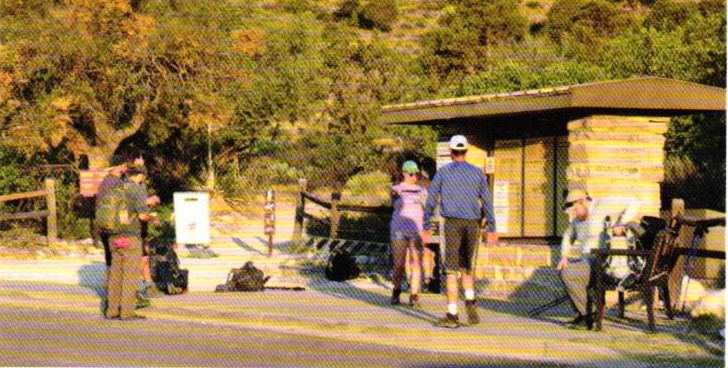
Unable to find a separate entrance-fee station—though we have an annual national parks pass anyway—we stop first at Pine Springs Visitor Center for a map. The park also has the Frijole Ranch History Museum. Driving a little farther up the wooded road brings us to a campground and the trailheads for Guadalupe Peak, Devils Hall and El Capitan. Many people are hiking, and entrance fees can be placed in a box here.
The campground is right at the trailhead. Painted lines on asphalt are the boundaries between sites. Perhaps because there are few campers, the ranger tells us to choose any spot we like. The nightly fee is inexpensive, with a further discount when I say I am a senior. There is drinking water but no shade. By evening, hikers return and take sites; had we arrived late, we might have missed out even on this. Halfway up a high mountain, the campground has a splendid view below. The following morning, descending, we look around the visitor center on the other side. Unless you plan to hike, I would not go out of my way to visit it.
POINT
The park’s appeal lies less in sightseeing than in wildlife watching and hiking. Hiking and backpacking are possible throughout the year. There are dozens of trails, and I am told the Manzanita Spring route can be traveled by wheelchair. The Salt Basin Dunes are another well-known feature.