
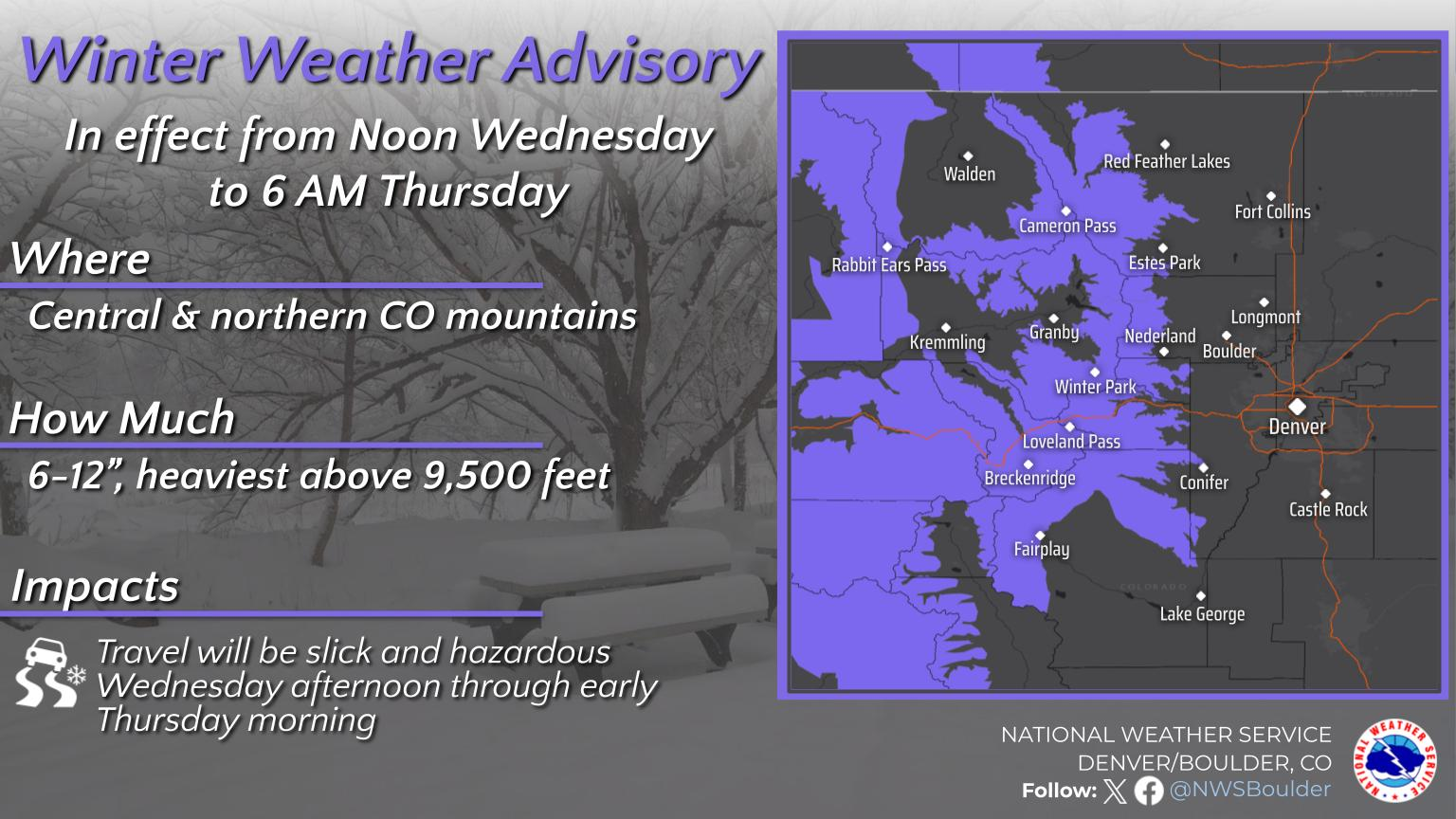
Winter road conditions were expected to enter the picture for fall mountain travel in Colorado. A Winter Weather Advisory issued by NWS Denver/Boulder at 4:03 a.m. MDT on October 14 called for 4–12 inches of snow from noon that day through 6 a.m. on October 15 around Rocky Mountain National Park and in the northern and central mountains. It warned that roads crossing mountain passes could become snow-covered and hazardous for travel.
A separate NWS snowfall outlook map projected 6–12 inches above 9,500 feet, with the heaviest snow expected during the afternoon and night of the 14th. The advisory’s broader area totals and the map’s high-elevation figures cover different areas. They should not be read directly as expected snowfall totals in the towns of Estes Park or Grand Lake.
Areas Affected
The advisory area included Rabbit Ears Pass, Rocky Mountain National Park and the Medicine Bow Mountains, the Summit County mountains, the Mosquito Range, and the Indian Peaks. NWS also included mountain stretches near Berthoud Pass, Cameron Pass, and the Eisenhower Tunnel among the named locations. RV travelers headed not only to the park but also toward Breckenridge or Winter Park needed to check the forecast for each pass along their route.
Within the park, weather-related restrictions should be distinguished from scheduled seasonal closures. NPS reported that Old Fall River Road had closed to vehicle traffic for the season and would be closed to all use, including walking and bicycling, from October 13–16 for maintenance. Conditions on Trail Ridge Road can change quickly with the weather, so a notice that it was open on an earlier date could not confirm passage. The park’s recorded road-information line is 970-586-1222.
What RV Travelers Need to Know
When planning travel days, travelers needed to consider not only snowfall during the afternoon and night of the 14th, but also road conditions early on the 15th. As NWS advised, allow extra time to reach the destination and, just before crossing a pass, check COtrip for closures and whether traction or chain requirements were in effect. A forecast alone should not be taken to mean a particular road was closed; likewise, an open road did not mean every RV could travel it safely.
For itineraries connecting both sides of the park in one day, the route to an overnight stop depended on whether Trail Ridge Road could be crossed. It was best to first confirm the reserved campground’s arrival time and approach direction, and not make a pass with uncertain access the itinerary’s only connection. This advisory communicated weather hazards and did not announce whether individual campgrounds were open or closed.
Before departure, travelers needed to compare the latest NWS advisory expiration time with the park’s road information. This article was based on the early-morning October 14 issuance, and the forecast and restrictions could change with additional snow or road conditions. Fall scenery below the mountains and winter road surfaces on high passes can occur on the same day.
Sources checked: NWS Winter Weather Advisory · NWS snowfall outlook · NPS road status
Photo: NOAA/NWS Denver-Boulder (public domain) / Original photo page