
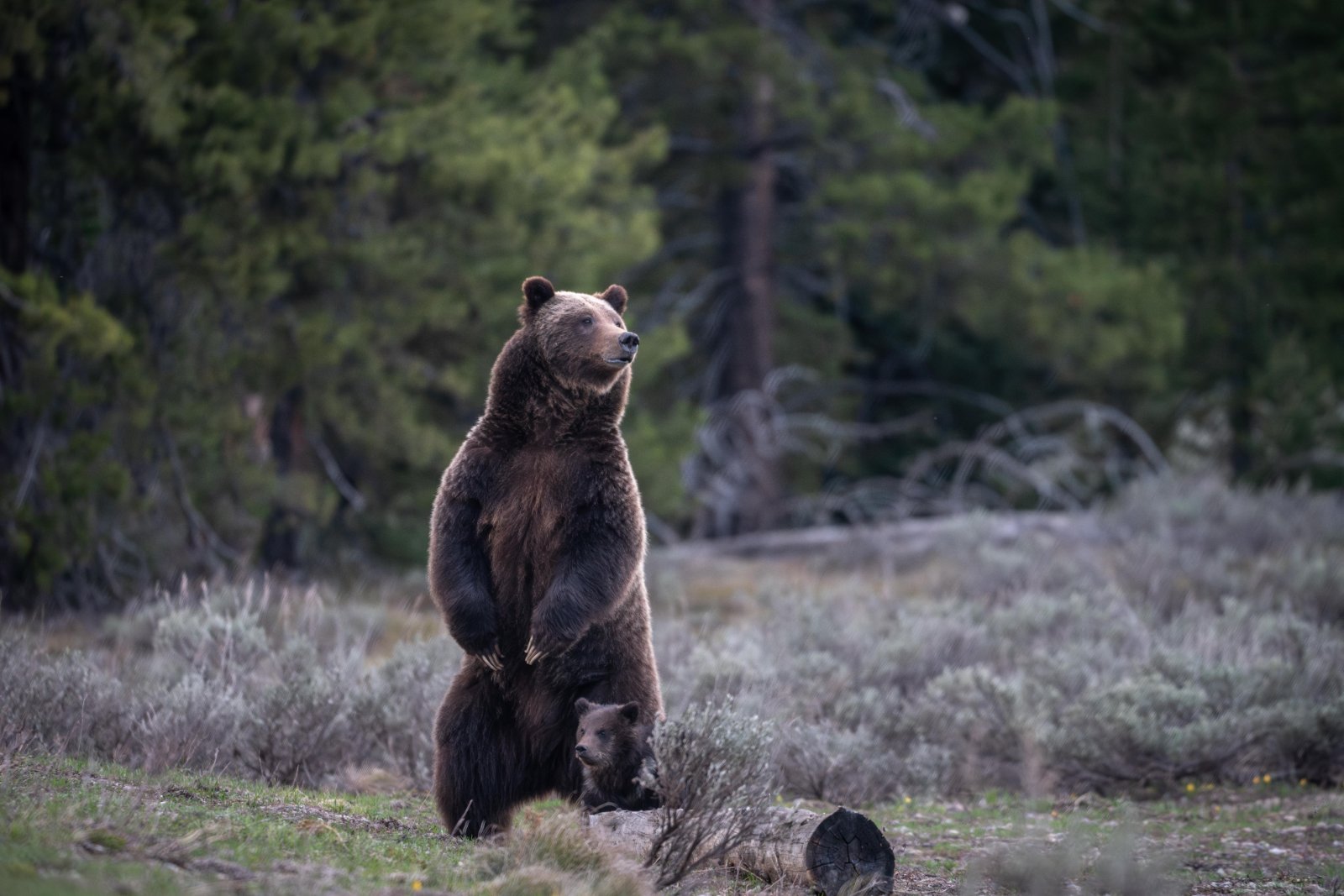
Keep at least 100 yards—about the length of a football field—between yourself and a grizzly. National parks vary, however, in how they require visitors to maintain that safety margin. Some require visitors to carry a bear canister, while others allow food to be hung instead. If you plan to travel by RV through areas where grizzlies and black bears live, it helps to understand the differences in park rules first.
Bear Canister Rules Vary by Park
Grand Teton National Park requires all backcountry campers to use bear canisters certified by the Interagency Grizzly Bear Committee (IGBC), unless a bear-resistant metal storage locker is provided at the campsite. Visitors with a backcountry permit can borrow a canister free of charge at permit offices. Yellowstone National Park takes a different approach. Bear canisters are not required, and food may instead be hung at an appropriate height. Many backcountry campsites have food-storage poles, but any canister used must also appear on the IGBC-certified product list. Glacier National Park requires bear canisters. It is one of the areas in the Lower 48 with the largest remaining grizzly populations.
What to Use Instead of a Bear Canister at an RV Campground
These rules generally apply to backcountry camping in remote areas inaccessible by vehicle. Developed campgrounds used by RV travelers are different. Food, cooking gear, garbage, and other bear attractants should be locked inside a vehicle with the windows closed or placed in bear-resistant storage lockers located throughout the campground. Yellowstone’s Fishing Bridge RV Park, covered previously, does not allow tents or tent trailers for the same reason. Sleeping inside a hard-sided vehicle is very different from sleeping with only a layer of fabric between you and a bear.
What a 100-Yard Distance Means
The National Park Service generally recommends staying at least 100 yards away from bears. Carry bear spray whenever hiking or camping, and never turn your back and run if you encounter a bear. The same sense of distance applies in an RV campground. If you see a bear wandering near your site, go inside your vehicle or camper, close the door, and do not try to get closer.
Put Away the Grill, Cooler, and Trash Bags First
One of the most common mistakes when RV camping in grizzly and black bear country is leaving the grill or cooler outside overnight after dinner. Dishes with food odors, pet food, and strongly scented items such as cosmetics can also attract bears. Put garbage directly into the campground’s bear-resistant receptacles, and fully close the windows even when storing items inside a vehicle. When cleaning up around the campfire, make a final check to ensure no food scraps remain on the fire grate or grill.
What to Check Before You Leave
For a trip through grizzly habitat such as Grand Teton, Yellowstone, or Glacier, it is safest to check the park’s latest bear-related alerts before departure. Depending on the season, bear activity can temporarily close certain trails or campgrounds. Within park boundaries, remembering two points will help with most situations: bear-canister rules differ by park, and at RV campgrounds, vehicles and storage lockers serve the role of a bear canister.
Extra Precautions for Pets and Children
Pet food is one of the things that can attract bears. Do not leave food bowls outdoors overnight, and keep pets on a leash during walks so they do not provoke a bear. When traveling with children, make sure they do not wander around the campground alone or ride bicycles or scooters out to its edges without an adult. Bear activity increases in the evening, particularly from dusk through dawn, so it is important to stay aware of your surroundings even within the campground during those hours.
Bear Spray: Carrying and Using It
Keep bear spray within reach not only while hiking but also in the campground. If it is stored deep inside a tent or camper, it may not be accessible when needed. Check the safety pin beforehand, and position yourself so the wind is not blowing toward you for it to be effective. Expired spray may have reduced pressure, so check the manufacture date before the season begins.
Bear Spray Cannot Go on an Airplane
Travelers visiting grizzly country by rental car or plane should understand bear-spray transportation rules in advance. Pressurized capsaicin bear spray is prohibited from air travel in both carry-on and checked baggage. Buy it locally at outdoor stores near the park or shops near visitor centers, then do not take it home after the trip; use a local disposal box or ask the store about disposal. Even when driving an RV, do not leave the spray in places such as the dashboard during summer, when interior vehicle temperatures can become excessively high.
Cook Outside the Camper and Change Clothes Before Bed
In grizzly habitat, a basic precaution is to keep cooking and sleeping spaces as separate as possible. If you grill fish or meat inside an RV, air it out thoroughly before the odor settles into clothing and bedding. If possible, change out of cooking clothes and store them in a sealed container. If the campground has a designated cooking area, using it is safer than cooking right beside the camper. These habits may seem small, but they are among the surest ways to keep bears from associating human living spaces with food odors. Before leaving a campground, make one final check for food crumbs or wrappers around your site. It benefits both the next visitors to use the site and the bears in the area. Grizzly habitat has been gradually expanding each year, and recent sightings have increased even at campgrounds where bears were once uncommon.
Data Source: NPS API (developer.nps.gov)
Photo: NPS Photo/Adams, Grand Teton National Park — https://www.nps.gov/grte/index.htm