
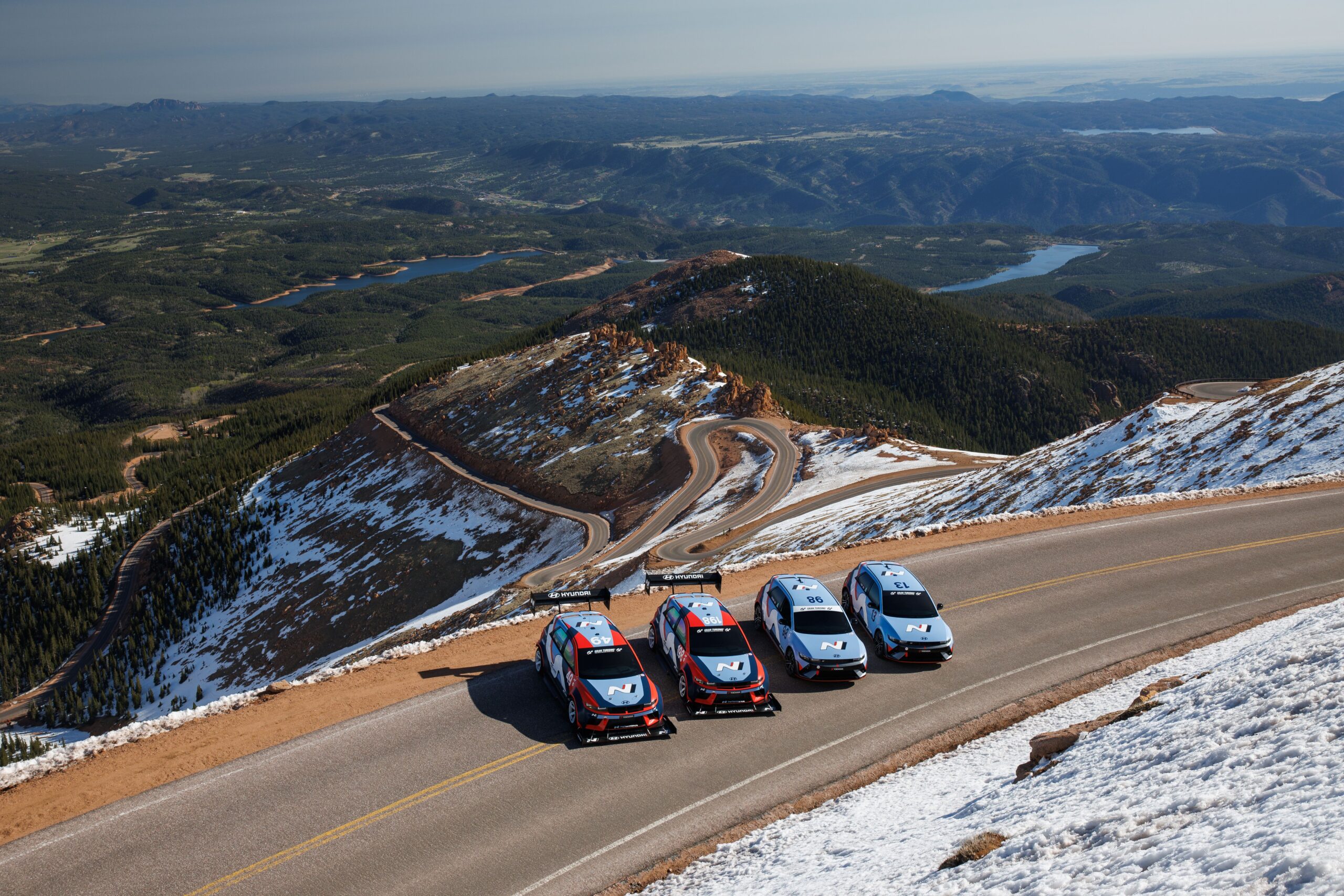
Colorado’s Pikes Peak Highway is paved. After the final unpaved section was covered with asphalt in 2011, the road itself became far less challenging than it once was. But RV travelers still face one hard-to-cross line—not one created by road conditions, but by regulations. Whether it is a fifth wheel or a travel trailer, no towed trailer of any size may travel this road.
All Towed Trailers Are Prohibited
The official rules administered by the City of Colorado Springs allow no exceptions. “Towed trailers and campers are prohibited regardless of size. This includes bicycle trailers and motorcycle trailers.” That is exactly what the rule says. Travel trailers, fifth wheels, and even the smallest pop-up trailers may not use this road. ATVs, off-road vehicles, and mopeds and scooters that fall below the specified standards are also on the prohibited list. Travelers arriving with a trailer must unhitch it somewhere below the mountain and continue only in the tow vehicle or another vehicle.
Buses and RVs: 24 Feet Overall, 19-Foot Wheelbase
Motorhomes and larger vehicles without trailers are not unrestricted, either. Buses and RVs may not exceed a 19-foot wheelbase, or 228 inches, and may not be longer than 24 feet overall. Since many large Class A motorhomes are well over 30 feet long, the RVs that can realistically use this road are limited to compact Class B models and smaller Class C units. Buses carrying fewer than 21 passengers may operate with conventional hydraulic brakes, but larger buses must have air brakes and an adequate retarder or engine-braking system. The guidance also notes that most commercial coaches and charter buses do not meet these requirements, making travel on the road effectively impractical. Drivers operating buses with more than 21 seats must hold the appropriate commercial driver’s license (CDL), and out-of-state registered vehicles or drivers must receive written advance approval from the Pikes Peak office at least 14 days before their visit. The regulations also specifically recommend drivers with experience on high-elevation mountain roads.
You Cannot Even Start Without an “L” Gear
The most notable requirement involves the transmission. Vehicles with automatic transmissions are permitted only if the gear selector is marked “1” or “L.” Hybrid vehicles may use “B” instead. If the selector shows only “S” or “M,” the driver must demonstrate at the entrance that the mode can fully lock the vehicle into first gear. In effect, the requirement to use low gear and engine braking rather than relying only on the brakes downhill is made a condition of entering the mountain road. Brake overheating has repeatedly contributed to accidents on this 19-mile route climbing and descending to 14,115 feet.
The road also serves as a racecourse. The Pikes Peak International Hill Climb, held annually since 1916, takes place on this same 19-mile stretch. There were concerns that the event might disappear after the entire route was paved in 2011, but it has continued to be held each year as scheduled. A separate bicycle hill-climb event is also held here, making the road a familiar venue for racers as well as regular visitors.
What About Regular Cars and Trucks?
Requirements are considerably simpler for ordinary passenger cars and pickup trucks without trailers. As noted above, automatic-transmission vehicles must have “1” or “L” marked on the gear selector, but no additional length or weight limit is specified. Scooters with an engine displacement exceeding 50 cc or output exceeding 4,476 watts may travel the road under motorcycle rules, provided they carry vehicle registration and proof of insurance. Smaller mopeds and scooters that do not meet that threshold, along with skateboards and longboards, are prohibited from the outset. In other words, the road is relatively accessible to travelers going up without a trailer in a camper van or small Class B, or to those planning to drive only their tow truck up the mountain.
19 Miles to 14,115 Feet
Pikes Peak Highway is a toll road that climbs 19 miles from Cascade to the summit. Spencer Penrose financed its construction in 1915, preceded by a wagon road built in 1888. In 1998, the Sierra Club filed suit over environmental damage on the unpaved sections, and a settlement led to completion of paving for the full route in 2011. At the time referenced, tolls were $18 for adults and $8 for children. Glen Cove, at 11,450 feet, has a weather station where average daytime highs remain in the low 60s even in midsummer, and nighttime temperatures can fall below freezing. The road is partially open year-round as high as snow conditions permit, while full access continues to change with that year’s snowpack.
If Driving It Yourself Feels Daunting, There Is the Cog Railway
For travelers uncomfortable taking a large RV up the mountain themselves, the Pikes Peak Cog Railway offers an alternative. Departing from Manitou Springs, the train follows 8.9 miles of track to the summit and takes about 75 minutes each way. The full round trip lasts a little over three hours, including about 45 minutes at the summit. Its biggest advantage is that passengers do not need to drive the narrow mountain road or worry about weather or brake condition. The fixed schedule, however, makes it difficult to stop at every overlook for photos or adjust the itinerary freely. Leaving a trailer at an RV park below the mountain and taking the Cog Railway to the summit may be the least stressful option on a road where trailer entry is prohibited outright. Tickets must be reserved separately, and they often sell out during peak season, so booking before the trip is the safer approach.
So, What Is the Best Way to Go?
In short, travelers towing a fifth wheel or travel trailer should either leave this road out of their itinerary entirely or park the trailer at an RV park or campground near Colorado Springs and drive up in a separate vehicle. Those planning to go up in a motorhome should also measure in advance to confirm the two key limits—24 feet in overall length and a 19-foot wheelbase—and, for an automatic transmission, first check that the gear selector has a low-gear lockout marking. On this 19-mile road to 14,115 feet, careful attention to the regulations—not the road itself—is the real gateway to being allowed through.
Where to leave the trailer should also be decided ahead of time. Several RV parks in and around Colorado Springs and neighboring Manitou Springs make it practical to leave a trailer for a day or two and visit the summit only in the tow vehicle or a rental car. Travelers who do not plan to leave the trailer behind may be better off shifting their itinerary to nearby attractions such as Garden of the Gods, which can be visited while towing. Clothing is another consideration. Even when Colorado Springs below the mountain reaches above 80°F in midsummer, the area around Glen Cove at 11,450 feet may stay near 60°F at midday and fall below 40°F after sunset. It is common for visitors who begin in short sleeves to be caught unprepared near the summit.
Photo: Hyundai Motor Group — Pexels (https://www.pexels.com/photo/four-rally-cars-on-a-mountain-road-27070634/)