
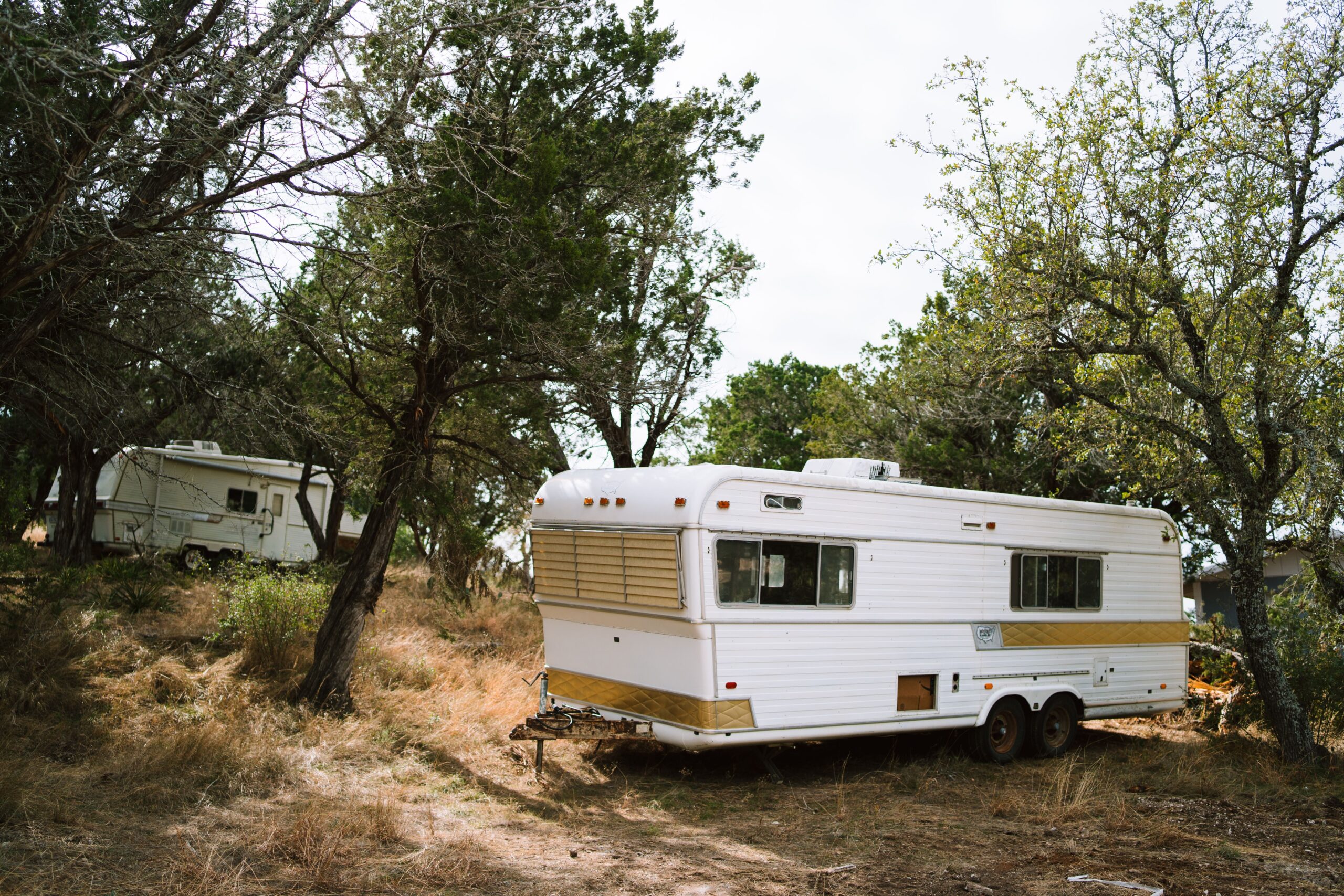
If you arrive at a midsummer campground and your RV refrigerator will not cool down, it is often reaching a physical limit rather than experiencing a mechanical failure. Most RVs use absorption refrigerators, which operate on a gravity-driven ammonia cooling cycle and can run into problems in hot weather that differ from those of a typical household refrigerator.
Check the Exterior Vents First
Poor ventilation is the most common reason an absorption refrigerator loses performance in hot weather. Check the upper and lower exterior refrigerator vents first: wasp nests, debris, or bent vent covers can restrict airflow. Adding an aftermarket cooling fan at the upper vent can force hot air out and is among the more effective ways to improve an absorption refrigerator’s performance in hot conditions.
Park With the Refrigerator Side in the Shade
In hot weather, simply parking so the wall containing the refrigerator stays in the shade can make a noticeable difference. Otherwise, heat added by direct sunlight is transferred straight to the cooling unit, further reducing performance.
If It Is Not Level, It Will Not Cool Properly
If the refrigerator does not cool at all right after parking, first check whether the RV is level. Because absorption refrigerators depend on a gravity-driven ammonia cooling cycle, that cycle cannot operate properly when the vehicle is tilted.
Above 90°F, Physical Limits Take Over
Once outdoor temperatures rise above 90°F, even a well-ventilated absorption refrigerator can begin to struggle. If temperatures outside an RV parked in direct sun exceed 95°F, the refrigerator’s cooling capacity may not be able to keep up with the heat. That is not necessarily a malfunction; it is a physical limitation of this type of refrigerator. Also inspect the rubber door gasket for looseness. With the door closed, place a dollar bill in the gap and pull it to identify any spots where it slides out easily.
Pre-Cool It the Day Before Departure
An absorption refrigerator typically takes 4 to 8 hours to cool from room temperature to its normal operating temperature, and it can take longer in hot weather. Rather than turning it on only after arriving at the campground and expecting it to cool quickly, it is far more practical to plug it into shore power at home and pre-cool it the day before departure.
Photo: Jeff Stapleton, Pexels — https://www.pexels.com/photo/white-and-brown-rv-trailer-near-green-trees-5991595/