
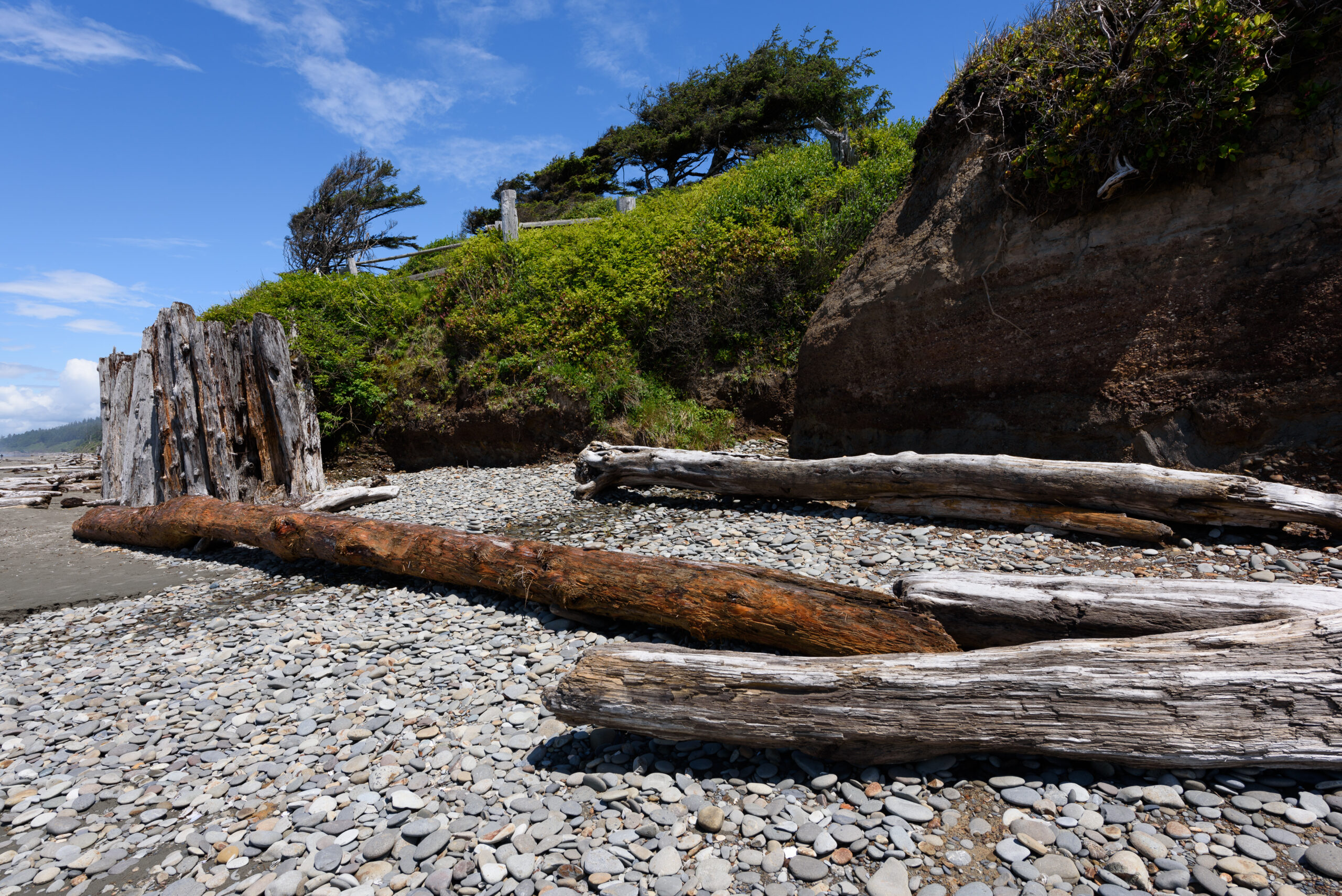
On the southwestern coast of Olympic National Park, one campground opens directly onto the Pacific. It is Kalaloch Campground. Its 168 sites are spread across six loops, A through F, and many can accommodate vehicles up to 25 feet or longer. Only two sites, however, have electricity. At all others, campers need generators, batteries, or solar power to make it through the night.
Just 2 Electric Sites Among 168
Based on Recreation.gov reservation data, Kalaloch’s individual site specifications range widely, from small tent sites with a maximum vehicle length of 13 feet to large sites that accept vehicles up to 52 feet. The average is about 23.7 feet. Of the campground’s 168 sites, 62 accommodate vehicles of at least 25 feet, and 33 can take vehicles 30 feet or longer. That means larger trailers and motorhomes can fit if campers choose their sites carefully. Power is the issue: just two of the 168 sites have electric hookups. The rest are dry camping sites, so campers who do not plan battery capacity and generator running time in advance may find the second night uncomfortable.
Before reserving, be sure to check the “Max Vehicle Length” listing for the individual site. Even within the same loop, driveway width and length vary by site, as do paving conditions. An RV dump station is available in the campground, making longer stays manageable.
Reservations, Rates, and Seasonal Differences
The nightly rate is $24. Reservation procedures vary by season. During peak season, sites are reserved online through Recreation.gov; in the off-season, the campground shifts to first-come, first-served availability. Exact peak-season dates vary somewhat from year to year, so it is safest to check Recreation.gov notices again before a visit. In the summer high season, waterfront sites often fill first, and booking at least one or two months ahead is recommended.
Fire Season Also Brings Campfire Rules
In August, Olympic National Park continued to issue wildfire alerts amid dry weather and lightning-caused fires. According to an official National Park Service alert, suppression work was underway on the Mt. Tom Creek Fire, which was started by lightning on a remote western park hillside. As a result, campfires were prohibited in dispersed camping and backcountry areas throughout the park. Campfires remained permitted in metal fire rings at developed campgrounds, including Kalaloch. Before leaving a fire, campers should make certain it is completely out.
The same alert noted that Mora Road was closed for repair work, limiting access to Rialto Beach, and that Jefferson County-managed South Shore Quinault Road was closed because of washouts. These closures did not affect Kalaloch’s own operations, but travelers planning to visit other parts of the park were advised to check the park alerts page again before departing.
Choosing a Coastal Loop
Kalaloch’s defining draw is its Pacific view from the bluffs. Some loops sit close to the shoreline, allowing campers to fall asleep to the sound of surf, but those sites are especially popular and reservations can be competitive. Inland loops, by contrast, are sheltered by forest, receive less wind, and tend to be quieter. Families with children may find it more convenient to prioritize loops near restrooms and drinking-water spigots.
The nearby South Beach Trail is a gentle, walkable route accessible directly from the campground. It is wise to check tide tables before visiting. At high tide, rocky coastal areas can quickly become impassable, so first-time visitors should allow plenty of time.
Getting There and Nearby Services
Kalaloch is on the southwestern Olympic Peninsula, just off Highway 101. It is a little more than two hours south of Port Angeles and about 1 1/2 hours north from the Aberdeen direction. Next to the campground, Kalaloch Lodge has a restaurant and small general store, useful for urgent needs such as fuel, ice, or basic groceries. A ranger station that also serves as the campground information point is nearby.
A short drive north of Kalaloch leads to Ruby Beach, known for the silhouettes of its sea stacks around sunset. Campers staying at Kalaloch may find it worthwhile to set aside an evening to visit. As across the Olympic Peninsula coast, summer mornings and evenings can bring thick fog and cool temperatures, so travelers relying only on short-sleeved clothing may be uncomfortable at night.
Checklist
For stays of more than two days without electric hookups, consider bringing an auxiliary battery, solar panels, or a quiet inverter generator. Coastal moisture and fog can cause nighttime temperatures to drop sharply, so an insulated sleeping bag is worthwhile even in summer. Because bears are common in the area, food and trash must be stored in the provided bear boxes. Locating the dump station and water spigots upon arrival can make the rest of the stay easier.
Data Source: NPS API (developer.nps.gov) / Recreation.gov RIDB
Photo: King of Hearts, “Kalaloch Beach Olympic June 2018 009.jpg,” Wikimedia Commons (CC BY-SA 4.0) — https://commons.wikimedia.org/wiki/File:Kalaloch_Beach_Olympic_June_2018_009.jpg