
A 270-mile range and a price tag in the $150,000s. Those two numbers alone drew industry attention to Coachmen’s RVEX electric camper van last fall. A Class B with neither tailpipe emissions nor a need for gas stations was newsworthy in its own right. But less than six months after its unveiling, the project was placed on indefinite hold. The reason was not Coachmen: the company supplying the vehicle platform withdrew from the business entirely.
Expectations Began With a Video Last September
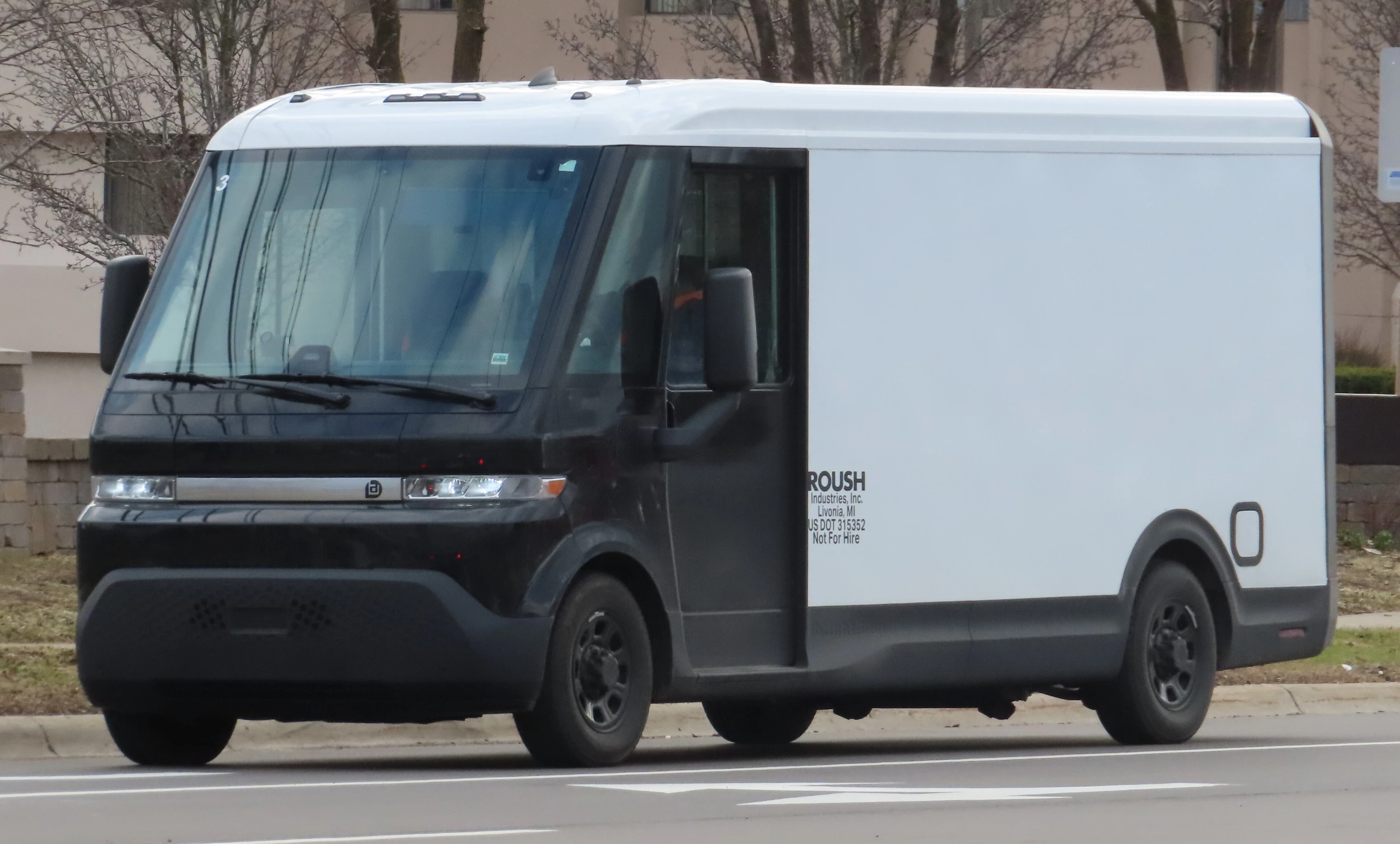
Coachmen first introduced the RVEX last September with a teaser video. Built on Chevrolet’s BrightDrop electric commercial platform, the Class B camper van was said to offer about 270 miles of range on a full charge. Its roof carried 1,000-watt solar panels, while a separate lithium house-battery bank kept vehicle propulsion and living-area power independent. The expected price was about $150,000. Compared with existing Class B models ranging from $100,000 to more than $200,000, it appeared relatively reasonable. Sales were projected to begin in 2026, and Coachmen had in fact begun accepting preorders. The interior was also ambitious for a Class B. It included a power sofa that converted into a king-size bed, and the separate lithium house-battery bank was promoted as a way to run the refrigerator and air conditioner for extended periods without starting the engine. With no exhaust or engine noise, the prospect of staying in national-park campgrounds or urban areas without disturbing neighbors appealed to potential buyers.
One Month Later, GM Pulled the Foundation Away
But in October, one month after the unveiling, General Motors announced that it would end the BrightDrop program itself. Weak sales, changing electric-vehicle market conditions, and rising costs were cited as factors. Analysts also pointed to mounting competition from Ford’s E-Transit and Rivian commercial vans, which had cast doubt on BrightDrop’s long-term prospects. Even industry observers were reportedly surprised by the decision, and Coachmen executives were said to have learned of it without advance notice. In effect, the platform beneath the RVEX disappeared.
BrightDrop was originally an electric commercial-van platform Chevrolet introduced for the delivery industry. Logistics companies such as FedEx drew attention by testing it early on, but sales did not meet expectations. RVEX was intended to turn this lower-cost commercial platform into a camper, which was central to its competitive pricing. The platform that made that affordability possible, however, was discontinued entirely.
A Vehicle Already Taking Orders Is Put on Hold
Industry outlet RV News first reported the news last week. Coachmen’s position is that the RVEX project has not been canceled but placed on indefinite hold. The company left open the possibility of reviving it if it can find another supplier of an electric vehicle platform. The complication is that Coachmen had already been accepting orders. That suggested there was real demand for an electric RV with a reasonable price and respectable range, but there is currently no way to meet that demand.
Winter for the Broader Electric RV Market
There is also a view that the RVEX would not necessarily have had an easy path even if it had launched as planned. After electric-vehicle tax credits ended last fall, purchases briefly surged before demand fell sharply. Many market-forecasting firms expect 2026 to be the first year in which EV shipments decline from the previous year. In this environment, electric RVs in a similar class have been trying to hold on in different ways. Entegra Coach’s Embark combines 105 miles of all-electric range with a gasoline range extender for up to 450 miles, and is reportedly priced from $300,000 to $450,000. Winnebago’s eRV2, a Ford E-Transit-based prototype, has achieved fully electric propulsion but remains in the prototype stage with no official price. It is easy to see why the RVEX combination of 270 miles and a price in the $150,000s stands out as a particular loss.
Electrification efforts are also continuing on the trailer side rather than only with motorhomes. Lightship’s AE.1 uses electric drive hardware in the trailer itself to help it move forward and reduce the burden on the tow vehicle. It emphasizes a streamlined body that cuts aerodynamic drag and an independent power-management system designed to travel farther with less energy. Honda introduced Base Station, an ultralight trailer concept weighing about 1,400 pounds that can be towed by a compact SUV such as a CR-V. With standard solar panels, a lithium battery, and an inverter, plus app-based controls, it has been viewed as an effort to lower the barrier to RV ownership.
Charging Infrastructure: The Hidden Barrier for Electric RVs
Even if an electric camper van such as the RVEX had reached the road, it would have faced another major hurdle: charging infrastructure. Industry estimates generally suggest that range can fall by as much as 30% to 50% when towing a trailer or carrying heavy cargo. Campground conditions are difficult as well. One survey found that only 15% of RV parks surveyed allowed charging directly at individual sites, while 46% had separate dedicated charging stations; the remaining 39% prohibited charging altogether. More than half cited insufficient electrical capacity or concerns about charger damage. Even at fast-charging stations, many layouts are awkward to enter while towing a trailer. That means electric RV travelers must account for far more variables than typical EV drivers from the earliest stages of planning, including charger locations, waiting times, and detours.
Waiting for the Next Challenge From an Automaker
Coachmen’s parent company is Forest River. Many believe a major manufacturer has the resources to reenter this market. But as this case shows, the success or failure of an electric RV is not determined by the RV manufacturer’s capabilities alone. The strategy of the automaker providing the platform, the availability of policy support, and the battery supply chain must all align. A vehicle called RVEX may not be seen on the road for some time, but demand for a 270-mile electric RV priced in the $150,000s has not disappeared. The question is how long it will take for the next challenger to emerge.
For shoppers considering an electric RV right away, the choices have narrowed to two paths. Those committed to fully electric driving must either wait for models that remain in the prototype stage or accept a high-priced model with shorter all-electric range supplemented by a range extender. Those who need a vehicle on the road now have little choice but to look at conventional gasoline or diesel Class B models. Until the RVEX’s price point in the $150,000s returns, electric RVs are likely to remain an option for a small group of early adopters.
Photo: 42-BRT / Original photo. CC BY-SA 4.0. Photo date: 2022-03-25 16:49:19. Resized and compressed for display.
